Endocrinology · Direct-Pay Specialist Care
Find a Board-Certified Endocrinologist Near You
Search hormone and thyroid specialists in your city, compare profiles and open times, and see one clear price before you book. No referral needed, in person or by video.
Enter your ZIP code to see endocrinologists near you, with prices and open times.
- Board-certified endocrinologists
- No referral required
- Price shown before you book
- In-person and virtual visits
The direct answer
What does an endocrinologist do?
An endocrinologist is a physician who diagnoses and treats problems with the glands that make hormones, including the thyroid, adrenal glands, pituitary, ovaries, and testes. They manage thyroid disease, PCOS, adrenal and pituitary disorders, osteoporosis, and hard-to-control diabetes. Endocrinologists complete internal medicine residency plus a fellowship before board certification. You can book one on Apptly Health without a referral.
Key facts at a glance
An estimated 20 million Americans have some form of thyroid disease, and up to 60% of them do not know it [1].
Nearly 5% of Americans over age 12 have an underactive thyroid (hypothyroidism), and about 1% have an overactive thyroid [2] [3].
About 1 in 5 women age 50 and older (19.6%) has osteoporosis, compared with 4.4% of men [4].
Apptly Health lets you book a board-certified endocrinologist directly, with the price shown before you confirm.
Endocrinologists you can book now
Endocrinologists near 07102
Current provider listings are checked when you open this page.
- Checking current provider listings, visit fees and appointment options…
Physician listings, available appointments and visit fees are refreshed when you search. Availability and the final fee are confirmed on the booking page.
Provider availability, prices and appointment times are checked live. Confirm exact visit details when booking.
Why Apptly is different
Hormone care without the gatekeeping
Hormone problems often show up as vague symptoms: tiredness, weight changes, irregular periods, or a lab value someone flagged and never explained. Apptly Health lets you go straight to a board-certified endocrinologist who can connect the dots, without first waiting for a referral.
See how it works
- Physician-founded and physician-led marketplace
- Verify each listed endocrinologist's credentials and board certification
- The visit price is shown before you book
- Choose any listed endocrinologist, with no network limits
- No referral needed from a primary care doctor
- Book online in a few minutes, day or night
- HIPAA-compliant platform for your health information
- Many endocrinologists offer video visits for follow-ups and lab reviews
Know when to get care
When should you see an endocrinologist?
Hormones affect energy, weight, mood, sleep, periods, fertility, and bone strength, so the signs of a gland problem can look like many other things. An endocrinology visit makes sense when symptoms persist, when labs are abnormal, or when a known condition is not responding to treatment.
Symptoms that point to a hormone problem
- Fatigue, feeling cold, constipation, dry skin, or weight gain that has no clear cause
- A racing heart, shaky hands, heat intolerance, trouble sleeping, or weight loss you did not try for [3]
- A lump or swelling in the front of the neck, or a thyroid nodule found on imaging
- Irregular or missed periods, acne, or extra facial and body hair
- Low sex drive, erectile problems, or breast changes in men
- Very high blood pressure at a young age, or blood pressure that is hard to control on several medicines
- A fracture from a minor fall, or loss of height
Situations that call for a specialist, even without symptoms
- An abnormal TSH, calcium, cortisol, testosterone, or prolactin result
- A thyroid nodule larger than about one centimeter or one with concerning ultrasound features
- A bone density scan showing osteoporosis or low bone mass
- An adrenal or pituitary mass found by chance on a CT or MRI
- Diabetes that is not reaching target despite treatment from your primary care doctor
- Planning pregnancy with a known thyroid condition
- Long-term steroid use, which can affect bones, blood sugar, and the adrenal glands
Important: Call 911 or go to the nearest emergency room for confusion, fainting, a very fast heartbeat with fever, severe vomiting with weakness or low blood pressure (especially if you have adrenal insufficiency), or very low blood sugar that does not improve. These can be signs of a hormone emergency and need care right away, not an online booking.
Understand your options
How much does an endocrinologist cost without insurance?
The cost of a self-pay endocrinologist visit varies by physician, location, visit format, and the services you need. Apptly Health is designed to show the listed visit fee before you confirm a booking. Do not assume that tests, procedures, or follow-up services are included in that fee.
Questions to ask before booking
- Is this price for a new-patient visit or a follow-up?
- Does the visit include thyroid or hormone lab tests, or are labs billed separately?
- Will a virtual appointment be appropriate for my concern?
- Can the provider supply a Good Faith Estimate for scheduled self-pay care?
- Can I use eligible HSA or FSA funds for the visit?
For scheduled care, patients who are uninsured or choose not to use insurance generally have rights to a Good Faith Estimate under federal rules. Ask about additional services and expected charges in advance.
If you have Medicare or Medicaid: check with the physician's office before you book. Program rules limit when an enrolled physician can accept direct payment for covered services, so whether a self-pay visit is possible depends on the physician and the service.
Your path to care
How Apptly Health works
Finding a hormone specialist should not take months of phone calls.
-
Step 1
Search by city, ZIP code, or concern.
Find board-certified endocrinologists near you or available by video.
-
Step 2
Compare endocrinologists.
Review credentials, areas of focus, languages, and open times.
-
Step 3
See the price first.
The visit fee is shown up front, before you commit.
-
Step 4
Book and be seen.
Appointment timing depends on real provider availability in your selected location.
Results, prices, and appointment availability depend on participating physicians in your area.
Expertise for your needs
Conditions an endocrinologist treats
Endocrinology covers every gland that releases hormones into the bloodstream. These are the conditions people most often book an endocrinologist for.
Thyroid disease
Hypothyroidism, often caused by Hashimoto's disease, is the most common hormone problem endocrinologists see. Women are five to eight times more likely than men to have thyroid problems, and one woman in eight will develop a thyroid disorder in her lifetime [1]. Endocrinologists also treat Graves' disease and other causes of an overactive thyroid, and manage thyroid levels before and during pregnancy.
Thyroid nodules and goiter
Most thyroid nodules are benign, but some need a closer look. An endocrinologist reviews your ultrasound, decides whether a fine-needle biopsy is needed, and sets a schedule for follow-up imaging. If surgery is recommended, they coordinate with a thyroid or ENT surgeon and manage your hormone levels afterward.
Polycystic ovary syndrome (PCOS)
PCOS affects an estimated 4% to 21% of women depending on how it is defined, and it is the most common cause of infertility due to absent ovulation [5]. Endocrinologists focus on the hormone and metabolic side: excess androgens, insulin resistance, weight, and long-term risk of type 2 diabetes and fatty liver.
Adrenal and pituitary disorders
The adrenal glands and pituitary control stress hormones, blood pressure, growth, and other glands. Endocrinologists evaluate Cushing's syndrome, adrenal insufficiency, primary aldosteronism, prolactin-producing tumors, and incidental masses found on scans, and they decide which ones need surgery and which can be watched.
Osteoporosis and calcium problems
Osteoporosis has no symptoms until a bone breaks. About 12.6% of adults age 50 and older have it, and another 43.1% have low bone mass [4]. Endocrinologists look for hidden causes, such as an overactive parathyroid gland or low vitamin D, and choose among bone-building and bone-protecting treatments.
Testosterone, estrogen, and other sex hormones
Low testosterone, early menopause, gender-affirming hormone care, and hormone changes after cancer treatment all fall within endocrinology. A specialist confirms the diagnosis with proper morning testing before any treatment starts and monitors safety over time.
Diabetes that needs specialist input
About 40.1 million people in the United States have diabetes [6]. Most are cared for by primary care doctors, and endocrinologists step in for type 1 diabetes, insulin pumps, or numbers that will not come down. For a full guide to diabetes care, see our diabetes doctor page.
Know your options
Common tests and treatments in endocrinology
Much of endocrinology is detective work. These are the tests and treatment options you are most likely to hear about. Your endocrinologist will explain which ones fit your situation.
Blood and urine hormone tests
TSH and free T4 for the thyroid, morning cortisol or a stimulation test for the adrenals, and timed testosterone or estrogen levels. Some tests must be drawn at a set time of day or after fasting, so ask before you go to the lab.
Thyroid ultrasound and biopsy
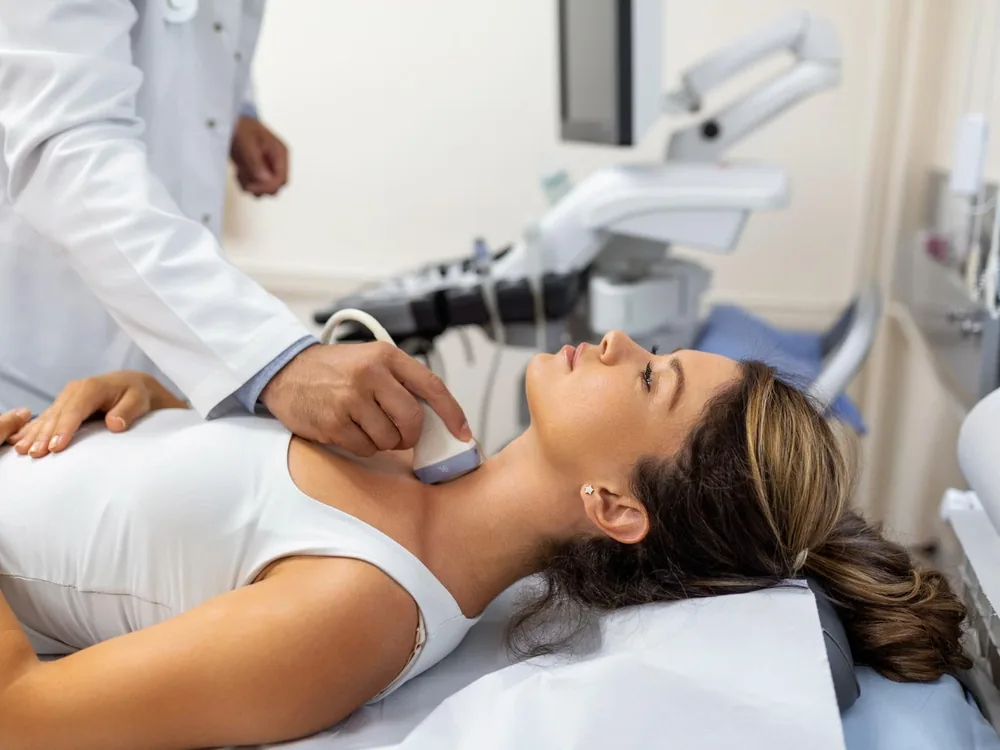
A painless neck ultrasound shows the size and features of nodules. A fine-needle biopsy uses a thin needle, takes a few minutes in the office, and tells you whether a nodule needs treatment.
Bone density (DXA) scan
A low-dose X-ray of the hip and spine that measures bone strength. Results are reported as T-scores and help decide whether medication is needed.
Medication and hormone replacement
Thyroid hormone replacement, anti-thyroid medicines, adrenal hormone replacement, bone medicines, and insulin or other diabetes drugs are common. Doses are tailored to your labs and adjusted over time by your physician.
Procedures and surgical referral
Radioactive iodine for some overactive thyroids, and referral to an endocrine surgeon for parathyroid, adrenal, or thyroid operations. Your endocrinologist manages your hormones before and after.
Before your appointment
What to expect at your first endocrinology visit
A first visit is mostly conversation and careful review. Many people leave with lab orders and a clear sense of what is being checked and why.
Your story and goals.
Your endocrinologist asks about symptoms, weight changes, periods, energy, family history of thyroid or hormone disease, and every medicine and supplement you take.
Focused exam.
Expect a check of your neck and thyroid, heart rate, blood pressure, skin, and signs of hormone excess or deficiency.
Testing plan.
Most visits end with targeted blood work, and sometimes a thyroid ultrasound, bone density scan, or imaging of the adrenal or pituitary glands.
Follow-up and plan.
You get a working diagnosis, a plan to review results, and pricing for any follow-up services discussed. Many results visits can happen by video.
Bring all prior hormone lab results, any thyroid ultrasound or bone scan reports, and a list of medicines and supplements. Biotin, a common hair and nail supplement, can distort thyroid lab results, so tell your endocrinologist if you take it. If you track your periods, blood sugar, or weight, bring that too.
Make an informed choice
How to choose the right endocrinologist near you
Endocrinologists share the same core training, but many focus on certain areas. Use this checklist to find a good fit.
- Confirm board certification in endocrinology, diabetes, and metabolism. You can verify any physician for free through the American Board of Medical Specialties [7]. Every endocrinologist on Apptly Health is verified before listing.
- Match their focus to your need: thyroid and nodules, PCOS and reproductive hormones, bone health, adrenal and pituitary disease, or diabetes technology.
- Ask whether they perform thyroid ultrasound or biopsy in the office, which can save a separate visit.
- Check availability for video follow-ups, since many hormone visits are about reviewing labs and adjusting medicine.
- Look at the price before you book. Self-pay patients also have a federal right to a Good Faith Estimate of expected charges for scheduled care [8].
- Read the profile for languages spoken, clinical interests, and how the physician likes to share results.
The evidence
The evidence: why hormone problems deserve a specialist
Gland disorders are common and often missed. The figures below come from national medical societies and federal health agencies.
-
20 million
Americans have some form of thyroid disease
Up to 60% of people with thyroid disease are unaware of their condition [1].
-
1 in 8
women will develop a thyroid disorder in her lifetime
More than 12% of the U.S. population will develop a thyroid condition at some point [1].
-
19.6%
of women age 50 and older have osteoporosis
Osteoporosis in older women rose from 14.0% in 2007 to 2008 to 19.6% in 2017 to 2018 [4].
-
40.1 million
people in the U.S. have diabetes
That is 12.0% of the population, and about 11 million adults with diabetes are undiagnosed [6].
Go deeper
Hormone health through every stage of life
The glands that need attention change as you age. Here is what endocrinologists most often look for at each stage.
Teens and young adults
Irregular periods, severe acne, or unwanted hair growth can be early signs of PCOS. Type 1 diabetes and an overactive thyroid often first appear in this age group. Early diagnosis protects fertility and long-term metabolic health.
Planning pregnancy and after birth
Thyroid levels matter for a healthy pregnancy, and thyroid medicine often needs adjusting as soon as pregnancy is confirmed. Some women develop thyroid inflammation in the months after giving birth, which can look like anxiety or exhaustion.
Midlife
Thyroid disease becomes more common, and perimenopause can blur the picture. Men may notice symptoms of low testosterone. This is a good time to discuss bone health, blood sugar, and cholesterol together.
Age 60 and older
Hypothyroidism is most common after 60 [2], and bone loss speeds up. An endocrinologist can review bone density, fracture risk, and medicines that affect bones, and help balance thyroid treatment with heart rhythm and other conditions.
Direct access compared
A simpler path to a hormone specialist
| Consideration | Apptly Health | Traditional route |
|---|---|---|
| Referral | Not required | Often required by your plan |
| Getting an appointment | Book online, with timing based on live provider availability | Calls, waitlists, and referral paperwork |
| Price | Shown before you book | Known after the claim is processed |
| Choice of endocrinologist | Any listed endocrinologist | Limited to your network |
| Lab review visits | In person or by video | Usually in person |
Related care
Related specialists you can book
Hormone problems often overlap with weight, diabetes, and menopause care. These Apptly Health specialists frequently work alongside endocrinologists.
Helpful answers
Frequently asked questions about seeing an endocrinologist
Do I need a referral to see an endocrinologist?
Not on Apptly Health. You can book a board-certified endocrinologist directly without a referral from a primary care doctor. If you plan to use insurance elsewhere, check your plan first, because many HMO plans require a referral before they will cover a specialist visit.
How much does an endocrinologist visit cost without insurance?
Each endocrinologist sets their own price, and it is shown on their Apptly Health profile before you book. Lab work, ultrasounds, and bone density scans are usually priced separately. As a self-pay patient you are also entitled to a Good Faith Estimate of expected charges for scheduled services under the No Surprises Act.
Does Apptly Health bill my insurance?
No. Apptly Health is a direct-pay platform. You pay the endocrinologist's listed fee directly, and Apptly Health does not submit claims to your insurance. Some plans reimburse out-of-network care, so check with your insurer if you plan to request reimbursement.
Can I book an endocrinologist on Apptly Health if I have Medicare or Medicaid?
Check with the physician's office before you book. Medicare and Medicaid have rules that limit when an enrolled physician can accept direct payment for covered services, so whether a self-pay visit is possible depends on the physician and the service you need.
Can I see an endocrinologist virtually?
Yes. Many endocrinologists on Apptly Health offer video visits, which work well for reviewing labs, adjusting thyroid or diabetes medicine, and follow-ups. A first visit for a neck lump, or one that needs a thyroid ultrasound or physical exam, is often best done in person. Your endocrinologist will tell you.
What is the difference between an endocrinologist and a diabetes doctor?
All endocrinologists are trained in diabetes, but their work also covers the thyroid, adrenal and pituitary glands, PCOS, bone health, and sex hormones. Many people with type 2 diabetes are well managed by a primary care physician. Choose an endocrinologist for type 1 diabetes, insulin pumps, or diabetes alongside another hormone problem.
Should I see an endocrinologist or a gynecologist for PCOS?
Both can help. A gynecologist is a good fit for period control, contraception, and fertility planning. An endocrinologist focuses on the hormone and metabolic side, such as excess androgens, insulin resistance, and diabetes risk. Many women benefit from seeing both, and the two often share care.
How do I know if an endocrinologist is board-certified?
Every endocrinologist on Apptly Health is verified as board-certified before their profile goes live. You can also check any physician for free with the American Board of Medical Specialties Certification Matters tool. Look for certification in endocrinology, diabetes, and metabolism, which follows internal medicine certification.
What should I bring to my first endocrinology appointment?
Bring copies of past lab results, especially thyroid, hormone, and blood sugar tests, plus any ultrasound, bone density, or imaging reports. Add a list of all medicines and supplements, including biotin, and a short timeline of your symptoms. Period tracking or glucose meter data is helpful too.
Can an endocrinologist help with weight gain?
An endocrinologist can check whether a thyroid, adrenal, or other hormone problem is contributing to weight gain, and some also practice obesity medicine. In most people, hormone tests come back normal, and a dedicated weight loss doctor may be a better fit for a full medical weight management program.
Is a thyroid nodule cancer?
Most thyroid nodules are not cancer. An endocrinologist uses ultrasound features and, when needed, a quick fine-needle biopsy to decide. Seek prompt care if a neck lump is growing quickly or you have trouble swallowing, breathing, or a hoarse voice that does not go away.
Can I use HSA or FSA funds for an endocrinology visit?
In many cases, yes. Visits to a physician for diagnosis or treatment of a medical condition are generally qualified medical expenses for HSA and FSA accounts. Confirm with your plan administrator before you book, and keep your receipt from Apptly Health.
More questions about booking, payments, or your account? Visit the Apptly Health FAQ page.
For physicians
Are you an endocrinologist?
Reach direct-pay patients who are actively looking for thyroid, hormone, and bone care. Set your own schedule and price, offer video follow-ups, and spend less time on administration.
Apply to Join the NetworkMedical review and references
Medically reviewed by Dr. Paula Muto
Board-certified vascular surgeon and founder of Apptly Health
This page is for general information and does not replace a consultation with a qualified physician. If you think you are having a medical emergency, call 911. If you are in emotional crisis, call or text 988.