
On this page
- Step 1: Make sure it isn’t an emergency
- Step 2: Decide where to start
- Step 3: Pick the right kind of orthopedic doctor
- Step 4: Compare participating doctors
- Step 5: Check credentials
- Step 6: Book your visit on Apptly
- Step 7: Get ready for the appointment
- Step 8: Plan your follow-up
- Step 9: If surgery is recommended
- Questions about seeing an orthopedic doctor without insurance
- Find your orthopedic doctor in Houston
You can see an orthopedic doctor without insurance, and you don’t need a referral to do it. This guide shows how to see an orthopedic doctor without insurance in Houston, step by step: where to start, how to choose the right specialist, how booking works, and what comes after the visit.
Step 1: Make sure it isn’t an emergency
An orthopedic office is the right place for pain, stiffness and injuries that are stable. Go to the emergency room first if a limb looks deformed, bone has broken the skin, there’s heavy bleeding, even gentle movement is very painful, a finger or toe beyond the injury is numb or discolored, or you suspect a neck, head or back injury (Mayo Clinic).
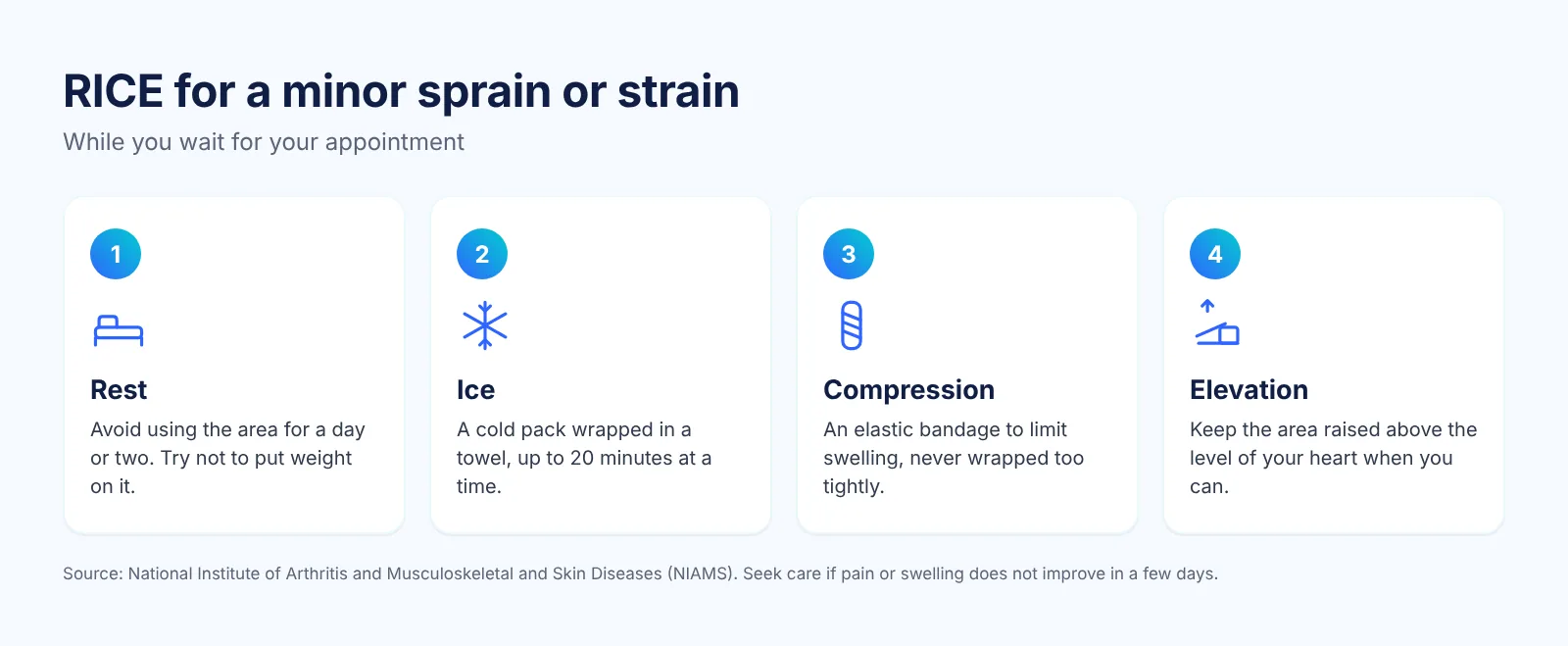
For a minor sprain or strain while you wait for an appointment, the National Institutes of Health recommends RICE: rest the area for a day or two, ice it for up to 20 minutes at a time, use a compression bandage that isn’t too tight, and keep it raised above the level of your heart when you can (NIAMS). If pain or swelling doesn’t settle after a few days, or you can’t put weight on it, book a visit.
Step 2: Decide where to start
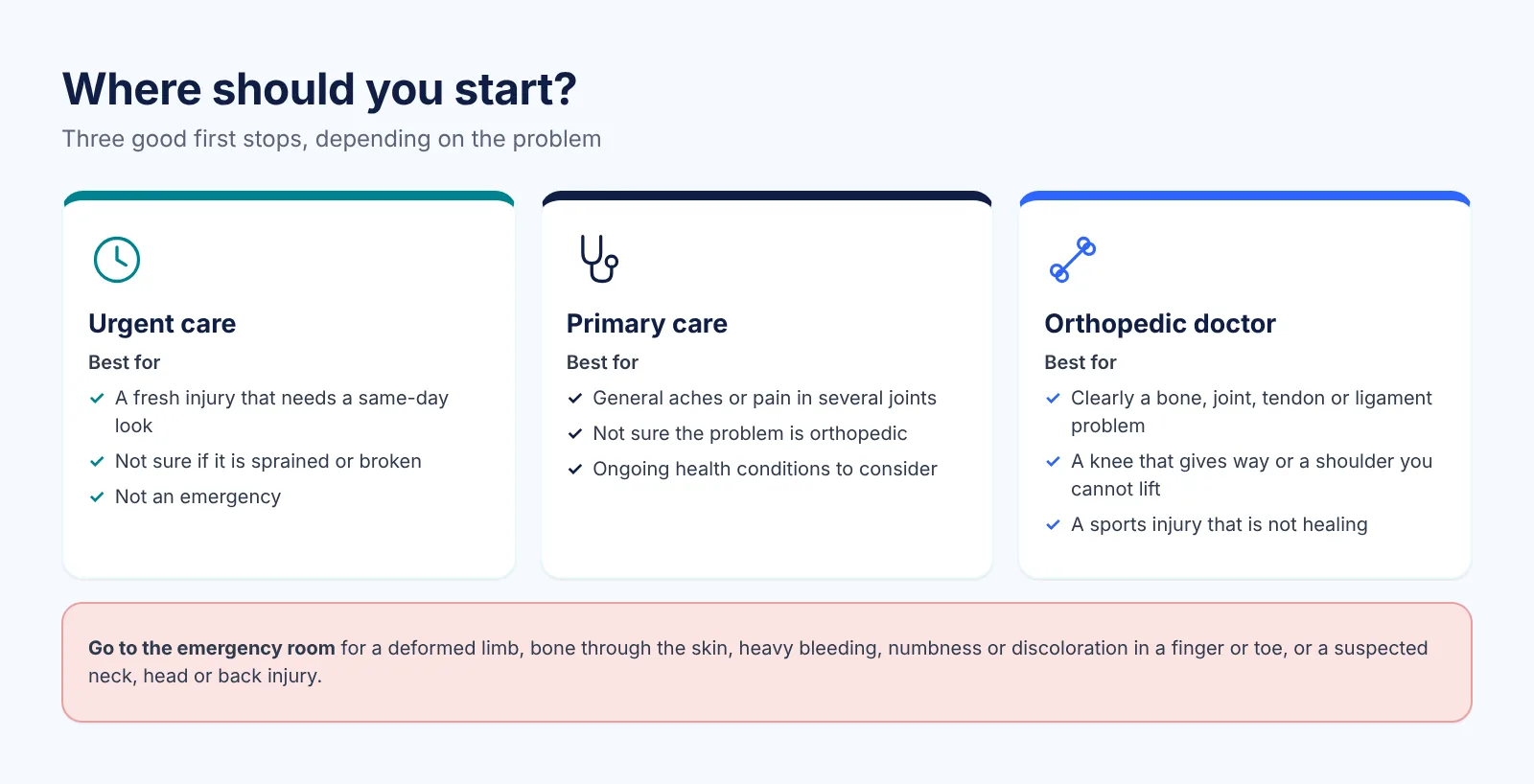
There are three common starting points, and the right one depends on the problem:
- Urgent care suits a fresh injury that needs a same-day look but isn’t an emergency, such as a twisted ankle you can’t tell is sprained or broken. Many people then follow up with an orthopedist.
- A primary care doctor is a good first stop for general aches, pain in several joints, or if you aren’t sure the problem is orthopedic at all. They can treat it or point you to the right specialist.
- An orthopedic doctor directly makes sense when the problem is clearly in a bone, joint, tendon or ligament: a knee that gives way, a shoulder you can’t lift, a sports injury that isn’t healing.
Insurance plans, especially HMOs, often require a referral from a primary care doctor before covering a specialist (HealthCare.gov). When you book a direct visit, that step isn’t required, so you can go straight to the orthopedist if that’s where your problem belongs.
Step 3: Pick the right kind of orthopedic doctor
Most orthopedic physicians focus on one area: knee, shoulder, hip, hand and wrist, foot and ankle, spine or sports injuries. Choosing the right one the first time saves you a second visit. If you aren’t sure, a general orthopedic or sports medicine visit is a sensible first stop. Our Houston orthopedic doctors page explains each sub-specialty and the conditions they treat.
Step 4: Compare participating doctors
On Apptly, open two or three physician profiles and compare:
- The sub-specialty and the conditions the physician treats.
- The practice address and how far it is from home or work.
- Upcoming availability.
- Whether the physician sees children, if you’re booking for a child or teenager.
Step 5: Check credentials
Apptly verifies board certification before a physician is listed. If you’d like to check for yourself, it takes two minutes: confirm the Texas license on the Texas Medical Board lookup and board certification on the American Board of Orthopaedic Surgery site.
Step 6: Book your visit on Apptly
- Search. Enter your ZIP code or choose Houston, then select orthopedics.
- Choose a doctor. Open a profile, read about their experience and check the address.
- Request a time. Pick an open slot that works for you and send your request.
- Get confirmation. The practice confirms your appointment, or suggests another time if that slot has just filled.
Tips for getting seen sooner
- Compare two or three physicians with the same sub-specialty, since availability varies from practice to practice.
- Be flexible on time of day. Early morning and late afternoon slots often open up first.
- Have your records ready, so the practice can confirm without waiting on information.
- If the practice suggests a different time, take it if you can and ask to be told about any earlier opening.
Step 7: Get ready for the appointment
Bring your medication list, any imaging discs and reports (a physical disc for an outside MRI), ER or urgent care paperwork, a short timeline of the problem and your written questions. Wear clothing that lets the doctor see and move the joint. Our guide to your first orthopedic visit covers what happens in the room and includes a printable checklist.
Step 8: Plan your follow-up
You should leave with a likely diagnosis and a plan. Before you go, make sure you know:
- When your follow-up visit should be, and how to book it.
- Where any imaging or physical therapy will happen, and how results get back to your doctor.
- What you can do at home, and what to avoid.
- Which signs mean you should call the practice or come back sooner.
Ask for a copy of your visit notes and imaging reports. They’re useful if you see another specialist later.
Step 9: If surgery is recommended
Take the time to understand the recommendation. The American Academy of Orthopaedic Surgeons suggests asking why the procedure is recommended, what the alternatives are, what happens if you delay it, what recovery looks like, and who you could see for a second opinion (AAOS OrthoInfo). For non-urgent surgery, a second opinion is common, and you can book one with another Houston orthopedic specialist on Apptly.
Questions about seeing an orthopedic doctor without insurance
Do I need a referral to see an orthopedic doctor without insurance?
No. Referrals are an insurance requirement, mostly in HMO plans (HealthCare.gov). For a direct visit with a participating physician, you can book the specialist yourself. Some practices may ask for records or imaging so they can prepare.
I already went to urgent care. Should I still see an orthopedist?
Often, yes. Urgent care can rule out an emergency and start treatment, and an orthopedic follow-up is common for injuries to bones, joints and ligaments. Bring your discharge paperwork and any imaging.
What if the doctor I want isn’t available soon?
Check other participating physicians with the same sub-specialty, since availability varies by practice. If your symptoms get worse while you wait, call the practice, and go to the emergency room for any emergency sign.
I have insurance. Can I still book a direct visit?
Yes. Many insured patients book directly for a specific visit, such as to skip a referral delay or to see a particular specialist. Your insurance stays in place for the rest of your care.
Can someone come to the appointment with me?
Yes. A family member or friend can help you remember what the doctor said and ask questions you might forget.
Can I see an orthopedist for an old injury?
Yes. Injuries that never fully healed, such as an ankle that keeps rolling or a shoulder that still aches months later, are a common reason for an orthopedic visit. Bring whatever records you have from the original injury.
What kind of doctor should I see for back pain?
Many people start with a primary care doctor or a physical medicine specialist. If you have pain that travels down a leg, weakness, or pain after an injury, a spine-focused orthopedic surgeon is a reasonable choice. New loss of bladder or bowel control with back pain needs emergency care.
Find your orthopedic doctor in Houston
Compare participating Houston orthopedic physicians and request a time that works for you.