Optometry · Direct-Pay Specialist Care
Find a Licensed Optometrist Near You
Book a comprehensive eye exam, a glasses or contact lens prescription, or a visit for red, dry, or irritated eyes. Compare optometrists and see the price before you book.
Enter your ZIP code to see optometrists near you, with prices and open times.
- Licensed optometrists, verified before listing
- No referral required
- Price shown before you book
- Exams for adults and kids
The direct answer
What does an optometrist do?
An optometrist is a Doctor of Optometry (OD) who provides primary eye care. Optometrists perform comprehensive eye exams, prescribe glasses and contact lenses, screen for eye diseases such as glaucoma and diabetic retinopathy, and treat common problems like dry eye and eye infections. They are state-licensed after four years of optometry school and refer to an ophthalmologist when surgery is needed.
Key facts at a glance
About 93 million U.S. adults are at high risk for serious vision loss, but only half saw an eye doctor in the past 12 months [1].
About 41.6% of Americans are nearsighted, up from about 25% in 1971 [2].
About 6.8% of U.S. children under 18 have a diagnosed eye and vision condition [1].
Apptly Health lets you book a licensed optometrist directly, with the exam price shown before you confirm.
Optometrists you can book now
Optometrists near 07102
Current provider listings are checked when you open this page.
- Checking current provider listings, visit fees and appointment options…
Physician listings, available appointments and visit fees are refreshed when you search. Availability and the final fee are confirmed on the booking page.
Provider availability, prices and appointment times are checked live. Confirm exact visit details when booking.
Why Apptly is different
Eye exams without the runaround
Needing new glasses should not mean calling five offices to find one that takes your plan. Apptly Health shows you optometrists near you, their open times, and their fees, so you can book an exam the same way you book anything else online.
See how it works
- Physician-founded and physician-led marketplace
- Verify each listed optometrist's credentials and license
- Exam price shown before you book
- Choose any listed optometrist, with no network limits
- No referral needed for an eye exam
- Book online in minutes, including evenings
- HIPAA-compliant platform for your records
- Some optometrists offer virtual visits for follow-ups and minor concerns
Know when to get care
When should you see an optometrist?
You do not need a problem to book an eye exam. Regular checks catch vision changes and silent eye disease early. These are the most common reasons people book.
Signs your vision or eyes need a check
- Squinting, eye strain, or headaches after reading or screen time
- Blurry vision at a distance, up close, or both
- Trouble seeing road signs or driving at night
- Holding your phone farther away to read it, often after age 40
- Dry, itchy, gritty, or watery eyes that do not settle
- A child who sits close to the TV, rubs their eyes, or struggles with reading
Reasons to book even when your eyes feel fine
- Your glasses or contact lens prescription has expired
- You want to start wearing contacts or try a new type
- You have diabetes or high blood pressure, which can affect the eyes
- A family history of glaucoma or macular degeneration
- Age 40 or older and it has been a few years since your last full exam
- A child starting school, or a failed vision screening at school or the pediatrician
Important: Do not wait for an optometry appointment if you have sudden vision loss, a sudden shower of new floaters or flashes, a curtain or shadow over your vision, a chemical in your eye, or an eye injury. Go to an emergency room or call 911. For a contact lens wearer with a painful red eye, remove the lens and get seen the same day.
Understand your options
How much does an optometrist cost without insurance?
The cost of a self-pay optometrist visit varies by physician, location, visit format, and the services you need. Apptly Health is designed to show the listed visit fee before you confirm a booking. Do not assume that tests, procedures, or follow-up services are included in that fee.
Questions to ask before booking
- Is this price for a new-patient visit or a follow-up?
- Does the exam include a contact lens fitting, or is that priced separately from the eye exam?
- Will a virtual appointment be appropriate for my concern?
- Can the provider supply a Good Faith Estimate for scheduled self-pay care?
- Can I use eligible HSA or FSA funds for the visit?
For scheduled care, patients who are uninsured or choose not to use insurance generally have rights to a Good Faith Estimate under federal rules. Ask about additional services and expected charges in advance.
If you have Medicare or Medicaid: check with the physician's office before you book. Program rules limit when an enrolled physician can accept direct payment for covered services, so whether a self-pay visit is possible depends on the physician and the service.
Your path to care
How Apptly Health works
Booking an eye exam should be as easy as ordering a ride.
-
Step 1
Search by city, ZIP code, or need.
Find licensed optometrists near you for exams, contacts, or eye problems.
-
Step 2
Compare optometrists.
Review profiles, services, languages, and open appointment times.
-
Step 3
See the price before you book.
The exam fee is shown up front. No claims paperwork for the visit.
-
Step 4
Book online and get your exam.
Appointment timing depends on real provider availability in your selected location.
Results, prices, and appointment availability depend on participating physicians in your area.
Expertise for your needs
What an optometrist checks and treats
Optometrists are the front door for most eye care. Here is what a visit can cover.
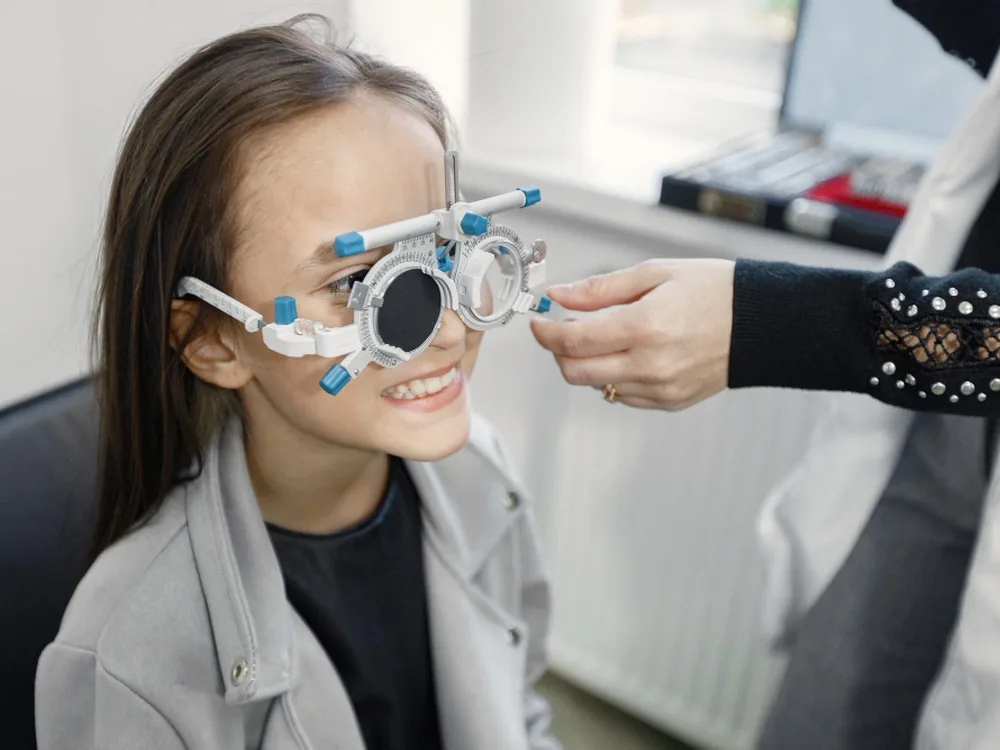
Nearsightedness, farsightedness, and astigmatism
Refractive errors are the most common reason people need glasses. Nearsightedness is rising: about 41.6% of Americans are now nearsighted, compared with about 25% in 1971 [2]. Your optometrist measures your prescription and checks how well each eye focuses.
Presbyopia and reading vision
Most people notice close-up blur in their 40s as the lens inside the eye stiffens. An optometrist can prescribe reading glasses, bifocals, progressive lenses, or multifocal contacts to fit how you work and live.
Contact lens fittings
A contact lens exam goes beyond a glasses prescription. Your optometrist measures the curve of your eye, checks lens fit and comfort, and teaches safe wear and cleaning habits to lower infection risk.
Dry eye, allergies, and pink eye
Optometrists diagnose and treat many common front-of-eye problems, including dry eye, eye allergies, and eye infections. What they can prescribe depends on state law.
Screening for glaucoma, cataracts, and diabetic eye disease
A comprehensive exam includes eye pressure and a look at the retina and optic nerve. About 9.6 million people in the U.S. have diabetic retinopathy [5], which often has no early symptoms. If disease is found, your optometrist may manage it or refer you to an ophthalmologist.
Children's vision and myopia control
Kids rarely complain about blurry vision. An exam can find focusing problems, lazy eye, or early nearsightedness. Some optometrists offer myopia management, such as special contact lenses or low-dose eye drops, which research suggests may help slow progression [2].
Know your options
Types of eye exams and services
Pick the visit that matches what you need. If you are not sure, a comprehensive exam covers the most ground.
Comprehensive eye exam
Checks your vision and prescription plus the health of the whole eye, including eye pressure and often a dilated look at the retina. This is the right choice for most adults and children.
Contact lens exam and fitting
Adds lens measurements, a trial fit, and a follow-up check. Needed for first-time wearers and anyone switching lens types.
Medical or problem-focused visit
For a red eye, irritation, a scratch, or a new symptom. The focus is diagnosis and treatment rather than updating glasses.
Pediatric eye exam
Uses games, pictures, and lights so even young children who cannot read can be tested. Some optometrists focus on children and binocular vision problems.
Specialty services
Some optometrists offer low vision care, vision therapy, specialty lenses for irregular corneas, or myopia management. Check the profile for these services.
Before your appointment
What to expect at your eye exam
A full exam usually takes 30 to 60 minutes, a little longer if your eyes are dilated or you are being fit for contacts.
Health and vision history.
You will talk about how your eyes feel, your screen and driving habits, your general health, medicines, and any family history of eye disease.
Vision and prescription testing.
You read an eye chart, then compare lenses ('one or two?') so your optometrist can fine-tune your prescription for distance and near.
Eye health check.
Your optometrist checks eye pressure, examines the front of the eye with a microscope, and looks at the retina and optic nerve, often after dilating drops.
Prescription and plan.
You get your glasses or contact lens prescription and a clear explanation of anything found, including whether you need a referral to an ophthalmologist.
Bring your current glasses and contact lenses (wear the contacts in, and bring the box or prescription), a list of medications, and sunglasses in case your eyes are dilated. If you have diabetes, bring your latest A1C. You are entitled to a copy of your glasses prescription, so ask for it before you leave.

Make an informed choice
How to choose the right optometrist near you
A good optometrist makes your eyes feel understood, not rushed. Use this checklist when comparing profiles.
- Confirm a current license. Optometrists are licensed by their state board of optometry, and you can look up any optometrist's license on that board's website.
- Board certification is optional for optometrists. Some choose to certify through the American Board of Optometry, which offers a free search to find certified optometrists [4].
- Check that the services you need are listed, such as contact lens fittings, pediatric exams, dry eye care, or myopia management.
- Ask whether dilation and retinal imaging are included in the exam price or charged separately.
- Look at the price before you book. Self-pay patients also have a federal right to a Good Faith Estimate for scheduled care [6].
- Read the profile for languages, evening or weekend hours, and how the office handles referrals to ophthalmologists.
The evidence
The evidence: why routine eye exams matter
Many eye conditions develop slowly and without pain. These figures from the CDC and National Eye Institute show why regular exams are worth the time.
-
93 million
U.S. adults are at high risk for serious vision loss
Only half of them visited an eye doctor in the past 12 months [1].
-
41.6%
of Americans are nearsighted
That is up from about 25% in 1971, and about 4% of Americans have high myopia [2].
-
6.8%
of children have a diagnosed eye or vision condition
Nearly 3% of U.S. children under 18 have blindness or vision impairment [1].
-
9.6 million
people in the U.S. have diabetic retinopathy
1.84 million have vision-threatening disease, which a dilated eye exam can detect before symptoms start [5].
Go deeper
How often you need an eye exam, by age
Your optometrist will set the right schedule for you. These general guidelines help you know when you are due.
Babies, toddlers, and school-age kids
Children should have their vision checked during well-child visits, and a full eye exam if a screening is failed or a parent notices squinting, eye turning, or reading trouble. Many families book an exam before kindergarten. Nearsighted children often need yearly checks because their prescription can change quickly.
Adults under 40
If you wear glasses or contacts, plan on an exam every one to two years, or as your optometrist advises. Contact lens wearers usually need a yearly exam to renew their prescription.
Adults 40 and older
The American Academy of Ophthalmology recommends a baseline comprehensive exam at 40, then every 2 to 4 years from 40 to 54, every 1 to 3 years from 55 to 64, and every 1 to 2 years from 65 on for people without risk factors [3].
People with diabetes or other risk factors
Anyone with type 2 diabetes should have an eye exam at diagnosis and at least yearly after that [3]. A family history of glaucoma, high eye pressure, or past eye injury may also mean more frequent visits.
Direct access compared
A simpler way to book an eye exam
| Consideration | Apptly Health | Traditional route |
|---|---|---|
| Finding an optometrist | Any listed optometrist near you | Limited to your vision plan's list |
| Price | Shown before you book | Often unclear until checkout |
| Booking | Online in minutes | Phone calls during office hours |
| Referral | Not required | Sometimes required for medical eye visits |
| Glasses prescription | Yours to keep | Yours to keep |
Related care
Related specialists you can book
Your eyes connect to the rest of your health. These Apptly Health specialists often work alongside optometrists.
Helpful answers
Optometrist FAQs
Do I need a referral to see an optometrist?
No. Optometrists are primary eye care providers, so you can book an eye exam directly on Apptly Health without a referral. If an optometrist finds something that needs surgery or specialist care, they will tell you and can help you choose an ophthalmologist.
What is the difference between an optometrist and an ophthalmologist?
An optometrist (OD) is a licensed eye care provider who does routine eye exams, prescribes glasses and contacts, and diagnoses and treats many common eye conditions. An ophthalmologist is a medical doctor who also performs eye surgery and treats advanced disease such as cataracts needing removal, complex glaucoma, and retina problems.
How much does an eye exam cost without insurance?
Each optometrist sets their own fee, and it is shown on their Apptly Health profile before you book. Contact lens fittings, retinal photos, and glasses or contacts themselves may cost extra, so check what the exam includes. Self-pay patients can also ask for a Good Faith Estimate for scheduled services.
Does Apptly Health bill my insurance?
No. Apptly Health is a direct-pay platform. You pay the optometrist's listed fee directly, and Apptly Health does not submit claims to your insurance. Some plans reimburse out-of-network care, so check with your insurer if you plan to request reimbursement.
Can I book an optometrist on Apptly Health if I have Medicare or Medicaid?
Check with the physician's office before you book. Medicare and Medicaid have rules that limit when an enrolled physician can accept direct payment for covered services, so whether a self-pay visit is possible depends on the physician and the service you need.
Can I get an eye exam online or by video?
A full eye exam needs to happen in person, because checking eye pressure and the retina requires equipment in the office. Some optometrists offer virtual visits for follow-ups, mild irritation, or questions about results. An online vision test is not a substitute for an eye health exam.
Is a contact lens exam different from a regular eye exam?
Yes. A glasses prescription and a contact lens prescription are not the same. A contact lens exam adds measurements of your eye's surface, a trial lens fit, and a check of how the lens moves and sits. First-time wearers usually need a short follow-up visit too.
Are optometrists board-certified?
Optometrists are licensed by their state, which is the legal requirement to practice. Board certification through the American Board of Optometry is voluntary. Apptly Health verifies each optometrist's license before listing, and you can confirm a license yourself on your state board of optometry's website.
What should I bring to my eye exam?
Bring your current glasses, your contact lenses and their box or prescription, a list of medications, and sunglasses in case your eyes are dilated. If you have diabetes, bring your latest A1C. Note any symptoms you have noticed, such as headaches, night driving trouble, or dryness.
How often should my child have an eye exam?
Children should have vision checked at regular well-child visits and get a full eye exam if they fail a screening or show signs like squinting or reading trouble. Many families book an exam before kindergarten. Nearsighted kids often need yearly exams because their eyes can change quickly.
When is an eye problem an emergency?
Sudden vision loss, a sudden burst of floaters or flashes, a curtain over your vision, a chemical splash, or an eye injury needs emergency care, not a scheduled exam. Go to an emergency room or call 911. A painful red eye while wearing contacts should be seen the same day.
Can I use HSA or FSA funds for an eye exam or glasses?
In many cases, yes. Eye exams, prescription glasses, and contact lenses are generally qualified medical expenses for HSA and FSA accounts. Plano (non-prescription) sunglasses usually are not. Check with your plan administrator to confirm before you book or order. Keep your receipts and prescription in case you are asked for proof.
More questions about booking, payments, or your account? Visit the Apptly Health FAQ page.
For physicians
Are you an optometrist?
Reach direct-pay patients who are actively looking for eye exams and eye care, set your own schedule and fees, and spend less time on vision plan paperwork.
Apply to Join the NetworkMedical review and references
Medically reviewed by Dr. Paula Muto
Board-certified vascular surgeon and founder of Apptly Health
This page is for general information and does not replace a consultation with a qualified physician. If you think you are having a medical emergency, call 911. If you are in emotional crisis, call or text 988.