Regenerative Medicine · Direct-Pay Specialist Care
Find a Regenerative Medicine Doctor Near You
Talk to a board-certified physician about PRP and other regenerative options for joint and tendon pain. Get a straight answer on the evidence, and see the visit price before you book.
Enter your ZIP code to see regenerative medicine doctors near you, with prices and open times.
- Licensed physicians
- No referral required
- Price shown before you book
- In-person and virtual consultations
The direct answer
What does a regenerative medicine doctor do?
A regenerative medicine doctor is a physician, usually trained in sports medicine, physical medicine and rehabilitation, orthopedics, or pain medicine, who offers treatments meant to support the body's own healing, such as platelet-rich plasma (PRP) injections, alongside standard care. Evidence varies by condition. The FDA has approved stem cell products only for certain blood disorders, not for joint or tendon pain.
Key facts at a glance
The only FDA-approved stem cell products in the U.S. are blood-forming stem cells from umbilical cord blood, approved for blood disorders and not for other uses [1].
In a 2021 randomized trial of 288 adults with knee osteoarthritis, PRP injections did not improve pain or cartilage more than saline injections at 12 months [4].
The American Academy of Orthopaedic Surgeons gives PRP for knee osteoarthritis only a 'limited' strength recommendation [5].
On Apptly Health you can book a consultation with a board-certified physician directly and see the visit price before you confirm.
Regenerative Medicine Doctors you can book now
Regenerative Medicine Doctors near 07102
Current provider listings are checked when you open this page.
- Checking current provider listings, visit fees and appointment options…
Physician listings, available appointments and visit fees are refreshed when you search. Availability and the final fee are confirmed on the booking page.
Provider availability, prices and appointment times are checked live. Confirm exact visit details when booking.
Why Apptly is different
Regenerative medicine advice without the sales pitch
Regenerative treatments are often sold directly to consumers, and the claims can be hard to judge. A priced-up-front consultation with a board-certified physician gets you an honest opinion before you pay for any procedure.
See how it works- A physician-founded and physician-led marketplace
- Physicians are board-certified in their specialty and verified before they are listed
- The consultation price is shown before you book
- Choose any listed regenerative medicine doctor, with no network limits
- No referral needed
- Online booking in a few minutes
- HIPAA-compliant platform
- Many physicians offer video consultations to review your imaging and options
Know when to get care
When should you see a regenerative medicine doctor?
A regenerative medicine consultation is most useful when standard care has not fully worked and you want to understand every option, including what not to spend money on.
Problems people commonly ask about
- Knee, hip, or shoulder arthritis pain that limits walking, sleep, or work
- Tendon pain that has lasted months, such as tennis elbow, Achilles, or patellar tendon pain
- A partial tendon or ligament injury that is slow to heal
- Recurring joint pain after an old sports injury
- Pain in a joint where surgery has been suggested but you want to explore other options first
Situations where a second opinion is wise
- A clinic has offered you a stem cell, umbilical cord, amniotic, or exosome injection
- You were quoted a high price for a package of injections
- You are told a treatment can cure arthritis, regrow cartilage, or replace surgery
- You are asked to pay in full before an exam or a review of your imaging
- You have diabetes, a blood disorder, or take blood thinners and are considering an injection
Important: Get same-day medical care, or go to the emergency room, if you develop fever or chills, rapidly worsening pain, a hot, red, or swelling joint, or drainage at the injection site in the days after any injection. Unapproved cell products have caused serious infections that needed hospital care [3]. Sudden vision loss after any eye injection is an emergency.
Understand your options
How much does a regenerative medicine doctor cost without insurance?
The cost of a self-pay regenerative medicine doctor visit varies by physician, location, visit format, and the services you need. Apptly Health is designed to show the listed visit fee before you confirm a booking. Do not assume that tests, procedures, or follow-up services are included in that fee.
Questions to ask before booking
- Is this price for a new-patient visit or a follow-up?
- Is this fee for the consultation only? Injections and other treatments are usually priced separately.
- Will a virtual appointment be appropriate for my concern?
- Can the provider supply a Good Faith Estimate for scheduled self-pay care?
- Can I use eligible HSA or FSA funds for the visit?
For scheduled care, patients who are uninsured or choose not to use insurance generally have rights to a Good Faith Estimate under federal rules. Ask about additional services and expected charges in advance.
If you have Medicare or Medicaid: check with the physician's office before you book. Program rules limit when an enrolled physician can accept direct payment for covered services, so whether a self-pay visit is possible depends on the physician and the service.
Your path to care
How Apptly Health works
Four steps to an honest second opinion.
-
Step 1
Search by location or condition.
Enter your city or ZIP code and the joint or tendon problem you want help with.
-
Step 2
Compare physicians.
Review board certification, specialty, treatment approach, languages, and open times.
-
Step 3
See the consultation price first.
The visit fee is shown before you book. Any procedure is discussed and priced separately.
-
Step 4
Book and get answers.
Appointment timing depends on real provider availability in your selected location.
Results, prices, and appointment availability depend on participating physicians in your area.
Expertise for your needs
Conditions a regenerative medicine doctor evaluates
Most regenerative medicine visits are about musculoskeletal pain. A good physician starts with a diagnosis, not a product, and explains where regenerative options fit next to proven care.
Knee osteoarthritis
This is where PRP has been studied most. Results are mixed: a national orthopedic guideline says PRP may reduce pain and improve function, with limited strength of evidence [5], while a large placebo-controlled trial found no meaningful benefit over saline [4]. Exercise and weight management remain the foundation.
Tendinopathy
Long-lasting tendon pain at the elbow, knee, heel, or shoulder is a common reason people ask about PRP. Loading exercises supervised by a clinician are the core treatment. Injections may be discussed when months of rehab have not worked, with frank talk about the evidence.
Ligament and muscle injuries
Sprains and strains usually heal with time and rehab. A Cochrane review of 19 trials found insufficient evidence to support platelet-rich therapies for soft tissue injuries [6], so a physician should be cautious about recommending them here.
Know your options
Regenerative treatments and what the evidence says
These are the options you are most likely to hear about. The evidence differs a lot between them, and some are not legally marketed at all.

Platelet-rich plasma (PRP)
PRP is made by spinning a sample of your own blood to concentrate the platelets, then injecting it into a joint or tendon. It is not an FDA-approved drug, and preparation methods vary from clinic to clinic. For knee arthritis, studies disagree [4] [5]. Ask how the PRP is prepared, how many injections are planned, and what result you should expect.
Bone marrow and fat-derived cell injections
Some clinics draw bone marrow or fat from your body and inject a concentrate into a joint, often calling it stem cell therapy. No stem cell product is FDA-approved for orthopedic use [1]. Ask whether the procedure is part of an FDA-overseen clinical trial, and what published evidence supports it for your condition.
Umbilical cord, amniotic, and exosome products
The FDA says there are no FDA-approved exosome products [1], and cord blood-derived stem cells are approved only for blood disorders. The FDA has warned that unapproved products can cause blindness, tumors, and serious infections, and that being offered them outside a clinical trial likely means you are being deceived [2]. In 2018, 12 patients were hospitalized with infections after injections of unapproved cord blood products for pain and orthopedic problems [3].
Prolotherapy
Prolotherapy injects an irritant solution, often a sugar solution, to trigger a healing response. Research is limited and results are mixed.
Standard options to compare against
Exercise therapy, weight management, bracing, and pain relievers come first for most joint pain. National guidelines for knee arthritis rate corticosteroid injections as giving short-term relief and do not recommend routine hyaluronic acid injections [5]. Joint replacement remains an option for advanced arthritis.
Before your appointment
What to expect at your first consultation
A good regenerative medicine consultation feels like a medical visit, not a sales meeting. Here is what should happen.
A full history.
Your physician asks about the problem, what treatments you have already tried, your other health conditions, and your medications, including blood thinners.
Exam and imaging review.
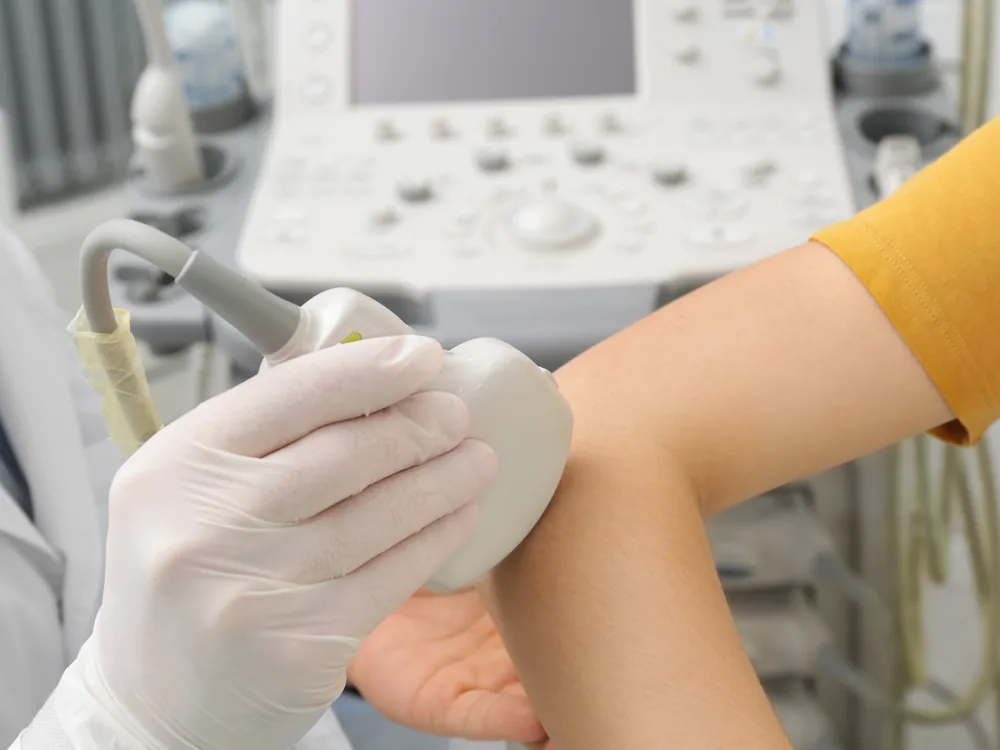
Expect a hands-on exam of the joint or tendon. Your physician reviews prior X-rays or MRI and may use in-office ultrasound to look at the tissue.
An honest options discussion.
You should hear the full range of choices, including standard care, what the evidence shows for each, and what is not recommended for your problem.
Pricing in writing.
If a procedure is suggested, ask for the total cost in writing, how many sessions are expected, and what follow-up is included. You do not have to decide that day.
Bring your imaging reports or discs, a list of medications and supplements, notes on past injections and therapy, and any quotes or brochures you received from other clinics. Your physician can help you compare them. For a video consultation, have the joint uncovered so you can show swelling or range of motion.
Make an informed choice
How to choose a regenerative medicine doctor near you
There is no separate board certification in regenerative medicine, so checking the physician's core training matters even more.
- Confirm board certification in a recognized specialty such as orthopaedic surgery, physical medicine and rehabilitation, sports medicine, or pain medicine. You can verify any physician free through the American Board of Medical Specialties [7]. Every physician on Apptly Health is verified before listing.
- Choose a physician who diagnoses first and offers standard treatments, not only injections.
- Be cautious of anyone who promises a cure, cartilage regrowth, or avoiding surgery for certain.
- Ask whether any cell-based product is FDA-approved or given in an FDA-overseen clinical trial. If not, the FDA advises caution [2].
- Ask for the full price of any procedure in writing. If you are uninsured or self-pay, you have a right to a Good Faith Estimate of expected charges for scheduled care [8].
The evidence
The evidence: what the research and regulators say
Regenerative medicine is an active research field. These figures help separate promising options from products sold ahead of the science.
-
0
FDA-approved exosome products
The only FDA-approved stem cell products are cord blood-derived blood-forming cells for blood disorders [1].
-
12 patients
hospitalized after unapproved cord blood stem cell injections
Infections were reported in Texas, Florida, and Arizona after products used for pain or orthopedic problems, as of December 2018 [3].
-
288 adults
in a placebo-controlled PRP trial for knee osteoarthritis
At 12 months, PRP did not reduce knee pain or protect cartilage more than saline injections [4].
-
19 trials
of platelet-rich therapies for soft tissue injuries reviewed
Across 1,088 participants, the Cochrane review found insufficient evidence to support their use [6].
Go deeper
Cost and red-flag questions before you pay
Regenerative procedures are usually paid out of pocket, and some cost far more than a standard visit. Use these questions to protect yourself.

What exactly is being injected?
Ask for the product name, where it comes from, and whether it is your own tissue or donor tissue. If it is a stem cell, cord, amniotic, or exosome product, ask whether it is FDA-approved or part of an FDA-overseen trial. The FDA notes that being registered with the agency or listed on a trial website does not by itself mean a product is legally marketed [2].
What does the evidence show for my condition?
A trustworthy physician will name published studies, explain their limits, and tell you when results are mixed or negative. Testimonials and before-and-after videos are not evidence.
What is the total cost?
Ask whether the quote includes imaging guidance, follow-up visits, and repeat injections, and check coverage with your health plan before you pay.
What are the risks, and who do I call if something goes wrong?
Every injection carries some risk of infection, bleeding, or a pain flare. Ask who handles complications, after hours too. If you are harmed by a regenerative product, report it to FDA MedWatch [2].
Direct access compared
A clearer way to explore regenerative options
| Consideration | Apptly Health | Typical direct-to-consumer clinic |
|---|---|---|
| Who you see | Board-certified physician, verified before listing | Credentials not always clear |
| First step | A medical consultation with an exam | Free seminar or sales consultation |
| Price | Consultation price shown before you book | Often quoted as a package at the visit |
| Options discussed | Full range, including standard care | Often the clinic's own product |
| Referral | Not needed | Not needed |
Related care
Related specialists you can book
Joint and tendon pain often needs a team. These Apptly Health specialists frequently work alongside physicians who offer regenerative care.
Helpful answers
Regenerative medicine FAQs
Do I need a referral to see a regenerative medicine doctor?
Not on Apptly Health. You can book a consultation with a board-certified physician who offers regenerative options without a referral. If you plan to use insurance for imaging or therapy elsewhere, check your plan, because many HMO plans require a referral for in-network specialist care.
How much does a regenerative medicine consultation cost without insurance?
Each physician sets their own consultation fee, and it is shown on their Apptly Health profile before you book. Procedures such as PRP are priced separately and are often paid out of pocket. As a self-pay patient, you are entitled to a Good Faith Estimate for scheduled services, so ask for one before any procedure.
Does Apptly Health bill my insurance?
No. Apptly Health is a direct-pay platform. You pay the regenerative medicine doctor's listed fee directly, and Apptly Health does not submit claims to your insurance. Some plans reimburse out-of-network care, so check with your insurer if you plan to request reimbursement.
Can I book a regenerative medicine doctor on Apptly Health if I have Medicare or Medicaid?
Check with the physician's office before you book. Medicare and Medicaid have rules that limit when an enrolled physician can accept direct payment for covered services, so whether a self-pay visit is possible depends on the physician and the service you need.
Are stem cell injections for knee pain FDA-approved?
No. The only FDA-approved stem cell products in the U.S. are blood-forming stem cells from umbilical cord blood, approved for certain blood disorders. The FDA warns that unapproved stem cell and exosome products can cause serious harm, and that being offered them outside an FDA-overseen clinical trial likely means you are being deceived.
Does PRP work for knee arthritis?
The evidence is mixed. The American Academy of Orthopaedic Surgeons says PRP may reduce pain and improve function, but rates the strength of that evidence as limited. A large 2021 placebo-controlled trial found PRP no better than saline at 12 months. Talk with your physician about whether it makes sense for you.
What is the difference between a regenerative medicine doctor and an orthopedic surgeon?
Regenerative medicine is not a separate board specialty. Physicians who offer it are usually trained in sports medicine, physiatry, pain medicine, or orthopedics. An orthopedic surgeon diagnoses and treats bone and joint problems with or without surgery, including joint replacement. Some orthopedic surgeons also offer PRP.
Can I have a regenerative medicine consultation by video?
Often, yes. Video works well for reviewing your history, imaging, and the evidence for different options, or for a second opinion on a quote you received. Any injection is done in person, and your physician may want an in-person exam first.
How do I check a regenerative medicine doctor's board certification?
Look up the physician's certification in their core specialty, such as orthopaedic surgery or physical medicine and rehabilitation, through the American Board of Medical Specialties Certification Matters tool. Every physician on Apptly Health is verified as board-certified before listing. There is no separate ABMS board for regenerative medicine.
What should I bring to a regenerative medicine consultation?
Bring imaging reports or discs, a list of medications and supplements, especially blood thinners, notes on past injections and therapy, and any quotes or brochures from other clinics. Write down your goals, such as walking farther or returning to a sport, so your physician can judge which options fit.
What should I do if I feel sick after an injection?
Get same-day care or go to the emergency room for fever, chills, rapidly worsening pain, or a hot, red, swollen joint after any injection, since these can signal infection. Sudden vision loss after an eye injection is an emergency. Harm from a regenerative product can be reported to the FDA's MedWatch program.
Can I use HSA or FSA funds for regenerative treatment?
A physician consultation for diagnosis or treatment is generally a qualified medical expense. Whether a specific procedure like PRP qualifies can depend on your plan and the reason it is done, so confirm with your HSA or FSA administrator before you pay.
More questions about booking, payments, or your account? Visit the Apptly Health FAQ page.

For physicians
Are you a physician who offers regenerative medicine?
Reach patients who want an evidence-based opinion on regenerative options, set your own consultation schedule and fees, and spend less time on administration.
Apply to Join the NetworkMedical review and references
Medically reviewed by Dr. Paula Muto
Board-certified vascular surgeon and founder of Apptly Health
This page is for general information and does not replace a consultation with a qualified physician. If you think you are having a medical emergency, call 911. If you are in emotional crisis, call or text 988.