Sports Medicine · Direct-Pay Specialist Care
Find a Board-Certified Sports Medicine Doctor Near You
Get a sprain, strain, knee injury, or concussion checked by a sports medicine physician in your area. Compare doctors and open times, and see the price before you book.
Enter your ZIP code to see sports medicine doctors near you, with prices and open times.
- Board-certified sports medicine physicians
- No referral required
- Price shown before you book
- In-person and virtual visits
The direct answer
What does a sports medicine doctor do?
A sports medicine doctor is a physician who diagnoses and treats injuries and conditions linked to exercise and sport, such as sprains, strains, tendon pain, stress fractures, and concussions. Most treat patients without surgery and refer to an orthopedic surgeon when an operation is needed. You do not have to be an athlete to see one, and on Apptly Health you can book without a referral.
Key facts at a glance
Joint injuries, such as an ACL tear in the knee, can raise the risk of osteoarthritis later in life in that same joint [1].
About 33 million U.S. adults have osteoarthritis, and repeated joint stress or injury is one of its risk factors [2].
Adults are advised to get at least 150 minutes a week of moderate aerobic activity plus muscle strengthening on at least 2 days [3].
On Apptly Health you can book a board-certified sports medicine physician directly, with the visit price shown before you confirm.
Sports Medicine Doctors you can book now
Sports Medicine Doctors near 07102
Current provider listings are checked when you open this page.
- Checking current provider listings, visit fees and appointment options…
Physician listings, available appointments and visit fees are refreshed when you search. Availability and the final fee are confirmed on the booking page.
Provider availability, prices and appointment times are checked live. Confirm exact visit details when booking.
Why Apptly is different
Sports injury care without the gatekeeping
The sooner an injury is looked at, the sooner you know whether to rest, rehab, or get imaging. Apptly Health lets you book a sports medicine doctor directly, on your schedule.
See how it works- A marketplace founded and led by physicians
- Sports medicine physicians are board-certified and verified before they are listed
- See the visit price before you commit
- Choose any listed sports medicine doctor, with no network limits
- No referral needed to book
- Book online in a few minutes
- HIPAA-compliant platform
- Many sports medicine doctors offer video visits for follow-ups and return-to-play check-ins
Know when to get care
When should you see a sports medicine doctor?
Soreness after a hard workout is normal. Pain that changes how you move, or keeps coming back, is worth a specialist visit.
Injury signs worth a sports medicine visit
- A pop in the knee or ankle followed by swelling within hours
- A joint that feels loose, unstable, or gives way when you change direction
- Pain in one spot on a bone that gets worse with running or jumping, which can signal a stress fracture
- Tendon pain at the heel, knee, elbow, or shoulder that has lasted more than two weeks
- Any hit to the head followed by headache, dizziness, fogginess, or feeling off
- Pain that makes you limp or change your form
Other good reasons to book
- You are returning to sport after an injury and want a safe plan
- You are starting to train for a race, a season, or a new sport
- A young athlete has heel or knee pain during a growth spurt
- You have arthritis and want to stay active without flare-ups
- You had a concussion and need clearance before going back to play
- You want a nonsurgical opinion before seeing a surgeon
Important: Call 911 or go to the emergency room after a head or neck injury with loss of consciousness, a headache that keeps getting worse, repeated vomiting, a seizure, slurred speech, confusion, unusual drowsiness, or weakness or numbness in the arms or legs. Do not move someone who may have a neck injury. Also go now for a bone that looks deformed or a limb that turns cold, pale, or numb.
Understand your options
How much does a sports medicine doctor cost without insurance?
The cost of a self-pay sports medicine doctor visit varies by physician, location, visit format, and the services you need. Apptly Health is designed to show the listed visit fee before you confirm a booking. Do not assume that tests, procedures, or follow-up services are included in that fee.
Questions to ask before booking
- Is this price for a new-patient visit or a follow-up?
- Does the visit include X-rays, ultrasound, or an injection, or are those billed separately?
- Will a virtual appointment be appropriate for my concern?
- Can the provider supply a Good Faith Estimate for scheduled self-pay care?
- Can I use eligible HSA or FSA funds for the visit?
For scheduled care, patients who are uninsured or choose not to use insurance generally have rights to a Good Faith Estimate under federal rules. Ask about additional services and expected charges in advance.
If you have Medicare or Medicaid: check with the physician's office before you book. Program rules limit when an enrolled physician can accept direct payment for covered services, so whether a self-pay visit is possible depends on the physician and the service.
Your path to care
How Apptly Health works
From injury to a plan in four steps.
-
Step 1
Search by location or injury.
Enter your city or ZIP code and what hurts.
-
Step 2
Pick your sports medicine doctor.
Compare training, sports focus, languages, and open times.
-
Step 3
See the price up front.
The visit fee is shown before you book, with no claims paperwork.
-
Step 4
Book and get back in motion.
Appointment timing depends on real provider availability in your selected location.
Results, prices, and appointment availability depend on participating physicians in your area.
Expertise for your needs
Conditions a sports medicine doctor treats
Sports medicine is about the whole active person, not just elite athletes. Weekend runners, dancers, warehouse workers, and kids in their first season all benefit.
Sprains and strains
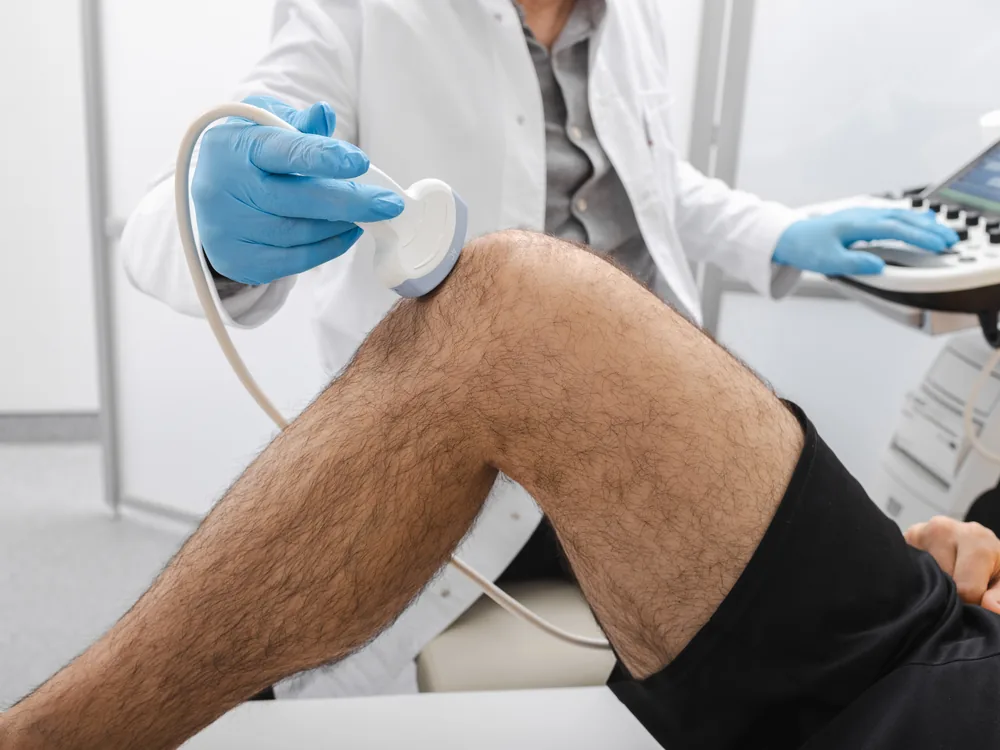
Ankle sprains and muscle strains are among the most common activity injuries. A sports medicine doctor grades the injury, rules out a fracture, and gives you a rehab plan so the joint does not keep rolling.
ACL and meniscus injuries
A pivot or awkward landing can tear the ACL or meniscus. Your doctor examines knee stability, orders an MRI when needed, and refers you to an orthopedic surgeon if reconstruction makes sense. Because joint injuries like ACL tears can raise later osteoarthritis risk, careful rehab matters even when surgery is not needed [1].
Tendinopathy and overuse injuries
Runner's knee, Achilles pain, tennis elbow, and rotator cuff irritation build up over weeks of repetition. Treatment centers on load management and specific exercises, sometimes with bracing or an injection.
Stress fractures
Small cracks in bone from repeated impact are common in runners and military recruits. Early diagnosis, often with an MRI, and a gradual return can prevent a full break. Repeated stress fractures may also prompt a look at nutrition, bone health, and menstrual history.
Concussion
Sports medicine physicians assess concussion, guide a step-by-step return to school, work, and sport, and decide when it is safe to play again. They also watch for symptoms that last longer than expected.
Staying active with arthritis or a chronic condition
Physical activity can help people with arthritis reduce joint pain and improve function [3]. A sports medicine doctor can design a plan that works around arthritis, asthma, diabetes, or heart conditions.
Know your options
Treatments a sports medicine doctor may recommend
Most sports injuries heal without surgery. Your doctor chooses from these options based on your injury, your goals, and your season.
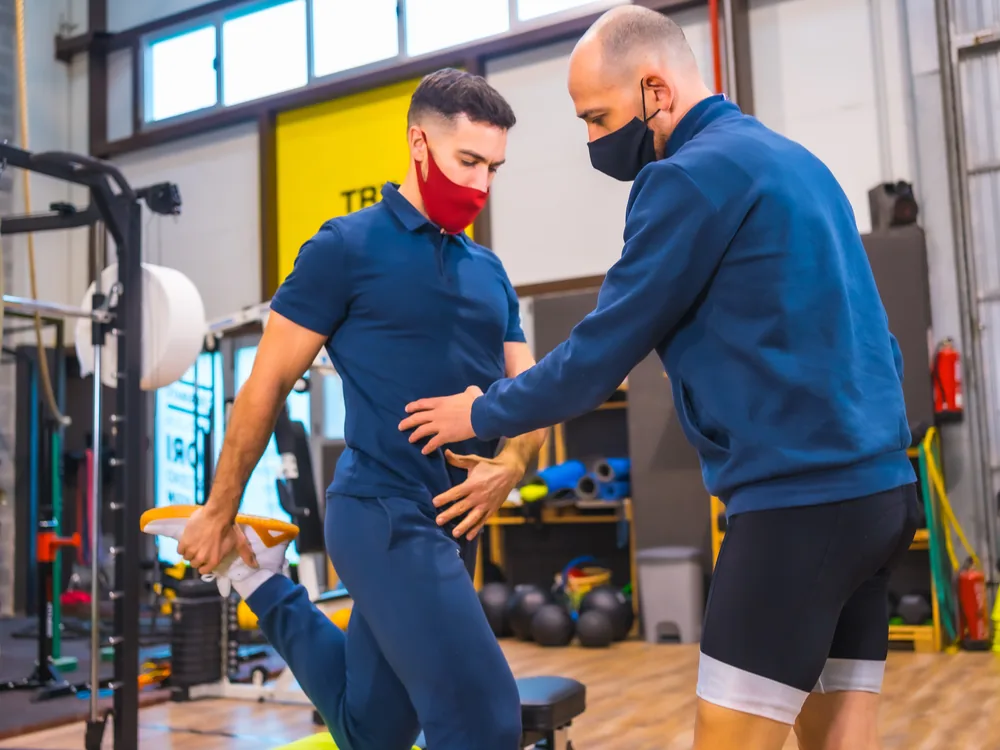
Relative rest and load management
Total rest is rarely the answer. Your doctor will tell you which activities to pause, which to modify, and how to build back up without a setback.
Guided rehabilitation
Strength, balance, and mobility work, often with a physical therapist or athletic trainer, is the core of recovery for most sprains, strains, and tendon problems.
Bracing, taping, and footwear
Short-term support can protect a healing ligament. Footwear or orthotic changes can help with some foot, shin, and knee problems.
Point-of-care ultrasound and imaging
Many sports medicine doctors use ultrasound in the office to look at tendons and guide injections. X-rays and MRI are ordered when the result would change your plan.
Injections
Corticosteroid injections can calm some inflamed joints and tendons in the short term. Platelet-rich plasma (PRP) is also offered, but a Cochrane review of 19 trials found insufficient evidence to support platelet-rich therapies for soft tissue injuries [4]. Ask your doctor what the evidence shows for your specific problem.
Referral to surgery when needed
Complete tendon ruptures, some ACL tears, unstable fractures, and repeat dislocations may need an orthopedic surgeon. Your sports medicine doctor can help you get there quickly.
Before your appointment
What to expect at your first sports medicine visit
Your first appointment is about finding out exactly what is injured and what you can safely do in the meantime.
How it happened.
Your doctor asks about the moment of injury, your training load, past injuries, and your goals, whether that is a marathon or playing with your kids.
Movement exam.
Expect strength, stability, and range-of-motion tests, and sometimes watching you squat, hop, or run. Wear athletic clothes.
Imaging when useful.
An in-office ultrasound or X-ray may be done. An MRI is ordered only if it will change your treatment.
A return-to-activity plan.
You leave with a diagnosis or working diagnosis, what to avoid, what you can keep doing, and when to check back.
Bring your usual athletic shoes, any brace or tape you use, prior imaging reports, and a list of medications and supplements. A training log or app history helps your doctor see if a recent jump in mileage or intensity played a part. For a concussion visit, write down symptoms day by day.
Make an informed choice
How to choose the right sports medicine doctor near you
Sports medicine physicians come from several training paths. Here is what to check.
- Confirm board certification. Sports medicine physicians are usually certified in family medicine, internal medicine, pediatrics, emergency medicine, or physical medicine and rehabilitation, with added sports medicine certification. Verify any physician free through the American Board of Medical Specialties [6].
- Decide whether you want a nonsurgical sports medicine physician or an orthopedic sports surgeon. Most new injuries start with the nonsurgical side.
- Look for experience with your sport or activity, and with your age group if the patient is a child or teen.
- Ask whether the doctor offers in-office ultrasound and works closely with physical therapists.
- Compare availability around your training or game schedule, including video follow-ups.
- Check the price before you book. If you are self-pay or uninsured, you have a right to a Good Faith Estimate of expected charges for scheduled care [7].
The evidence
The evidence: why sports injuries deserve real care
A quick, correct diagnosis protects your joints for decades. These numbers come from federal health agencies and a leading evidence review group.
-
33 million
U.S. adults have osteoarthritis
Repeated joint stress or injury is a known risk factor, and an ACL injury raises the chance of arthritis in that knee later [2].
-
5.4%
of adults ages 18 to 44 already have diagnosed arthritis
Arthritis is not only an older person's condition. Prevalence was measured during 2019 to 2021 [5].
-
150 minutes
of moderate aerobic activity a week is the adult target
Plus muscle strengthening at least 2 days a week, and even 5 or 10 minutes at a time counts [3].
-
19 trials
reviewed on platelet-rich therapies for soft tissue injuries
With 1,088 participants, the Cochrane review found insufficient evidence to support their use [4].
Go deeper
Getting back to play safely
The most common mistake after an injury is returning too fast. These are the principles sports medicine doctors use to bring you back.

Pain and swelling guide the pace
Mild discomfort during rehab can be acceptable, but pain that lingers into the next day or swelling that returns means the load was too high. Your doctor will set clear rules so you are not guessing.
Strength and balance come before speed
After a knee or ankle injury, you typically need to show near-equal strength and control between sides before cutting, jumping, or sprinting. Testing, not the calendar alone, guides the decision.
Concussion needs a stepwise return
Return to learning or work usually comes before return to sport, and each stage adds a bit more activity only if symptoms stay quiet. A young athlete should never go back to play the same day as a suspected concussion.
Prevent the next injury
Warm-up programs, strength training, gradual increases in mileage or intensity, and rest days lower the chance of a repeat. Ask your doctor for a prevention plan built for your sport.
Direct access compared
A quicker way to a sports injury specialist
| Consideration | Apptly Health | Traditional route |
|---|---|---|
| Referral | Not required | Often required by your plan |
| First step | Book the sports medicine doctor directly | Primary care visit, then a specialist |
| Price | Shown before you book | Known after the claim is processed |
| Choice of doctor | Any listed sports medicine physician | Limited to your network |
| Follow-ups | In person or by video for many check-ins | Mostly in person |
Related care
Related specialists you can book
Recovery from a sports injury sometimes involves other specialists. These Apptly Health doctors often work alongside sports medicine physicians.
Helpful answers
Sports medicine doctor FAQs
Do I need a referral to see a sports medicine doctor?
Not on Apptly Health. You can book a board-certified sports medicine physician directly. If you plan to use insurance for imaging or physical therapy elsewhere, check your plan, since many HMO plans require a referral for in-network specialist care. Booking directly can save a step when you want an injury checked quickly.
How much does a sports medicine visit cost without insurance?
Each sports medicine doctor sets their own fee, which is shown on their Apptly Health profile before you book. Imaging, injections, braces, and therapy are priced separately. As a self-pay patient, you are entitled to a Good Faith Estimate for scheduled services under the No Surprises Act, so ask for one before planned procedures.
Does Apptly Health bill my insurance?
No. Apptly Health is a direct-pay platform. You pay the sports medicine doctor's listed fee directly, and Apptly Health does not submit claims to your insurance. Some plans reimburse out-of-network care, so check with your insurer if you plan to request reimbursement.
Can I book a sports medicine doctor on Apptly Health if I have Medicare or Medicaid?
Check with the physician's office before you book. Medicare and Medicaid have rules that limit when an enrolled physician can accept direct payment for covered services, so whether a self-pay visit is possible depends on the physician and the service you need.
What is the difference between a sports medicine doctor and an orthopedic surgeon?
Many sports medicine physicians are trained in a primary care field or rehabilitation and treat injuries without surgery, using rehab, bracing, and injections. Orthopedic sports surgeons can do the same, and they also perform operations such as ACL reconstruction. For most new injuries, a nonsurgical sports medicine doctor is a sensible first stop.
Do I have to be an athlete to see a sports medicine doctor?
No. Sports medicine doctors treat anyone with an activity-related injury or a goal of staying active, including walkers, gardeners, people with physically demanding jobs, and older adults with arthritis. If movement hurts or you want to move more safely, you are a good fit.
Can I see a sports medicine doctor virtually?
Yes, for many visits. Video works well for reviewing imaging, checking rehab progress, adjusting training plans, and some concussion follow-ups. A new joint injury usually needs a hands-on exam, and your doctor will tell you if you should come in.
How do I check if a sports medicine doctor is board-certified?
Every sports medicine physician on Apptly Health is verified as board-certified before listing. You can also look up any physician for free through the American Board of Medical Specialties Certification Matters tool, which shows their primary board and any sports medicine certification.
What should I bring to my first sports medicine appointment?
Bring athletic clothes and shoes, any brace or tape you use, prior X-ray or MRI reports, a list of medications and supplements, and notes on how and when the injury happened. Recent training logs help your doctor spot changes in load.
When is a sports injury an emergency?
Call 911 or go to the ER after a head or neck injury with loss of consciousness, worsening headache, repeated vomiting, confusion, seizure, or arm or leg weakness. Also go for an obvious deformity, a bone through the skin, or a limb that turns cold, pale, or numb. Do not book an online visit for these.
Are PRP or stem cell injections a good option for my injury?
It depends, and the evidence is mixed. A Cochrane review found insufficient evidence to support platelet-rich therapies for soft tissue injuries. The FDA has approved stem cell products only for certain blood disorders, not for joint or sports injuries, and warns patients about clinics selling unapproved ones [8]. Ask your doctor about the evidence, cost, and alternatives first.
Can I use HSA or FSA funds for a sports medicine visit?
In many cases, yes. A physician visit to diagnose or treat an injury is generally a qualified medical expense, and some prescribed braces can qualify too. Check with your plan administrator before you book. Because the price is shown before you book, you can plan the payment in advance.
More questions about booking, payments, or your account? Visit the Apptly Health FAQ page.

For physicians
Are you a sports medicine doctor?
Connect with active patients who want fast answers about their injuries, set your own schedule and fees, and keep more of your day for patient care.
Apply to Join the NetworkMedical review and references
Medically reviewed by Dr. Paula Muto
Board-certified vascular surgeon and founder of Apptly Health
This page is for general information and does not replace a consultation with a qualified physician. If you think you are having a medical emergency, call 911. If you are in emotional crisis, call or text 988.