Bariatric Surgery · Direct-Pay Specialist Care
Find a Board-Certified Bariatric Surgeon Near You
Search weight loss surgeons in your city, compare profiles and consultation times, and see one clear price before you book. No referral needed, in person or by video.
Enter your ZIP code to see bariatric surgeons near you, with prices and open times.
- Board-certified surgeons
- No referral required
- Price shown before you book
- In-person and virtual consultations
The direct answer
What does a bariatric surgeon do?
A bariatric surgeon is a board-certified surgeon who performs operations to treat obesity and related metabolic disease, such as the gastric sleeve, gastric bypass, and revision surgery. They assess whether you qualify, explain the risks and benefits of each procedure, perform the operation, and follow you for years afterward. You can book a bariatric surgery consultation on Apptly Health without a referral.
Key facts at a glance
About 270,089 bariatric procedures were performed in the U.S. in 2023, and the sleeve gastrectomy was the most common [1].
Current ASMBS and IFSO guidelines recommend surgery for a BMI of 35 or higher, and say it should be considered at a BMI of 30 to 34.9 with metabolic disease [2].
Perioperative mortality after bariatric surgery is very low, ranging from 0.03% to 0.2% [2].
Apptly Health lets you book a board-certified bariatric surgeon directly, with the consultation price shown before you confirm.
Bariatric Surgeons you can book now
Bariatric Surgeons near 07102
Current provider listings are checked when you open this page.
- Checking current provider listings, visit fees and appointment options…
Physician listings, available appointments and visit fees are refreshed when you search. Availability and the final fee are confirmed on the booking page.
Provider availability, prices and appointment times are checked live. Confirm exact visit details when booking.
Why Apptly is different
Weight loss surgery consults without the gatekeeping
Deciding on surgery is a big step, and you deserve straight answers from a surgeon before you commit to a long program. Apptly Health lets you book a consultation with a board-certified bariatric surgeon directly, so you can learn whether you qualify and what each option really involves.
See how it works
- Physician-founded and physician-led marketplace
- Verify each listed bariatric surgeon's credentials and board certification
- Consultation price shown before you book
- Choose any listed bariatric surgeon, with no network limits
- No referral needed for a consultation
- Book online in minutes
- HIPAA-compliant platform
- Many surgeons offer video consultations for a first conversation
Know when to get care
When should you see a bariatric surgeon?
A consultation is not a commitment. It is the best way to find out whether surgery is a safe, sensible option for you, and how it compares with medicines and other treatments.
Signs surgery may be worth discussing
- You have obesity and have not reached or kept a healthy weight with lifestyle changes or medicines
- You have type 2 diabetes, high blood pressure, sleep apnea, or fatty liver that is getting harder to control
- Your weight limits your mobility, work, or ability to have a needed joint replacement
- You have regained significant weight after a previous weight loss operation
- You have severe reflux or other problems after a sleeve gastrectomy
- Your doctor has mentioned surgery and you want an expert opinion
Who may qualify under current guidelines
- Adults with a BMI of 35 or higher, regardless of other health conditions [2]
- Adults with a BMI of 30 to 34.9 who have metabolic disease such as type 2 diabetes [2]
- People of Asian descent, for whom guidelines use lower BMI thresholds [2]
- Older adults, since guidelines set no upper age limit, with a frailty assessment [2]
- Some adolescents with severe obesity, evaluated at specialized centers [2]
- Insurance plans may still use older criteria, such as a BMI of 40 or more, or 35 or more with a serious weight-related condition [3]
Important: If you have had bariatric surgery and develop worsening belly pain, a fast heartbeat, fever, shortness of breath, chest pain, vomiting that keeps you from drinking fluids, or a swollen, painful leg, call 911 or go to the nearest emergency room. These can be signs of a leak, blood clot, or blockage and need care right away.
Understand your options
How much does a bariatric surgeon cost without insurance?
The cost of a self-pay bariatric surgeon visit varies by physician, location, visit format, and the services you need. Apptly Health is designed to show the listed visit fee before you confirm a booking. Do not assume that tests, procedures, or follow-up services are included in that fee.
Questions to ask before booking
- Is this price for a new-patient visit or a follow-up?
- Is this fee for the consultation only? Surgery, anesthesia, and facility fees are usually billed separately.
- Will a virtual appointment be appropriate for my concern?
- Can the provider supply a Good Faith Estimate for scheduled self-pay care?
- Can I use eligible HSA or FSA funds for the visit?
For scheduled care, patients who are uninsured or choose not to use insurance generally have rights to a Good Faith Estimate under federal rules. Ask about additional services and expected charges in advance.
If you have Medicare or Medicaid: check with the physician's office before you book. Program rules limit when an enrolled physician can accept direct payment for covered services, so whether a self-pay visit is possible depends on the physician and the service.
Your path to care
How Apptly Health works
Getting expert advice on weight loss surgery should be easy.
-
Step 1
Search by city, ZIP code, or procedure.
Find board-certified bariatric surgeons near you or available for a video consultation.
-
Step 2
Compare surgeons.
Review credentials, procedures offered, languages, and open times.
-
Step 3
See the consultation price first.
The fee for your consultation is shown before you book.
-
Step 4
Book your consultation.
Appointment timing depends on real provider availability in your selected location.
Results, prices, and appointment availability depend on participating physicians in your area.
Expertise for your needs
Conditions bariatric surgery can help
Bariatric surgery is also called metabolic surgery because its benefits go far beyond the scale. These are the conditions surgeons most often discuss with patients.
Severe obesity
About 9.4% of U.S. adults have severe obesity [4]. For many of them, surgery leads to more lasting weight loss than other options. Studies report more than 60% loss of excess weight after surgery [2].
Type 2 diabetes
Blood sugar often improves within days to weeks after surgery, sometimes before much weight is lost. Some people are able to reduce or stop diabetes medicines, under the care of their physician.
Heart disease risk and long-term survival
Weight loss surgery can improve blood pressure and cholesterol. In a large study comparing more than 9,900 gastric bypass patients with similar people who did not have surgery, overall deaths were 40% lower after surgery [2].
Sleep apnea, joint pain, and fatty liver
Losing a large amount of weight can ease sleep apnea, take pressure off knees and hips, and reduce liver fat. Some patients need surgery to qualify for a joint replacement.
Cancer risk
Obesity raises the risk of several cancers. In a cohort of more than 30,000 patients, adults with obesity who had bariatric surgery had a 32% lower risk of developing cancer [2].
Weight regain or problems after earlier surgery
Revision operations made up 32,267 of the bariatric procedures done in 2023 [1]. A surgeon can evaluate regain, severe reflux, or other problems and explain whether medicine or a second operation makes more sense.
Know your options
Types of bariatric surgery
Each operation changes the stomach and digestion in a different way. Your surgeon will recommend a procedure based on your health, goals, and history.
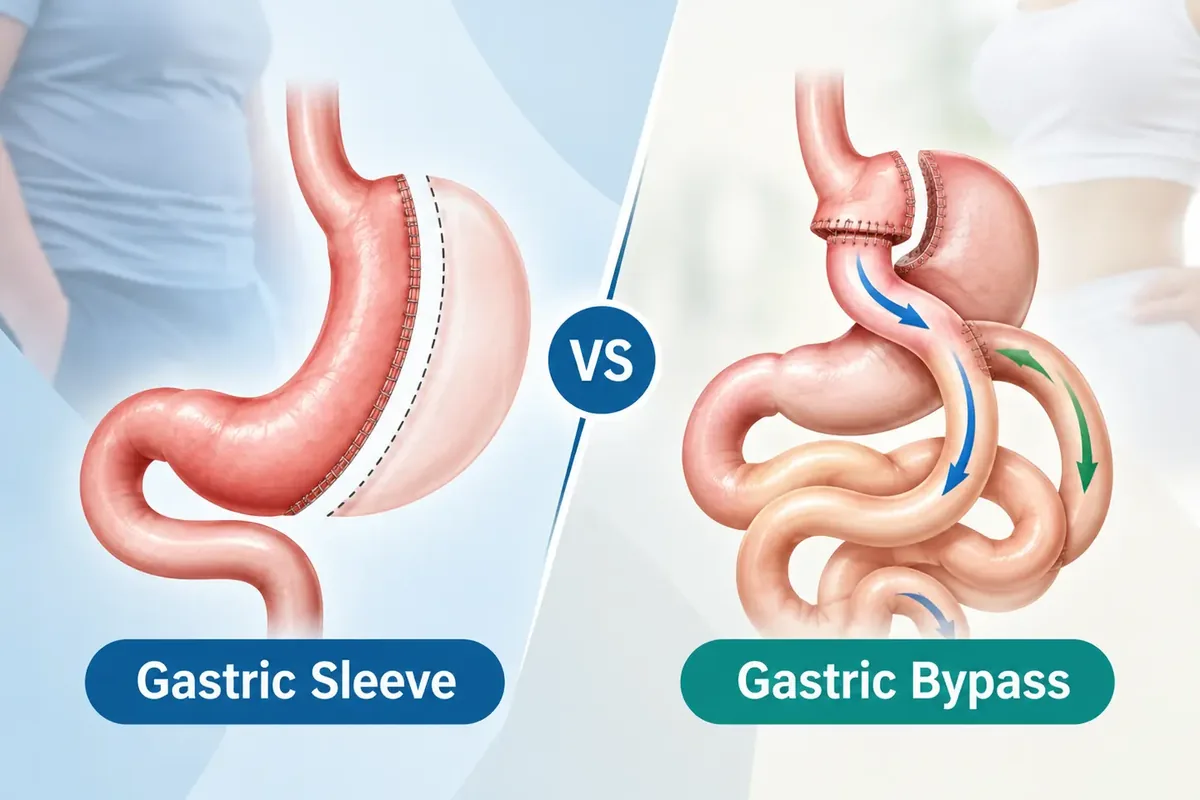
Sleeve gastrectomy (gastric sleeve)
The surgeon removes most of the stomach, leaving a narrow tube. It reduces how much you can eat and lowers hunger hormones. It was the most common operation in 2023, with 157,254 procedures [1]. It can worsen reflux in some people.
Roux-en-Y gastric bypass
A small stomach pouch is created and connected directly to the small intestine. It is often favored for people with severe reflux or type 2 diabetes. About 63,132 were performed in 2023 [1]. Lifelong vitamin supplements are needed.
Duodenal switch and SADI-S
These combine a sleeve with a larger intestinal bypass. They can lead to the most weight loss and are sometimes chosen for very high BMI, but they carry a higher risk of nutritional deficiencies and need close follow-up.
Endoscopic and less invasive options
Endoscopic sleeve gastroplasty and intragastric balloons are done through the mouth without incisions. They produce less weight loss than surgery and may suit people who do not qualify for, or do not want, a standard operation.
Revision surgery
An operation to change or correct an earlier weight loss procedure. Revision surgery is more complex than a first operation [2], so look for a surgeon with specific experience.
Before your appointment
What to expect at your bariatric surgery consultation
Your first visit is about information and fit. No one should rush you into a date on the operating schedule.
Your history and goals.
The surgeon reviews your weight history, past treatments, health conditions, previous surgeries, and what you hope surgery will change.
Exam and eligibility review.
Expect your height, weight, and BMI to be measured and a review of reflux, diabetes, sleep apnea, and other conditions that affect which procedure fits.
Procedure options explained.
The surgeon walks through the operations that suit you, their expected results, risks, and the lifelong changes each one requires.
Pre-surgery steps.
If you move forward, you will hear about the evaluation process, which often includes lab work, a nutrition visit, a mental health assessment, and sometimes an upper endoscopy, plus pricing for services discussed.
Bring a list of medicines and supplements, records of past weight loss efforts including any medicines, notes from previous surgeries (especially any earlier weight loss operation), and recent lab or sleep study results. Write down your questions about recovery time, diet after surgery, and time off work.
Make an informed choice
How to choose the right bariatric surgeon near you
Surgical experience and a strong follow-up program matter as much as the operation itself. Use this checklist.
- Confirm board certification in surgery. You can verify any surgeon for free through the American Board of Medical Specialties [5]. Every surgeon on Apptly Health is verified before listing.
- Ask how many of your chosen procedure the surgeon performs each year, and how often they do revisions.
- Ask whether the hospital where they operate is accredited for metabolic and bariatric surgery.
- Make sure the program includes dietitians, mental health support, and long-term follow-up, not just the operation.
- Look at the consultation price before you book. Self-pay patients also have a federal right to a Good Faith Estimate of expected charges for scheduled care, including surgery [6].
- Choose a surgeon who explains the downsides of each option as clearly as the benefits.
The evidence
The evidence: what the data says about weight loss surgery
Bariatric surgery is one of the most studied treatments for obesity. These figures come from the American Society for Metabolic and Bariatric Surgery and the CDC.
-
270,089
bariatric procedures performed in the U.S. in 2023
Sleeve gastrectomy accounted for 157,254 and gastric bypass for 63,132 [1].
-
0.03% to 0.2%
perioperative mortality
ASMBS and IFSO describe the risk of death around the time of surgery as very low [2].
-
40%
lower overall mortality after gastric bypass
In a study of more than 9,900 patients compared with people who did not have surgery [2].
-
9.4%
of U.S. adults have severe obesity
Based on national survey data from August 2021 to August 2023 [4].
Go deeper
Recovery and life after bariatric surgery
Surgery is a tool, and the months after it shape your results. This is a typical path, though your surgeon's plan comes first.
In the hospital
Most sleeve and bypass operations are done laparoscopically through small incisions. Many patients walk the same day and go home after a short hospital stay. Walking early helps prevent blood clots.
The first weeks
Your diet moves step by step from clear liquids to purees to soft foods. Sipping enough fluid and getting enough protein are the main goals. Many people return to desk work within a few weeks.
The first year
Weight loss is fastest in the first months. Regular visits check your progress, labs, and vitamins. This is the time to build exercise, sleep, and eating habits that last.
For life
Daily vitamins, yearly labs, and ongoing follow-up help prevent deficiencies and catch weight regain early. Pregnancy should usually be delayed during the rapid weight loss phase; talk with your surgeon if you plan to conceive.
Direct access compared
A simpler path to a bariatric consultation
| Consideration | Apptly Health | Traditional route |
|---|---|---|
| Referral | Not required | Often required before a surgical consult |
| Getting an appointment | Book a consultation online | Information sessions and waitlists |
| Consultation price | Shown before you book | Known after the claim is processed |
| Choice of surgeon | Any listed bariatric surgeon | Limited to your network |
| First conversation | In person or by video | Mostly in person |
Related care
Related specialists you can book
Weight loss surgery works best with a team. These Apptly Health specialists frequently work alongside bariatric surgeons.
Helpful answers
Frequently asked questions about seeing a bariatric surgeon
Do I need a referral to see a bariatric surgeon?
Not on Apptly Health. You can book a consultation with a board-certified bariatric surgeon directly, without a referral. If you hope to use insurance for the operation itself, check your plan early, because many plans require referrals, documented weight loss attempts, or other steps before approving surgery.
How much does a bariatric consultation cost without insurance?
Each surgeon sets their own consultation fee, and it is shown on their Apptly Health profile before you book. The cost of surgery itself depends on the procedure, the hospital, and anesthesia, and is quoted separately. As a self-pay patient, you have a right to a Good Faith Estimate for scheduled services under the No Surprises Act.
Does Apptly Health bill my insurance?
No. Apptly Health is a direct-pay platform. You pay the bariatric surgeon's listed fee directly, and Apptly Health does not submit claims to your insurance. Some plans reimburse out-of-network care, so check with your insurer if you plan to request reimbursement.
Can I book a bariatric surgeon on Apptly Health if I have Medicare or Medicaid?
Check with the physician's office before you book. Medicare and Medicaid have rules that limit when an enrolled physician can accept direct payment for covered services, so whether a self-pay visit is possible depends on the physician and the service you need.
Can I have a bariatric consultation virtually?
Yes. Many bariatric surgeons on Apptly Health offer video consultations, which work well for a first conversation about eligibility and options. Before surgery you will need in-person visits, an exam, and pre-operative testing, and your surgeon will explain what is needed.
Do I qualify for weight loss surgery?
Under current ASMBS and IFSO guidelines, surgery is recommended for adults with a BMI of 35 or higher and should be considered at a BMI of 30 to 34.9 with metabolic disease such as type 2 diabetes. Lower thresholds apply for people of Asian descent. A surgeon will review your full health picture.
What is the difference between a bariatric surgeon and a weight loss doctor?
A bariatric surgeon performs operations such as the gastric sleeve and gastric bypass and provides surgical follow-up. A weight loss doctor treats obesity without surgery, using lifestyle support and medicines. Many people see both, and some use medicines before or after surgery under their physicians' guidance.
Gastric sleeve or gastric bypass: which is better?
Neither is best for everyone. The sleeve is simpler and was the most common procedure in 2023, but it can worsen reflux. Gastric bypass is often favored for people with severe reflux or type 2 diabetes but requires lifelong vitamin supplements. Your surgeon will recommend the option that fits your health.
How do I know if a bariatric surgeon is board-certified?
Every surgeon on Apptly Health is verified as board-certified before their profile goes live. You can also check any surgeon for free with the American Board of Medical Specialties Certification Matters tool. It is also reasonable to ask whether their hospital is accredited for bariatric surgery.
What should I bring to my bariatric consultation?
Bring a list of medicines and supplements, records of past weight loss attempts, operative notes from any earlier stomach or weight loss surgery, and recent lab or sleep study results. A list of questions about recovery, diet, and time off work helps you get the most from the visit.
Is bariatric surgery safe?
Bariatric surgery is considered safe for most eligible patients, with perioperative mortality ranging from 0.03% to 0.2% according to ASMBS and IFSO. Like any operation, it carries risks such as bleeding, leaks, blood clots, and nutritional deficiencies. Your surgeon will explain your personal risk.
Can I use HSA or FSA funds for bariatric surgery?
In many cases, yes. Surgical consultations and weight loss surgery to treat a diagnosed medical condition are generally qualified medical expenses. Some related costs, such as nutrition visits ordered by your surgeon, may also qualify. Confirm with your plan administrator before you book, and keep receipts for every visit and procedure.
More questions about booking, payments, or your account? Visit the Apptly Health FAQ page.

For physicians
Are you a bariatric surgeon?
Reach direct-pay patients who are actively researching weight loss surgery. Set your own consultation schedule and price, offer video first visits, and spend less time on administration.
Apply to Join the NetworkMedical review and references
Medically reviewed by Dr. Paula Muto
Board-certified vascular surgeon and founder of Apptly Health
This page is for general information and does not replace a consultation with a qualified physician. If you think you are having a medical emergency, call 911. If you are in emotional crisis, call or text 988.