Infectious Disease · Direct-Pay Specialist Care
Find a Board-Certified Infectious Disease Doctor Near You
Search infection specialists in your area, compare profiles and open times, and see the price before you book. No referral needed, and many visits can happen by video.
Enter your ZIP code to see infectious disease doctors near you, with prices and open times.
- Board-certified infection specialists
- No referral required
- Price shown before you book
- In-person and virtual visits
The direct answer
What does an infectious disease doctor do?
An infectious disease doctor is an internist with at least two extra years of fellowship training in infections caused by bacteria, viruses, fungi, and parasites. They sort out fevers without a clear cause, infections that keep returning or resist antibiotics, Lyme and other tick-borne illness, HIV and hepatitis, and travel-related disease. You can book one on Apptly Health without a referral.
Key facts at a glance
More than 2.8 million antibiotic-resistant infections occur in the United States each year, and more than 35,000 people die as a result [1].
About 1.7 million U.S. adults develop sepsis each year, and at least 350,000 of them die during their hospital stay or are discharged to hospice [2].
An estimated 476,000 Americans are diagnosed and treated for Lyme disease each year [3].
Apptly Health lets you book a board-certified infectious disease doctor directly, with the price shown before you confirm.
Infectious Disease Doctors you can book now
Infectious Disease Doctors near 07102
Current provider listings are checked when you open this page.
- Checking current provider listings, visit fees and appointment options…
Physician listings, available appointments and visit fees are refreshed when you search. Availability and the final fee are confirmed on the booking page.
Provider availability, prices and appointment times are checked live. Confirm exact visit details when booking.
Why Apptly is different
Infection care without the gatekeeping
When an infection will not clear, or a test comes back positive and nobody can explain what it means, waiting weeks for a referral only adds worry. Apptly Health connects you directly with board-certified infectious disease doctors who publish their own schedules and prices.
See how it works
- Physician-founded and physician-led marketplace
- Verify each listed infectious disease doctor's credentials and board certification
- The visit price is shown before you book
- Choose any listed infectious disease doctor, with no network limits
- No referral needed from another doctor
- Book online in minutes, day or night
- HIPAA-compliant platform for private conversations about sensitive results
- Many infection specialists offer virtual visits for follow-ups and test reviews
Know when to get care
When should you see an infectious disease doctor?
Primary care and urgent care handle most infections well. An infection specialist earns their place when the usual approach has not worked, the diagnosis is unclear, or the germ needs expert management.
Signs an infection needs a specialist
- A fever that has lasted weeks with no clear cause after basic testing
- Urinary, skin, or sinus infections that return again and again
- An infection that did not improve after one or more rounds of antibiotics
- A culture result showing a resistant germ such as MRSA or an ESBL organism
- A bone, joint, or implant infection, or a wound that will not heal
- Lingering symptoms after a tick bite, or a rash that spreads in a ring
Situations where an infection specialist adds real value
- A new positive test for HIV, hepatitis B, hepatitis C, or syphilis
- Wanting to start or review HIV prevention with PrEP
- A weakened immune system from chemotherapy, a transplant, or biologic drugs
- Upcoming travel to areas with malaria, yellow fever, or typhoid risk
- Getting sick within weeks of returning from international travel
- Needing IV antibiotics at home after a hospital stay
Important: Call 911 or go to the nearest emergency room if you or someone you care for has an infection along with confusion, very fast breathing, a racing heart, extreme pain, clammy or mottled skin, or is hard to wake. These can be signs of sepsis, a life-threatening reaction to infection that needs emergency care right away, not an online booking.
Understand your options
How much does an infectious disease doctor cost without insurance?
The cost of a self-pay infectious disease doctor visit varies by physician, location, visit format, and the services you need. Apptly Health is designed to show the listed visit fee before you confirm a booking. Do not assume that tests, procedures, or follow-up services are included in that fee.
Questions to ask before booking
- Is this price for a new-patient visit or a follow-up?
- Does the visit include lab tests or travel vaccines, or are those billed separately?
- Will a virtual appointment be appropriate for my concern?
- Can the provider supply a Good Faith Estimate for scheduled self-pay care?
- Can I use eligible HSA or FSA funds for the visit?
For scheduled care, patients who are uninsured or choose not to use insurance generally have rights to a Good Faith Estimate under federal rules. Ask about additional services and expected charges in advance.
If you have Medicare or Medicaid: check with the physician's office before you book. Program rules limit when an enrolled physician can accept direct payment for covered services, so whether a self-pay visit is possible depends on the physician and the service.
Your path to care
How Apptly Health works
Reaching an infection specialist should take minutes.
-
Step 1
Search by city, ZIP code, or concern.
Find board-certified infectious disease doctors near you or available by video.
-
Step 2
Compare specialists.
Review credentials, clinical interests, languages, and open appointment times.
-
Step 3
See the price first.
The visit fee is shown up front, with no claim forms to file afterward.
-
Step 4
Book and be seen.
Appointment timing depends on real provider availability in your selected location.
Results, prices, and appointment availability depend on participating physicians in your area.
Expertise for your needs
Conditions an infectious disease doctor treats
Infectious disease specialists cover every organ system, because germs do not stay in one place. These are some of the most common reasons people book a visit.
Recurrent and resistant infections
Antibiotic resistance makes ordinary infections harder to treat, with more than 2.8 million resistant infections in the U.S. each year [1]. An infection specialist reviews your cultures and past treatments, picks the right drug for the specific germ, and looks for hidden reasons an infection keeps coming back.
Lyme disease and tick-borne illness
More than 80,000 Lyme disease cases are reported to the CDC each year, and the true number treated is far higher [3]. A specialist can confirm or rule out Lyme, look for other tick-borne infections, and give an honest view of lingering symptoms after treatment.
HIV care and prevention
About 1.2 million people in the U.S. live with HIV, and about 13% do not know it [4]. Infectious disease doctors manage HIV as a long-term condition, monitor treatment, and prescribe PrEP for people who want to lower their risk of getting HIV.
Viral hepatitis
Hepatitis B and C often cause no symptoms for years while they damage the liver. An infection specialist explains what your results mean, checks liver health, and talks through treatment options, which for hepatitis C can often clear the virus.
Bone, joint, and implant infections
Infections in bone, a replaced joint, a heart valve, or other hardware usually need weeks of targeted antibiotics. Infection specialists work closely with surgeons to plan the right drug, the right length of treatment, and safe monitoring.
Fever of unknown origin
A fever that lingers for weeks without an answer is one of the classic reasons to see an infection specialist. They take a detailed history of travel, animals, food, and exposures, then order focused tests rather than a long list of guesses.
Know your options
Tests and treatments an infection specialist may use
Good infection care starts with finding the exact germ, then choosing the narrowest treatment that will work. Your doctor decides which of these fit your situation.

Cultures and targeted lab testing
Blood, urine, wound, or tissue cultures grow the germ so the lab can test which antibiotics work against it. Specialists may also order antibody tests, PCR tests, or viral load testing to confirm a diagnosis and track treatment.
Antibiotic stewardship
Using the right antibiotic, at the right dose, for the right length of time protects you from side effects and resistance. An infection specialist may stop drugs you do not need just as often as they start new ones.
Outpatient IV antibiotic therapy
Some serious infections need intravenous antibiotics for weeks. Many patients can receive them at home or at an infusion center, with the infection specialist overseeing blood work and safety checks along the way.
Before your appointment
What to expect at your first infectious disease visit
Infection specialists are detectives. Your first visit is mostly a careful conversation, followed by testing that targets the most likely causes.
A detailed exposure history.
Expect questions about travel, pets and other animals, hobbies, work, food, sexual history, and recent illness in the people around you. Honest answers stay private and help narrow the list fast.
Review of past treatments.
Your doctor goes through every antibiotic or antiviral you have taken, how long you took it, and what happened, along with any culture results.
Focused exam and testing.
A physical exam looks at skin, lymph nodes, joints, and any wound or device site. Blood work, cultures, or imaging may follow.
A clear treatment plan.
You leave with a working diagnosis, a treatment or testing plan, and the price of any follow-up visit before you book it.
Bring a list of every antibiotic you have taken in the past year, copies of culture reports, lab results, and imaging, a list of your current medicines and allergies, and dates of any recent travel or tick bites. Photos of a rash taken over several days can help a great deal, especially for a virtual visit.
Make an informed choice
How to choose the right infectious disease doctor near you
The right specialist has the training for your problem, time to listen, and a plan that fits your life. Use this checklist when you compare profiles.
- Confirm board certification. Infectious disease is a subspecialty of internal medicine certified by the American Board of Internal Medicine, which requires internal medicine certification plus at least 24 months of fellowship training [5]. You can verify any physician for free through the American Board of Medical Specialties [7]. Every specialist on Apptly Health is verified before listing.
- Match the doctor's focus to your need, such as HIV and hepatitis care, travel medicine, Lyme and tick-borne illness, or bone and implant infections.
- Ask whether they can coordinate home or infusion center IV antibiotics if you might need them.
- Check whether virtual visits are offered for test reviews and follow-ups.
- Look at the visit price before you book. Self-pay patients also have a federal right to a Good Faith Estimate of expected charges for scheduled care [8].
- Read the profile for languages spoken and approach to sensitive topics, so you feel comfortable sharing your full history.
The evidence
The evidence: why expert infection care matters
Infections are common, and when they are missed or poorly treated they can become serious quickly. These figures come from the CDC and HIV.gov.
-
2.8 million
antibiotic-resistant infections happen in the U.S. each year
More than 35,000 people die from them each year, based on the CDC's 2019 threats report [1].
-
1.7 million
U.S. adults develop sepsis each year
At least 350,000 adults with sepsis die during their hospital stay or are discharged to hospice [2].
-
476,000
Americans are diagnosed and treated for Lyme disease each year
This estimate comes from insurance claims; more than 80,000 cases are formally reported to the CDC each year [3].
-
13%
of people with HIV in the U.S. do not know they have it
About 1.2 million people age 13 and older were living with HIV at the end of 2022 [4].
Go deeper
Travel medicine: planning ahead and coming home well
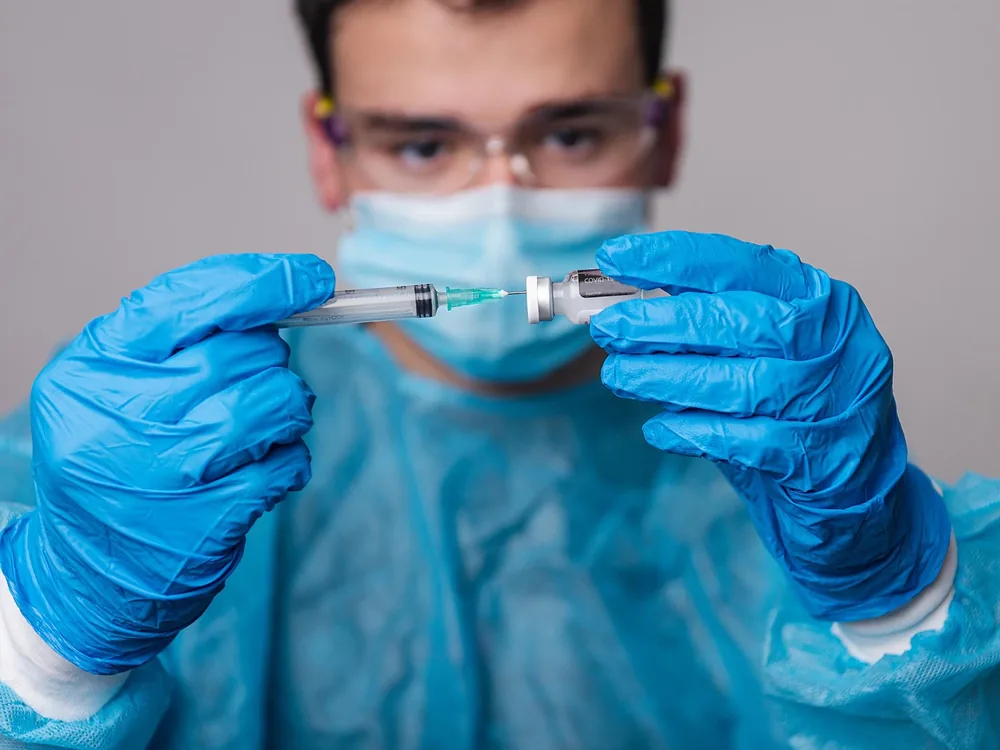
Many infectious disease doctors also practice travel medicine. The CDC recommends a pre-travel consultation for all international travelers, and says it matters most for people with complicated health histories, pregnant travelers, and anyone with long or complex trips [6].
Before you go
Book early enough to finish any vaccine series before you leave, since some vaccines need more than one dose [6]. Your doctor reviews your health history and itinerary, then advises on vaccines such as typhoid or yellow fever, malaria prevention, and safe food and water habits.
Last-minute trips
Even if you leave in a few days, a visit is still worth it. Faster vaccine schedules exist for some vaccines, and you can still get malaria prevention, a self-treatment plan for traveler's diarrhea, and advice on bites and food safety [6].
Visiting friends and relatives
People traveling home to see family are often at higher risk of malaria than tourists, according to the CDC [6]. Staying in homes and eating local food are part of the joy of the trip, so a plan that fits how you will really travel matters.
After you return
Fever after travel to a malaria area needs prompt medical attention. Diarrhea, a rash, or a cough that starts in the weeks after your trip is also worth a visit. Tell every doctor where you went and when.
Direct access compared
A faster path to an infection specialist
| Consideration | Apptly Health | Traditional route |
|---|---|---|
| Referral | Not required | Often required by your plan |
| Who you can see | Any listed infectious disease doctor | Specialists in your network |
| Price | Shown before you book | Known after the claim is processed |
| Scheduling | Online booking in minutes | Phone calls and waitlists |
| Visit type | In person or virtual | Mostly in person |
Related care
Related specialists you can book
Infections often overlap with other conditions. These Apptly Health specialists frequently work alongside infectious disease doctors.
Helpful answers
Infectious disease questions, answered
Do I need a referral to see an infectious disease doctor?
Not on Apptly Health. You can book a board-certified infectious disease doctor directly without a referral. If you plan to use insurance somewhere else, check your plan first, because many HMO plans require a referral before they will cover a specialist visit.
How much does an infectious disease visit cost without insurance?
Each specialist sets their own price and shows it on their Apptly Health profile before you book, so you know the visit fee up front. Lab tests, cultures, imaging, and medicines are priced separately. As a self-pay patient you can also ask for a Good Faith Estimate of expected charges for scheduled care under the No Surprises Act.
Does Apptly Health bill my insurance?
No. Apptly Health is a direct-pay platform. You pay the infectious disease doctor's listed fee directly, and Apptly Health does not submit claims to your insurance. Some plans reimburse out-of-network care, so check with your insurer if you plan to request reimbursement.
Can I book an infectious disease doctor on Apptly Health if I have Medicare or Medicaid?
Check with the physician's office before you book. Medicare and Medicaid have rules that limit when an enrolled physician can accept direct payment for covered services, so whether a self-pay visit is possible depends on the physician and the service you need.
Can I see an infectious disease doctor virtually?
Yes. Many infection specialists on Apptly Health offer video visits, which work well for reviewing test results, travel medicine planning, HIV and PrEP follow-ups, and checking progress on treatment. A new wound, joint, or skin problem may need an in-person exam, and your doctor will tell you if so.
What is the difference between an infectious disease doctor and my primary care doctor or urgent care?
Primary care and urgent care handle most everyday infections well, such as a simple sinus or bladder infection. An infectious disease doctor has extra fellowship training for infections that keep coming back, resist antibiotics, involve bone or implants, or have no clear cause. Many people see both, with the specialist advising on the hard parts.
How do I know if an infectious disease doctor is board-certified?
Every infectious disease doctor on Apptly Health is verified as board-certified before their profile goes live. You can also confirm any physician's certification for free using the American Board of Medical Specialties Certification Matters tool. Look for certification in infectious disease from the American Board of Internal Medicine.
What should I bring to my first infectious disease appointment?
Bring a list of antibiotics or antivirals you have taken in the past year with dates, culture and lab reports, imaging results, your current medicines and allergies, and details of recent travel, animal contact, or tick bites. Dated photos of a rash or wound are very helpful.
Can I use HSA or FSA funds for an infectious disease visit?
In many cases, yes. Visits to a physician for the diagnosis or treatment of an illness are generally qualified medical expenses, and travel vaccines may also qualify. Confirm the details with your plan administrator before you book.
Do infectious disease doctors treat long-lasting symptoms after Lyme disease?
Yes. An infection specialist can review how your Lyme disease was diagnosed and treated, check for other tick-borne infections, look for other causes of ongoing fatigue or pain, and give you an honest, evidence-based view of what more antibiotics can and cannot do.
When should I book a travel medicine visit?
As early as you can after you plan an international trip, so there is time to finish any vaccine series before you leave. If your trip is soon, book anyway. Faster schedules exist for some vaccines, and you can still get malaria prevention and a plan for common travel illnesses.
When is an infection an emergency?
Call 911 or go to the emergency room if an infection comes with confusion, fast breathing, a racing heart, severe pain, cold or mottled skin, or trouble staying awake. These can be signs of sepsis. A stiff neck with fever and a severe headache, or fever after travel to a malaria area, also needs urgent care.
More questions about booking, payments, or your account? Visit the Apptly Health FAQ page.

For physicians
Are you an infectious disease doctor?
Reach direct-pay patients who are actively looking for infection and travel medicine care, set your own schedule and price, and spend less time on paperwork.
Apply to Join the NetworkMedical review and references
Medically reviewed by Dr. Paula Muto
Board-certified vascular surgeon and founder of Apptly Health
This page is for general information and does not replace a consultation with a qualified physician. If you think you are having a medical emergency, call 911. If you are in emotional crisis, call or text 988.