Pulmonology · Direct-Pay Specialist Care
Find a Board-Certified Pulmonologist Near You
Short of breath, coughing for weeks, or holding a CT report that mentions a nodule? Compare lung doctors near you, see the price first, and book without a referral.
Enter your ZIP code to see pulmonologists near you, with prices and open times.
- Board-certified pulmonologists
- No referral required
- Price shown before you book
- In-person and virtual visits
The direct answer
What does a pulmonologist do?
A pulmonologist is a physician who diagnoses and treats diseases of the lungs and airways, including asthma, COPD, lung nodules, interstitial lung disease, and chronic cough. Pulmonologists complete internal medicine residency and then fellowship training in pulmonary disease, and they use breathing tests, imaging, and bronchoscopy to find the cause of your symptoms and manage long-term lung conditions.
Key facts at a glance
About 27.8 million people in the U.S. have asthma, including 23 million adults, based on 2023 national survey data [1].
In 2023, 3.8% of U.S. adults had diagnosed COPD, rising to 10.5% of adults age 75 and older [2].
Only 18.2% of Americans at high risk for lung cancer were screened, according to the American Lung Association [4].
Apptly Health lets you book a board-certified pulmonologist directly, with the price shown before you confirm.
Pulmonologists you can book now
Pulmonologists near 07102
Current provider listings are checked when you open this page.
- Checking current provider listings, visit fees and appointment options…
Physician listings, available appointments and visit fees are refreshed when you search. Availability and the final fee are confirmed on the booking page.
Provider availability, prices and appointment times are checked live. Confirm exact visit details when booking.
Why Apptly is different
Lung care without the gatekeeping
When every flight of stairs leaves you winded, you should not have to wait on paperwork to see a lung specialist. Apptly Health connects you directly with board-certified pulmonologists who set their own hours and post their own prices.
See how it works- Physician-founded and physician-led marketplace
- Verify each listed pulmonologist's credentials and board certification
- See the visit price on the profile before you book
- Choose any listed pulmonologist, with no network limits
- No referral needed to book
- Online booking in minutes
- HIPAA-compliant platform
- Many pulmonologists offer video visits for follow-ups and test reviews
Know when to get care
When should you see a pulmonologist?
Your primary care doctor can handle a simple chest cold. A lung specialist is the right next step when breathing problems linger, keep coming back, or show up on a test.
Symptoms that point to a lung specialist
- A cough that will not go away weeks after a cold, or one that keeps returning
- Shortness of breath with everyday activity that is new or getting worse
- Wheezing or chest tightness, especially at night or with exercise
- Coughing up mucus most days, or any blood in what you cough up
- Frequent chest infections or pneumonia more than once
- Low oxygen readings on a home pulse oximeter or at a doctor's office
Situations that call for a lung evaluation
- Asthma that still limits you, or needs oral steroids more than once a year
- A current or past smoking history, even without symptoms
- A lung nodule or other abnormal finding on a chest X-ray or CT scan
- Work exposure to dust, asbestos, silica, mold, or chemical fumes
- Autoimmune disease such as rheumatoid arthritis or scleroderma, which can affect the lungs
- Breathing that has not recovered after a serious respiratory infection
Important: Call 911 now for severe shortness of breath, lips or fingertips turning blue or gray, an asthma attack that does not ease with your rescue inhaler, coughing up more than a small amount of blood, or sudden sharp chest pain with breathlessness. These need emergency care, not an online booking.
Understand your options
How much does a pulmonologist cost without insurance?
The cost of a self-pay pulmonologist visit varies by physician, location, visit format, and the services you need. Apptly Health is designed to show the listed visit fee before you confirm a booking. Do not assume that tests, procedures, or follow-up services are included in that fee.
Questions to ask before booking
- Is this price for a new-patient visit or a follow-up?
- Does the visit include breathing tests such as spirometry, or are those billed separately?
- Will a virtual appointment be appropriate for my concern?
- Can the provider supply a Good Faith Estimate for scheduled self-pay care?
- Can I use eligible HSA or FSA funds for the visit?
For scheduled care, patients who are uninsured or choose not to use insurance generally have rights to a Good Faith Estimate under federal rules. Ask about additional services and expected charges in advance.
If you have Medicare or Medicaid: check with the physician's office before you book. Program rules limit when an enrolled physician can accept direct payment for covered services, so whether a self-pay visit is possible depends on the physician and the service.
Your path to care
How Apptly Health works
Seeing a lung specialist should be the easy part.
-
Step 1
Search by city, ZIP code, or symptom.
Find board-certified pulmonologists near you or available by video.
-
Step 2
Compare lung doctors.
Review credentials, clinical focus, languages, and open times.
-
Step 3
See the price first.
The visit fee is listed before you confirm.
-
Step 4
Book and be seen.
Appointment timing depends on real provider availability in your selected location.
Results, prices, and appointment availability depend on participating physicians in your area.
Expertise for your needs
Lung conditions a pulmonologist treats
Pulmonology covers the airways, the lung tissue, and the blood vessels of the lungs. These are the problems lung doctors on Apptly Health see most.
Asthma
Asthma narrows and inflames the airways, causing wheeze, cough, and tightness. About 8.9% of U.S. adults have it [1]. A pulmonologist confirms the diagnosis with breathing tests, sorts out triggers, and steps treatment up or down so you have fewer flares.
COPD and emphysema
Chronic obstructive pulmonary disease slowly limits airflow, most often after years of smoking or other exposures. It becomes much more common with age, reaching 10.5% of adults 75 and older [2]. Inhalers, pulmonary rehab, vaccines, and oxygen when needed can keep you active longer.
Lung nodules
A small spot on a CT scan is common, and most are not cancer. A pulmonologist weighs size, shape, growth, and your risk to decide between watching with follow-up scans, further imaging, or a biopsy.
Interstitial lung disease and pulmonary fibrosis
These conditions inflame or scar the lung tissue itself, causing a dry cough and breathlessness that slowly builds. Idiopathic pulmonary fibrosis is the most common type [5]. Early diagnosis matters because some forms respond to treatment and others benefit from medicines that slow scarring.
Chronic cough
A cough that lingers after other causes are treated often traces back to asthma, postnasal drip, reflux, or a medicine side effect. A lung doctor works through each possibility in order instead of cycling through cough syrups.
Bronchiectasis, sarcoidosis, and pulmonary hypertension
Widened airways that trap mucus, clusters of inflammatory cells in the lungs, and high pressure in the lung arteries all need specialist testing and long-term follow-up, often with other specialists involved.
Know your options
Lung tests and procedures, explained
Your pulmonologist chooses tests based on your symptoms and history. Here is what each one involves so you know what you are agreeing to.

Spirometry and pulmonary function tests
You breathe hard into a mouthpiece to measure how much air your lungs hold and how fast you can move it. These tests diagnose asthma and COPD and track change over time. They take less than an hour and do not hurt.
Chest imaging
A chest X-ray is a quick first look. A CT scan shows far more detail and is used for nodules, scarring, and bronchiectasis. Low-dose CT is used for lung cancer screening in people who qualify [3].
Walk test and oxygen check
A six-minute walk with a finger sensor shows how your oxygen holds up with activity and whether you might benefit from supplemental oxygen.
Bronchoscopy
A thin, flexible camera passes through the mouth or nose into the airways under sedation to look inside, collect samples, or biopsy a spot. Newer navigation tools can reach small nodules deep in the lung. This is done in a hospital or procedure center.
Pulmonary rehabilitation
A supervised program of exercise, breathing techniques, and education for people with COPD and other chronic lung disease. It is one of the most useful things you can do to feel stronger day to day.
Before your appointment
What to expect at your first pulmonology visit
Knowing how the visit runs makes it easier to book and easier to get answers in one trip.
Your breathing history.
Your pulmonologist asks about symptoms, triggers, infections, smoking and vaping history, jobs, hobbies, pets, and family history of lung disease.
Exam and oxygen check.
Expect a listen to your lungs and heart, a look for clubbing or swelling, and a fingertip oxygen reading at rest and sometimes while walking.
Breathing tests.
Spirometry is often done the same day. Your doctor may also order full pulmonary function testing, a CT scan, or blood work.
A clear plan.
You leave with a working diagnosis, any inhaler technique coaching you need, next steps, and pricing for follow-up testing.
Bring all your inhalers, not just a list, so your doctor can check your technique. Also bring medication lists, past chest X-ray or CT reports and image discs, prior breathing test results, and home oxygen readings if you track them. If breathing tests are planned the same day, ask the office whether to hold any inhalers beforehand, and never skip a rescue inhaler you need.
Make an informed choice
How to choose the right pulmonologist near you
The right lung doctor has the training for your specific problem and a practice set up for the testing you will need. Use this checklist.
- Confirm board certification in pulmonary disease. Check any physician for free through the American Board of Medical Specialties [6]. Every pulmonologist on Apptly Health is verified before listing.
- Match their focus to your need: asthma and COPD, nodules and lung cancer evaluation, interstitial lung disease, or pulmonary hypertension.
- Ask where breathing tests and CT scans are done and whether results come back to the same doctor.
- If you may need bronchoscopy, ask about hospital affiliations and whether they perform it themselves.
- For COPD, ask whether they can refer you to pulmonary rehab close to home.
- Check the price before you book. Self-pay patients have a federal right to a Good Faith Estimate for scheduled care [7].
- Look for video follow-ups, which help when breathing makes travel hard.
The evidence
The evidence: why lung care should not wait
Lung disease is widespread, often underdiagnosed, and easier to manage when caught early. These figures come from federal health agencies and national health organizations.
-
27.8 million
people in the U.S. have asthma
That is 8.4% of the population in 2023, including about 4.8 million children [1].
-
10.5%
of adults 75 and older have diagnosed COPD
Overall, 3.8% of U.S. adults had diagnosed COPD in 2023, and women were more likely than men to have it [2].
-
18.2%
of high-risk Americans were screened for lung cancer
Low screening rates mean many lung cancers are found later than they could be [4].
-
3,624
people died from asthma in the U.S. in 2023
Most asthma deaths occurred in adults, a reminder that well-controlled asthma is worth the effort [1].
Go deeper
Found a lung nodule or thinking about screening?
Two of the most common reasons people search for a lung doctor are a scan that mentions a nodule and a question about lung cancer screening. Here is how a pulmonologist approaches each.
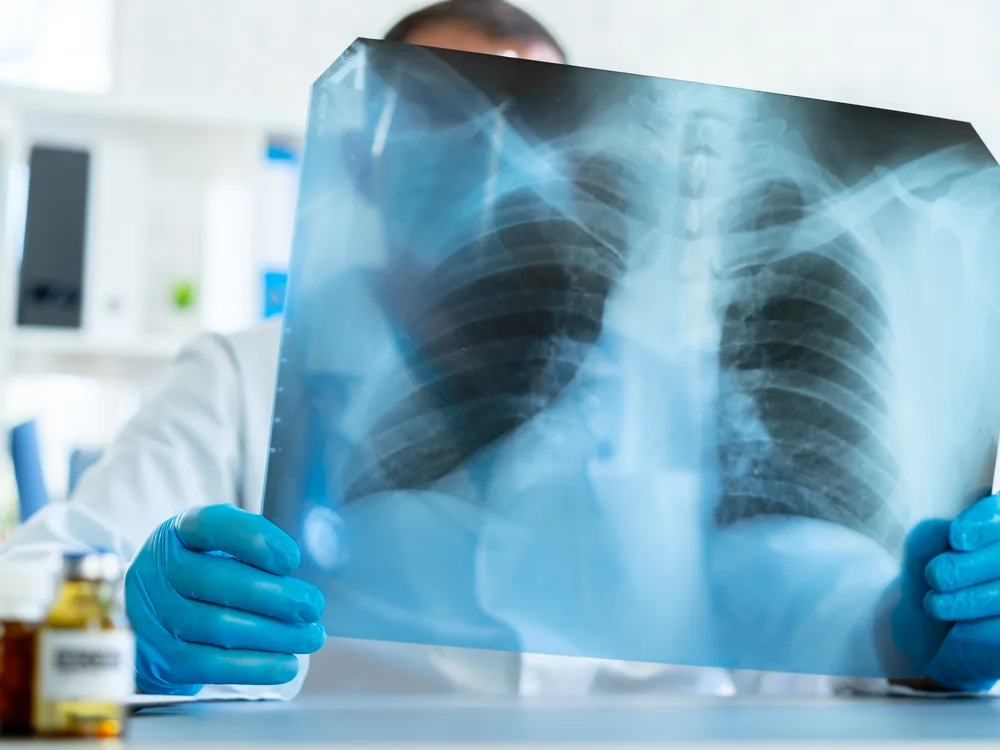
Who should get lung cancer screening
The U.S. Preventive Services Task Force recommends a yearly low-dose CT scan for adults ages 50 to 80 with a 20 pack-year smoking history who still smoke or quit within the past 15 years [3]. A pulmonologist can help you work out your pack-years and decide whether screening is right for you.
If your scan shows a nodule
Most nodules are scars or old infections. Your lung doctor looks at size, edges, density, and your personal risk, then compares with older scans if any exist. Many small nodules only need a repeat CT months later to confirm they are stable.
When a biopsy or surgeon makes sense
A growing or suspicious nodule may need a PET scan, a bronchoscopy biopsy, or a needle biopsy. If surgery is likely, your pulmonologist works with a thoracic surgeon, so you get both views before deciding.
Quitting smoking still helps
Stopping at any age slows lung function loss and lowers cancer risk. Ask your pulmonologist about medicines and counseling that make quitting more likely to stick.
Direct access compared
A faster way to a lung specialist
| Consideration | Apptly Health | Traditional route |
|---|---|---|
| Referral | Not required | Often required by your plan |
| Getting started | Book a pulmonologist directly | Primary care visit, referral, then a wait |
| Price | Shown before you book | Known after the claim is processed |
| Choice of lung doctor | Any listed pulmonologist | Limited to your network |
| Follow-up visits | In person or virtual, depending on the specialist | Mostly in person |
Related care
Related specialists you can book
Breathing problems often overlap with sleep, allergies, and surgery. These Apptly Health specialists frequently work alongside pulmonologists.
Helpful answers
Frequently asked questions about seeing a pulmonologist
Do I need a referral to see a pulmonologist?
Not on Apptly Health. You can book a board-certified pulmonologist directly without first seeing a primary care doctor. If you plan to use insurance for testing or care elsewhere, check your plan, because many HMO plans require a referral for in-network specialist visits.
How much does a pulmonologist visit cost without insurance?
Each pulmonologist sets their own visit fee, and it is shown on their Apptly Health profile before you book. Breathing tests, CT scans, and bronchoscopy are priced separately. As a self-pay patient, you can request a Good Faith Estimate of expected charges for scheduled services under the No Surprises Act.
Does Apptly Health bill my insurance?
No. Apptly Health is a direct-pay platform. You pay the pulmonologist's listed fee directly, and Apptly Health does not submit claims to your insurance. Some plans reimburse out-of-network care, so check with your insurer if you plan to request reimbursement.
Can I book a pulmonologist on Apptly Health if I have Medicare or Medicaid?
Check with the physician's office before you book. Medicare and Medicaid have rules that limit when an enrolled physician can accept direct payment for covered services, so whether a self-pay visit is possible depends on the physician and the service you need.
Can I see a pulmonologist virtually?
Yes, many pulmonologists on Apptly Health offer video visits. They work well for reviewing CT and breathing test results, adjusting inhalers, and COPD or asthma follow-ups. A first visit for new breathlessness usually needs an in-person exam and breathing test, and your doctor will tell you if so.
What is the difference between a pulmonologist and an allergist?
An allergist focuses on the immune system's reactions, including allergy testing, hay fever, food allergies, and allergic asthma, and can offer allergy shots. A pulmonologist treats the lungs themselves, including asthma, COPD, nodules, scarring, and chronic cough. For asthma, either can help. If allergies drive your symptoms, start with an allergist; if breathing tests or scans are abnormal, start with a pulmonologist.
Is a pulmonologist the same as a lung surgeon?
No. A pulmonologist diagnoses and treats lung disease with tests, medicines, and procedures like bronchoscopy. A thoracic surgeon operates on the lungs, esophagus, and chest. Most people start with a pulmonologist, who brings in a surgeon only if an operation may help.
How do I know if a pulmonologist is board-certified?
Every pulmonologist listed on Apptly Health is verified as board-certified before their profile goes live. You can also confirm any physician's certification in pulmonary disease for free through the American Board of Medical Specialties Certification Matters tool. Pulmonologists are usually certified in internal medicine as well as pulmonary disease, and some also hold critical care certification.
What should I bring to my first pulmonology appointment?
Bring every inhaler you use so your doctor can check technique, a full medication list, past chest X-ray or CT reports and image discs, prior breathing test results, and any home oxygen readings. Note when symptoms started and what makes them better or worse.
Can a pulmonologist help with sleep apnea?
Some can. Many sleep medicine specialists trained first in pulmonology, but not every pulmonologist treats sleep disorders. If snoring, breathing pauses at night, or daytime sleepiness is your main concern, look for a physician board-certified in sleep medicine. Your pulmonologist can also point you to one.
When is shortness of breath an emergency?
Call 911 for severe breathlessness, blue or gray lips or fingertips, confusion, an asthma attack that does not ease with a rescue inhaler, sudden chest pain with breathlessness, or coughing up more than a small amount of blood. Do not wait for a scheduled visit.
Can I use HSA or FSA funds for a pulmonologist?
In many cases, yes. Physician visits to diagnose or treat a medical condition are generally qualified medical expenses, and so are many breathing tests and some equipment, such as nebulizers. Check with your plan administrator before you book to confirm what your account covers.
More questions about booking, payments, or your account? Visit the Apptly Health FAQ page.
For physicians
Are you a pulmonologist?
Reach direct-pay patients who are actively looking for help with asthma, COPD, nodules, and chronic cough. Set your own schedule and price, and offer video follow-ups when they fit.
Apply to Join the NetworkMedical review and references
Medically reviewed by Dr. Paula Muto
Board-certified vascular surgeon and founder of Apptly Health
This page is for general information and does not replace a consultation with a qualified physician. If you think you are having a medical emergency, call 911. If you are in emotional crisis, call or text 988.