Physical Medicine and Rehabilitation · Direct-Pay Specialist Care
Find a Board-Certified Physiatrist Near You
Search physical medicine and rehabilitation doctors in your area, compare profiles and open times, and see the visit price before you book. No referral needed, in person or by video.
Enter your ZIP code to see physiatrists near you, with prices and open times.
- Board-certified physiatrists
- No referral required
- Price shown before you book
- In-person and virtual visits
The direct answer
What does a physiatrist do?
A physiatrist is a medical doctor who specializes in physical medicine and rehabilitation (PM&R). Physiatrists diagnose and treat conditions of the brain, spinal cord, nerves, bones, joints, and muscles, with a focus on restoring function rather than surgery. They lead rehab after strokes, brain and spinal cord injuries, and surgery, and treat back pain and sports injuries. You can book one on Apptly Health without a referral.
Key facts at a glance
More than 1 in 4 U.S. adults have some type of disability, and 12.2% have a mobility disability [3].
Stroke, which affects more than 795,000 people in the U.S. each year, is a leading cause of serious long-term disability [4].
Physiatrists complete a four-year PM&R residency and pass written and oral exams from the American Board of Physical Medicine and Rehabilitation [6].
Apptly Health lets you book a board-certified physiatrist directly, with the price shown before you confirm.
Physiatrists you can book now
Physiatrists near 07102
Current provider listings are checked when you open this page.
- Checking current provider listings, visit fees and appointment options…
Physician listings, available appointments and visit fees are refreshed when you search. Availability and the final fee are confirmed on the booking page.
Provider availability, prices and appointment times are checked live. Confirm exact visit details when booking.
Why Apptly is different
Rehabilitation care without the gatekeeping
Recovery has its own clock. When you are trying to get back to walking, working, or playing, waiting weeks for a referral can cost progress. Apptly Health connects you directly with board-certified physiatrists who set their own schedules and publish their own prices.
See how it works
- A marketplace physicians founded and continue to lead
- Verify each listed physiatrist's credentials and board certification
- Visit price shown before you book
- Choose any listed physiatrist, with no network limits
- No referral needed to get started
- Book online in minutes, for yourself or a family member
- HIPAA-compliant platform for records and therapy notes
- Many physiatrists offer video visits for follow-ups and rehab check-ins
Know when to get care
When should you see a physiatrist?
Physiatrists are the doctors to call when the question is not just "what is wrong" but "how do I get back to doing what I need to do." Consider booking if any of these apply.
Symptoms and problems a physiatrist evaluates
- Back or neck pain that keeps you from work or exercise
- Numbness, tingling, or weakness in an arm or leg that needs a nerve test
- Muscle tightness or spasticity after a stroke, brain injury, or spinal cord injury
- Trouble walking, balance problems, or frequent falls
- A sports or overuse injury that is slow to heal
- Joint pain from arthritis that limits daily tasks
Life events where a physiatrist adds value
- Recovery after a stroke, concussion, or traumatic brain injury
- Rehab after joint replacement, spine surgery, or a fracture
- Life after an amputation, including prosthetic planning
- Living with multiple sclerosis, cerebral palsy, or a neuromuscular disease
- Returning to work after an injury, with a plan and restrictions you can use
- Coordinating therapy, bracing, and equipment for a family member
Important: Call 911 for sudden weakness or numbness on one side of the body, sudden trouble speaking or seeing, or a sudden severe headache, which can signal a stroke. Also call 911 or go to the ER after a head injury with confusion, repeated vomiting, or worsening drowsiness, or for back pain with new loss of bladder or bowel control. A rehab visit can come later.
Understand your options
How much does a physiatrist cost without insurance?
The cost of a self-pay physiatrist visit varies by physician, location, visit format, and the services you need. Apptly Health is designed to show the listed visit fee before you confirm a booking. Do not assume that tests, procedures, or follow-up services are included in that fee.
Questions to ask before booking
- Is this price for a new-patient visit or a follow-up?
- Does the visit include EMG or nerve testing, or are those billed separately?
- Will a virtual appointment be appropriate for my concern?
- Can the provider supply a Good Faith Estimate for scheduled self-pay care?
- Can I use eligible HSA or FSA funds for the visit?
For scheduled care, patients who are uninsured or choose not to use insurance generally have rights to a Good Faith Estimate under federal rules. Ask about additional services and expected charges in advance.
If you have Medicare or Medicaid: check with the physician's office before you book. Program rules limit when an enrolled physician can accept direct payment for covered services, so whether a self-pay visit is possible depends on the physician and the service.
Your path to care
How Apptly Health works
Starting rehab should be the easy part of recovery.
-
Step 1
Search by city, ZIP code, or condition.
Find board-certified physiatrists near you or available by video.
-
Step 2
Choose your physiatrist.
Compare profiles, focus areas, languages, and open times.
-
Step 3
See the price before you book.
One clear visit fee, shown up front, with no claims paperwork.
-
Step 4
Book online and be seen.
Appointment timing depends on real provider availability in your selected location.
Results, prices, and appointment availability depend on participating physicians in your area.
Expertise for your needs
Conditions a physiatrist treats
Physical medicine and rehabilitation is one of the broadest specialties in medicine. Physiatrists treat conditions affecting the brain, spinal cord, nerves, bones, joints, ligaments, muscles, and tendons [1].
Stroke recovery
About 610,000 Americans have a first stroke each year [4]. Physiatrists guide the rehab plan afterward, from managing spasticity and shoulder pain to deciding which therapies will help you regain walking, hand use, and speech.
Brain injury and concussion
Traumatic brain injury led to about 214,110 hospitalizations in 2020 [5]. Physiatrists help with headaches, dizziness, memory and attention problems, sleep, and a safe return to school, work, or sport.
Spinal cord injury
Physiatrists manage the whole picture after a spinal cord injury, including mobility, bladder and bowel programs, skin protection, and equipment such as wheelchairs.
Back, neck, and nerve pain
Many physiatrists focus on spine and musculoskeletal care. They treat disc problems, sciatica, and pinched nerves with exercise programs, medication, and guided injections, and use nerve testing to find where a problem sits.
Sports and overuse injuries
Tendon problems, sprains, and stress injuries respond well to a structured rehab plan. Physiatrists also advise on return to play and prevention.
Amputation and limb loss
Physiatrists coordinate prosthetic fitting, gait training, and care for residual limb pain, working closely with prosthetists and therapists.
Know your options
Treatments and services a physiatrist provides
Physiatrists focus treatment on function and treat the whole person, not just the problem area [1]. Your physiatrist decides which of these fit your goals.
A personalized rehab plan
Your physiatrist writes the prescription for physical, occupational, or speech therapy, sets goals, and adjusts the plan as you improve.
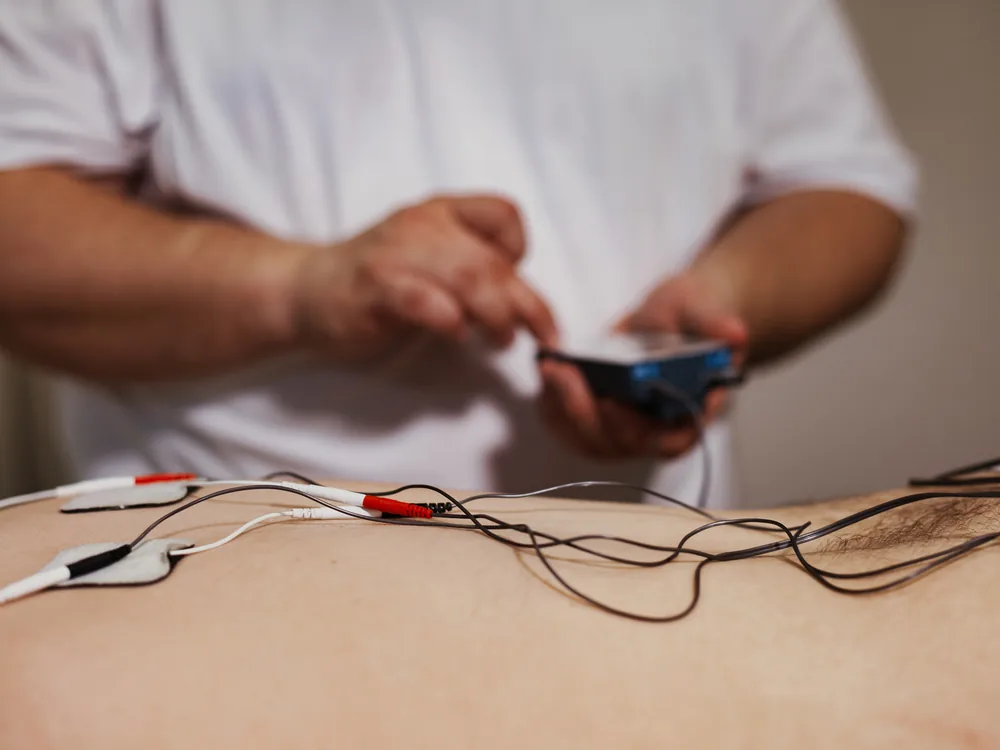
EMG and nerve conduction studies
Many physiatrists perform these nerve and muscle tests. They help diagnose pinched nerves, carpal tunnel syndrome, and neuropathy.
Injections and spasticity treatment
Options can include image-guided joint or spine injections and treatment of tight, overactive muscles after a stroke or brain injury.
Braces, prosthetics, and equipment
Physiatrists prescribe and fine-tune braces, orthotics, prosthetic limbs, walkers, and wheelchairs so they fit your body and daily life.
Medication and team coordination
Physiatrists prescribe medications for pain, nerve symptoms, and spasticity, and coordinate a team that may include therapists, psychologists, and other physicians [2].
Before your appointment
What to expect at your first physiatry visit
A physiatry visit looks at how your condition affects your whole day, not just one body part.
Your goals and history.
Your physiatrist asks what you want to get back to, such as work, stairs, driving, or sport, and reviews your medical history and past treatment.
Function-focused exam.
Expect checks of strength, reflexes, sensation, joint motion, balance, and walking. You may be asked to stand, squat, or step.
Testing if needed.
Your physiatrist may perform or order EMG and nerve studies, imaging, or lab work when results would change your plan.
A rehab plan.
You leave with a diagnosis, clear goals, therapy or equipment orders, and pricing for any follow-up services discussed.
Bring your medication list, imaging and test reports, hospital discharge papers if you were recently admitted, and notes from any therapists you have seen. If you use a brace, cane, walker, or prosthesis, bring it. Wear comfortable clothes and shoes you can walk in, and consider bringing a family member or caregiver who helps you at home.
Make an informed choice
How to choose the right physiatrist near you
Physiatrists often specialize within the field. Choosing one whose focus matches your situation makes a real difference.
- Confirm board certification. You can verify any physician for free through the American Board of Medical Specialties [7]. Every physiatrist on Apptly Health is verified before listing.
- Match the focus to your need. Physiatrists may be subspecialty certified in brain injury medicine, spinal cord injury medicine, neuromuscular medicine, pain medicine, pediatric rehabilitation, or sports medicine [1].
- Ask whether EMG and nerve testing are done in the office.
- Ask how the physiatrist works with your therapists and other doctors.
- Compare availability, including video visits for rehab check-ins.
- Look at the price before you book. Self-pay patients also have a federal right to a Good Faith Estimate of expected charges for scheduled care [8].
- Read the profile for languages spoken and experience with your condition.
The evidence
The evidence: why rehabilitation medicine matters
Disability and injury are far more common than many people realize. These figures come from federal health agencies and the specialty's professional bodies.
-
1 in 4
U.S. adults have some type of disability
Cognition (13.9%) and mobility (12.2%) disabilities are the most common types [3].
-
795,000
people in the U.S. have a stroke each year
Stroke is a leading cause of serious long-term disability [4].
-
214,110
traumatic brain injury hospitalizations in 2020
More than 586 TBI-related hospitalizations every day in the United States [5].
-
4 years
of PM&R residency after medical school
Followed by written and oral board exams from the American Board of Physical Medicine and Rehabilitation [6].
Go deeper
Your recovery roadmap: where rehab happens
Rehab often moves through several settings. Physiatrists work in rehabilitation centers, hospitals, and private offices [2], and can help you understand which stage you are in and what comes next.
In the hospital
After a stroke, major injury, or surgery, a physiatrist may see you before discharge to judge how much rehab you need and where it should happen.
Inpatient rehabilitation
People who can handle several hours of therapy a day may move to an inpatient rehab unit, where a physiatrist leads the team and checks progress daily.
Outpatient and home rehab
Once you are home, outpatient visits with a physiatrist keep therapy on track, adjust medications and equipment, and address new problems such as pain or spasticity.
Long-term follow-up
For lasting conditions such as spinal cord injury, MS, or limb loss, regular physiatry visits help you stay as independent as possible and catch problems early.
Direct access compared
A simpler path to a rehabilitation doctor
| Consideration | Apptly Health | Traditional route |
|---|---|---|
| Referral | Not required | Often required by your plan |
| Scheduling | Varies by live provider availability | Depends on referral processing and network openings |
| Price | Shown before you book | Known after the claim is processed |
| Choice of physiatrist | Any listed physiatrist | Limited to your network |
| Visit type | In person or virtual | Mostly in person |
Related care
Related specialists you can book
Rehabilitation often involves pain, spine, and sports medicine care. These Apptly Health specialists frequently work alongside physiatrists.
Helpful answers
Frequently asked questions about seeing a physiatrist
Do I need a referral to see a physiatrist?
Not on Apptly Health. You can book a board-certified physiatrist directly, without a referral from your primary care physician. If you plan to use insurance for therapy or equipment elsewhere, check your plan, since many require a referral or prior authorization.
How much does a physiatrist visit cost without insurance?
Each physiatrist sets their own visit price, shown on their Apptly Health profile before you book. Nerve tests, injections, therapy, and equipment are priced separately. As a self-pay patient, you are also entitled to a Good Faith Estimate of expected charges for scheduled services under the No Surprises Act.
Does Apptly Health bill my insurance?
No. Apptly Health is a direct-pay platform. You pay the physiatrist's listed fee directly, and Apptly Health does not submit claims to your insurance. Some plans reimburse out-of-network care, so check with your insurer if you plan to request reimbursement.
Can I book a physiatrist on Apptly Health if I have Medicare or Medicaid?
Check with the physician's office before you book. Medicare and Medicaid have rules that limit when an enrolled physician can accept direct payment for covered services, so whether a self-pay visit is possible depends on the physician and the service you need.
What is the difference between a physiatrist and a physical therapist?
A physiatrist is a medical doctor who diagnoses conditions, orders tests, prescribes medication, performs procedures such as nerve studies and injections, and writes your rehab plan. A physical therapist is a licensed therapist who carries out hands-on treatment and exercise. They work as a team, with the physiatrist leading the medical side.
Is a physiatrist the same as a pain management doctor?
Not exactly. Physiatrists focus on restoring function across many conditions, from stroke to sports injuries. Pain management doctors focus on diagnosing and treating pain sources, often with procedures. Many physiatrists also hold pain medicine certification, so for back or neck pain either can be a good starting point.
Can I see a physiatrist virtually?
Yes, for many visits. Video works well for reviewing progress, adjusting therapy goals, and checking on medications. A first visit, nerve testing, injections, and brace or prosthetic fitting need to happen in person. Your physiatrist will tell you which visits fit video.
How do I know if a physiatrist is board-certified?
Every physiatrist on Apptly Health is verified as board-certified before listing. You can also check any physician for free through the American Board of Medical Specialties Certification Matters tool. Physiatrists are certified by the American Board of Physical Medicine and Rehabilitation after a four-year residency.
What should I bring to my first physiatry appointment?
Bring your medication list, imaging and test results, hospital discharge papers, and therapy notes. Bring any brace, cane, walker, or prosthesis you use, and wear comfortable clothes and shoes. Write down the activities you most want to get back to.
Can a physiatrist help after a stroke or brain injury?
Yes. Brain injury and stroke rehab are core parts of physiatry, and some physiatrists are subspecialty certified in brain injury medicine. They manage spasticity, pain, sleep, and thinking problems, and direct physical, occupational, and speech therapy toward your goals.
Do physiatrists treat children?
Some do. Pediatric rehabilitation medicine is a recognized subspecialty, and pediatric physiatrists care for children with cerebral palsy, spina bifida, brain injury, and developmental conditions. Look for this focus on the physician's profile when booking for a child.
Can I use HSA or FSA funds for a physiatrist visit?
In many cases, yes. Physician visits for diagnosis or treatment are generally qualified medical expenses for HSA and FSA accounts, and many medically necessary braces and mobility aids are too. Check with your plan administrator before you book.
More questions about booking, payments, or your account? Visit the Apptly Health FAQ page.

For physicians
Are you a physiatrist?
Reach direct-pay patients and families looking for rehabilitation, spine, and musculoskeletal care. Set your own schedule and price, and spend more time on recovery plans and less on paperwork.
Apply to Join the NetworkMedical review and references
Medically reviewed by Dr. Paula Muto
Board-certified vascular surgeon and founder of Apptly Health
This page is for general information and does not replace a consultation with a qualified physician. If you think you are having a medical emergency, call 911. If you are in emotional crisis, call or text 988.