Ophthalmology · Direct-Pay Specialist Care
Find a Board-Certified Ophthalmologist Near You
Search medical and surgical eye doctors in your area, compare profiles and open times, and see the visit price before you book. No referral needed.
Enter your ZIP code to see ophthalmologists near you, with prices and open times.
- Board-certified ophthalmologists
- No referral required
- Price shown before you book
- In-person exams and virtual follow-ups
The direct answer
What does an ophthalmologist do?
An ophthalmologist is a medical doctor (MD or DO) who diagnoses and treats every kind of eye disease, prescribes medicine, and performs eye surgery. After medical school, ophthalmologists complete an internship and at least three years of eye surgery residency. They treat cataracts, glaucoma, macular degeneration, diabetic eye disease, and eye injuries. You can book one directly on Apptly Health without a referral.
Key facts at a glance
About 93 million U.S. adults are at high risk for serious vision loss, yet only half visited an eye doctor in the past 12 months [1].
An estimated 4.2 million people in the United States have glaucoma, and about 1.5 million have glaucoma that already affects their vision [2].
About 9.6 million people in the U.S. were living with diabetic retinopathy in 2021, including 1.84 million with vision-threatening disease [3].
On Apptly Health you can book a board-certified ophthalmologist directly and see the price before you confirm.
Ophthalmologists you can book now
Ophthalmologists near 07102
Current provider listings are checked when you open this page.
- Checking current provider listings, visit fees and appointment options…
Physician listings, available appointments and visit fees are refreshed when you search. Availability and the final fee are confirmed on the booking page.
Provider availability, prices and appointment times are checked live. Confirm exact visit details when booking.
Why Apptly is different
Eye care without the gatekeeping
Blurry vision, a new floater, or a glaucoma diagnosis should not sit on a waiting list while a referral gets approved. Apptly Health lets you go straight to a medical eye doctor who sets their own schedule and publishes their own fee.
See how it works
- Physician-founded and physician-led marketplace
- Verify each listed ophthalmologist's credentials and board certification
- Visit price shown before you book
- Choose any listed ophthalmologist, with no network limits
- No referral from an optometrist or primary care doctor needed
- Book online in minutes, day or night
- HIPAA-compliant platform for your records and messages
- Many ophthalmologists offer virtual visits for follow-ups and results
Know when to get care
When should you see an ophthalmologist?
Some eye problems announce themselves. Others, like early glaucoma, cause no symptoms at all until vision is already lost. Book an ophthalmology visit if any of these sound familiar.
Symptoms that call for a medical eye exam
- Cloudy, blurry, or dim vision, or colors that look faded [4]
- Glare, halos around lights, or trouble driving at night
- Straight lines that look wavy, or a blurry spot in the center of your vision
- Gradual loss of side (peripheral) vision
- Eye pain, ongoing redness, or light sensitivity that does not clear up
- Double vision, a drooping eyelid, or a new difference in pupil size
Situations that call for regular ophthalmology care
- Diabetes of any type, which needs a dilated eye exam at least once a year [6]
- A family history of glaucoma or macular degeneration
- Age 40 or older and never had a full medical eye exam [6]
- High eye pressure flagged at an optometry or vision screening visit
- Long-term use of steroids or other medicines that can affect the eyes
- A cataract that now gets in the way of reading, driving, or work
Important: Go to an emergency room or call 911 if you have sudden vision loss in one or both eyes, a sudden shower of new floaters or flashes of light, a dark curtain moving across your vision, a chemical splash, or an injury that cuts or punctures the eye. These can be signs of a retinal detachment, stroke, or other emergency and need same-day care, not an online booking.
Understand your options
How much does an ophthalmologist cost without insurance?
The cost of a self-pay ophthalmologist visit varies by physician, location, visit format, and the services you need. Apptly Health is designed to show the listed visit fee before you confirm a booking. Do not assume that tests, procedures, or follow-up services are included in that fee.
Questions to ask before booking
- Is this price for a new-patient visit or a follow-up?
- Does the visit include dilation and eye imaging, or are those billed separately?
- Will a virtual appointment be appropriate for my concern?
- Can the provider supply a Good Faith Estimate for scheduled self-pay care?
- Can I use eligible HSA or FSA funds for the visit?
For scheduled care, patients who are uninsured or choose not to use insurance generally have rights to a Good Faith Estimate under federal rules. Ask about additional services and expected charges in advance.
If you have Medicare or Medicaid: check with the physician's office before you book. Program rules limit when an enrolled physician can accept direct payment for covered services, so whether a self-pay visit is possible depends on the physician and the service.
Your path to care
How Apptly Health works
Booking a medical eye doctor should take minutes, not weeks of phone calls.
-
Step 1
Search by city, ZIP code, or eye concern.
Find board-certified ophthalmologists near you, or available by video for follow-ups.
-
Step 2
Compare ophthalmologists.
Review profiles, subspecialty training, languages, and open appointment times.
-
Step 3
See the price before you book.
One clear visit fee up front. No claims forms for the visit.
-
Step 4
Book online and get seen.
Appointment timing depends on real provider availability in your selected location.
Results, prices, and appointment availability depend on participating physicians in your area.
Expertise for your needs
Eye conditions an ophthalmologist treats
Ophthalmologists manage the medical and surgical side of eye health. These are the conditions patients most often book for.
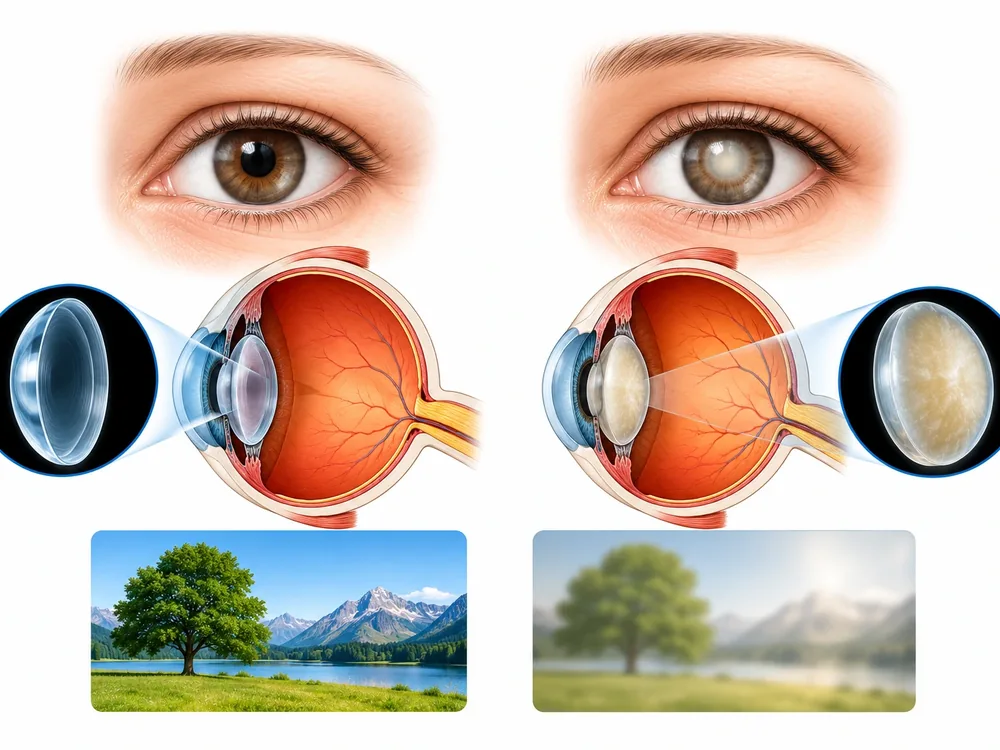
Cataracts
A cataract is a clouding of the lens inside the eye. Cataracts are very common with age, and more than half of Americans age 80 or older have had cataracts or cataract surgery [4]. Surgery replaces the cloudy lens with a clear artificial one, and 9 out of 10 people see better afterward [4].
Glaucoma
Glaucoma damages the optic nerve, usually without pain or early warning signs. Ophthalmologists measure eye pressure, scan the optic nerve, and test side vision, then treat with eye drops, laser, or surgery to protect the sight you still have. Lost vision cannot be restored, which is why early checks matter.
Age-related macular degeneration
AMD affects the macula, the part of the retina used for reading and recognizing faces. A 2022 study estimated 18.34 million people age 40 and older had early AMD and 1.49 million had late-stage AMD in 2019 [5]. Some forms can be slowed with in-office injections.
Diabetic eye disease
High blood sugar can damage the small blood vessels in the retina. Early diabetic retinopathy has no symptoms, so a yearly dilated exam is the main defense. Ophthalmologists use laser treatment or injections when disease threatens vision.
Retina problems, floaters, and flashes
New floaters or flashes can be harmless, or they can signal a retinal tear. A dilated exam tells the difference. Tears found early can often be sealed with laser in the office.
Dry eye, inflammation, and eyelid conditions
Chronic dry eye, uveitis (inflammation inside the eye), and eyelid problems such as drooping lids or growths often need a medical eye doctor, especially when over-the-counter drops have not helped.
Know your options
Types of ophthalmologists and which one you need
Many ophthalmologists complete an extra one or two years of fellowship training. Starting with the right one can save you a second visit.
Comprehensive ophthalmologist
The right first stop for most people. A comprehensive ophthalmologist does full medical eye exams, manages early glaucoma and dry eye, and performs common surgeries such as cataract removal.
Cataract and refractive surgeon
Focuses on lens and cornea surgery, including cataract surgery with premium lens options and laser vision correction such as LASIK or PRK.
Glaucoma specialist
Manages glaucoma that is advanced, hard to control, or needs laser or surgical treatment to lower eye pressure.
Retina specialist
Treats macular degeneration, diabetic retinopathy, retinal tears and detachments, and blocked retinal blood vessels. Many patients see a retina specialist for regular eye injections.
Pediatric, neuro, and oculoplastic ophthalmologists
Pediatric ophthalmologists treat lazy eye, crossed eyes, and childhood eye disease. Neuro-ophthalmologists look at vision problems tied to the brain and optic nerve. Oculoplastic surgeons handle eyelids, tear ducts, and the eye socket.
Before your appointment
What to expect at your first ophthalmology visit
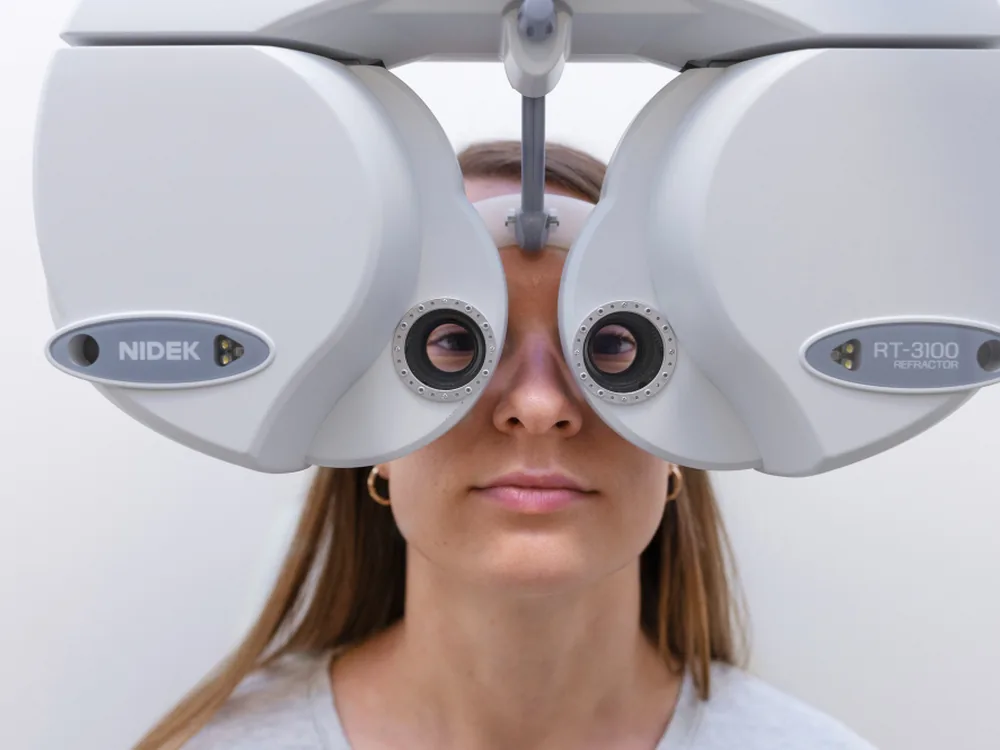
A first visit with a medical eye doctor is more thorough than a quick vision screening. Plan for one to two hours if your eyes will be dilated.
History and vision check.
You will go over symptoms, medicines, general health, and family eye history, then read an eye chart to measure your vision.
Eye pressure and front-of-eye exam.
Eye pressure is measured to screen for glaucoma, and a slit lamp microscope is used to look at the lids, cornea, and lens.
Dilation and retina exam.
Drops widen your pupils so the ophthalmologist can examine the retina and optic nerve. Imaging scans may be added if something needs a closer look.
Diagnosis and plan.
You leave knowing what was found, what treatment options exist, and the price of any follow-up tests or procedures discussed.
Bring your current glasses and contact lens details, a list of medications and eye drops, any recent blood sugar or A1C results if you have diabetes, and records from past eye exams. Dilation can blur your vision and make you sensitive to light for several hours, so bring sunglasses and plan for someone else to drive you home.
Make an informed choice
How to choose the right ophthalmologist near you
The right eye doctor has training that fits your problem, an appointment time that works for you, and a way of explaining things you can follow. Use this checklist.
- Confirm board certification. You can check any physician for free through the American Board of Medical Specialties [7]. Every ophthalmologist on Apptly Health is verified before listing.
- Match the subspecialty to your need: comprehensive care for most issues, a retina specialist for macular or diabetic eye disease, a glaucoma specialist for hard-to-control pressure.
- If you are planning cataract surgery, ask how many cataract procedures the surgeon does and which lens options they offer.
- Ask where surgery or laser treatment would take place in case you need it later.
- Look at the price before you book. Self-pay patients also have a federal right to a Good Faith Estimate for scheduled care [8].
- Read the profile for languages spoken, clinical interests, and whether virtual follow-ups are offered.
The evidence
The evidence: why medical eye care matters
Most serious eye disease can be slowed or treated when it is found early. These figures come from the CDC, the National Eye Institute, and peer-reviewed research.
-
93 million
U.S. adults are at high risk for serious vision loss
Only half of them visited an eye doctor in the past 12 months [1].
-
4.2 million
people in the U.S. have glaucoma
About 1.5 million of them have glaucoma that already affects their vision, based on 2022 CDC modeled estimates [2].
-
9.6 million
people live with diabetic retinopathy
1.84 million of them have vision-threatening disease, according to 2021 estimates [3].
-
90%
of blindness caused by diabetes is preventable
Early detection through regular dilated eye exams is what makes the difference [1].
Go deeper
Eye health at every age
The eye diseases that matter most change as you get older, and so does how often you should be checked. The American Academy of Ophthalmology suggests this schedule for adults without risk factors [6].
Under 40: protect and pay attention
Most younger adults need a medical eye exam only for symptoms, an eye injury, diabetes, or a family history of eye disease. Wear protective eyewear for sports and yard work, and see an ophthalmologist quickly for eye pain, sudden blurring, or a red eye that does not improve.
Ages 40 to 54: get a baseline
The Academy recommends a baseline comprehensive eye exam at 40, when early signs of disease and vision changes often first appear. After that, adults without risk factors should be checked every 2 to 4 years [6].
Ages 55 to 64: shorten the gap
Glaucoma, cataracts, and early macular changes become more common. The recommended interval narrows to every 1 to 3 years [6].
65 and older: check every year or two
An exam every 1 to 2 years helps catch cataracts, glaucoma, and AMD before they limit driving, reading, or living on your own [6]. If you have diabetes, keep a yearly dilated exam no matter your age.
Direct access compared
A faster route to a medical eye doctor
| Consideration | Apptly Health | Traditional route |
|---|---|---|
| Referral | Not required | Often required by your plan or optometrist |
| Price | Shown before you book | Known after the claim is processed |
| Choice of ophthalmologist | Any listed ophthalmologist | Limited to your network |
| Booking | Online in minutes | Phone calls during office hours |
| Follow-up visits | In person, or virtual where offered | Mostly in person |
Related care
Related specialists you can book
Eye problems often connect to other parts of your health. These Apptly Health specialists frequently work alongside ophthalmologists.
Helpful answers
Ophthalmologist FAQs
Do I need a referral to see an ophthalmologist?
Not on Apptly Health. You can book a board-certified ophthalmologist directly, without a referral from an optometrist or primary care doctor. If you plan to use insurance somewhere else, check your plan first, because many HMO plans require a referral for in-network specialist visits.
What is the difference between an ophthalmologist and an optometrist?
An ophthalmologist is a medical doctor who diagnoses and treats all eye diseases and performs eye surgery. An optometrist (OD) is a licensed eye care provider who does routine eye exams, prescribes glasses and contacts, and treats some eye conditions. For cataract surgery, advanced glaucoma, or retina disease, you need an ophthalmologist.
How much does an ophthalmologist visit cost without insurance?
Each ophthalmologist sets their own fee, and it is shown on their Apptly Health profile before you book. Imaging, laser treatment, injections, and surgery are priced separately. As a self-pay patient you also have the right to a Good Faith Estimate of expected charges for scheduled care under the No Surprises Act.
Does Apptly Health bill my insurance?
No. Apptly Health is a direct-pay platform. You pay the ophthalmologist's listed fee directly, and Apptly Health does not submit claims to your insurance. Some plans reimburse out-of-network care, so check with your insurer if you plan to request reimbursement.
Can I book an ophthalmologist on Apptly Health if I have Medicare or Medicaid?
Check with the physician's office before you book. Medicare and Medicaid have rules that limit when an enrolled physician can accept direct payment for covered services, so whether a self-pay visit is possible depends on the physician and the service you need.
Can I see an ophthalmologist virtually?
Partly. Video visits work well for reviewing test results, follow-up after a procedure, dry eye management, and talking through surgery options. A new eye problem usually needs an in-person exam, because measuring eye pressure and looking at the retina require equipment in the office. Your ophthalmologist will tell you which visit type fits.
When is it time for cataract surgery?
There is no single cutoff. Most people consider surgery when the cataract makes it hard to drive, read, work, or do daily tasks, and new glasses no longer help. Your ophthalmologist will measure your vision, examine the lens, and talk through the benefits, risks, and lens choices so you can decide together.
How do I know if an ophthalmologist is board-certified?
Every ophthalmologist listed on Apptly Health is verified as board-certified before their profile goes live. You can also check any physician's certification for free on the American Board of Medical Specialties Certification Matters website by searching their name and state.
What should I bring to my first ophthalmology appointment?
Bring your glasses and contact lens prescription, a list of all medications and eye drops, past eye exam records, and blood sugar or A1C results if you have diabetes. Bring sunglasses, and plan for someone to drive you home in case your pupils are dilated.
How often should I see an ophthalmologist?
Adults without risk factors should have a baseline exam at 40, then every 2 to 4 years until 54, every 1 to 3 years from 55 to 64, and every 1 to 2 years from 65 on. People with diabetes need a dilated exam at least once a year. Glaucoma or AMD usually means more frequent visits.
Are flashes and floaters an emergency?
They can be. A sudden burst of new floaters, flashes of light, or a shadow or curtain over part of your vision can mean a retinal tear or detachment. Get same-day emergency eye care rather than booking a routine appointment. A few old, stable floaters are common and usually harmless.
Can I use HSA or FSA funds to see an ophthalmologist?
In many cases, yes. Visits for diagnosing or treating an eye condition are generally qualified medical expenses, and so are prescription glasses and many eye surgeries. Check with your plan administrator before you book to confirm what your account covers.
More questions about booking, payments, or your account? Visit the Apptly Health FAQ page.
For physicians
Are you an ophthalmologist?
Reach direct-pay patients who are actively looking for medical and surgical eye care, set your own schedule and fees, and spend less time on insurance paperwork.
Apply to Join the NetworkMedical review and references
Medically reviewed by Dr. Paula Muto
Board-certified vascular surgeon and founder of Apptly Health
This page is for general information and does not replace a consultation with a qualified physician. If you think you are having a medical emergency, call 911. If you are in emotional crisis, call or text 988.