Pain Management · Direct-Pay Specialist Care
Find a Board-Certified Pain Management Doctor Near You
Search pain specialists in your area, compare profiles and open times, and see the visit price before you book. No referral needed, in person or by video.
Enter your ZIP code to see pain management doctors near you, with prices and open times.
- Board-certified pain specialists
- No referral required
- Price shown before you book
- In-person and virtual visits
The direct answer
What does a pain management doctor do?
A pain management doctor is a physician with extra training in diagnosing and treating pain that lasts or keeps returning, such as back and neck pain, sciatica, arthritis, nerve pain, and headaches. They find the pain source and combine nonsurgical treatments like targeted injections, nerve procedures, medication review, and rehab. The goal is less pain and more function. You can book one on Apptly Health without a referral.
Key facts at a glance
About 51.6 million U.S. adults, or 20.9%, lived with chronic pain in 2021 [1].
About 17.1 million adults had high-impact chronic pain that frequently limited their life or work activities [1].
CDC's 2022 clinical guideline states that nonopioid therapies are preferred for subacute and chronic pain [2].
Apptly Health lets you book a board-certified pain management doctor directly, with the price shown before you confirm.
Pain Management Doctors you can book now
Pain Management Doctors near 07102
Current provider listings are checked when you open this page.
- Checking current provider listings, visit fees and appointment options…
Physician listings, available appointments and visit fees are refreshed when you search. Availability and the final fee are confirmed on the booking page.
Provider availability, prices and appointment times are checked live. Confirm exact visit details when booking.
Why Apptly is different
Pain care without the gatekeeping
When pain has gone on for months, every extra week of waiting feels long. Apptly Health connects you directly with board-certified pain management doctors who set their own schedules and publish their own prices.
See how it works
- Started by physicians and still led by them
- Verify each listed pain management doctor's credentials and board certification
- Visit price shown before you book
- Choose any listed pain management doctor, with no network limits
- No referral needed to start care
- Online booking in minutes, from your couch
- HIPAA-compliant platform for your records and imaging
- Many pain specialists offer video visits for follow-ups and medication reviews
Know when to get care
When should you see a pain management doctor?
Pain that fades in a few days rarely needs a specialist. A pain management doctor makes sense when pain lingers, keeps returning, or is starting to shape your days.
Signs it is time for a pain specialist
- Pain that has lasted longer than about three months
- Back or neck pain that spreads into an arm or leg
- Burning, electric, or pins-and-needles pain that suggests nerve involvement
- Pain that keeps you from working, sleeping, exercising, or caring for family
- Medications that are not helping enough or cause side effects you cannot live with
- Pain that continues after surgery or after an injury has healed
Situations where a pain specialist adds value
- You want to avoid or delay surgery and explore other options
- A surgeon has said surgery is not likely to help your pain
- You take opioids long term and want a safer, coordinated plan
- You have arthritis, shingles nerve pain, or diabetic nerve pain
- You have complex regional pain syndrome or another hard-to-treat condition
- You need a diagnostic nerve block to pinpoint where pain is coming from
Important: Call 911 or go to the emergency room for chest pain, a sudden severe headache, or back pain with new loss of bladder or bowel control, numbness in the groin or inner thighs, or worsening leg weakness, which can signal cauda equina syndrome [8]. Call 911 right away if someone taking pain medicine is very drowsy, hard to wake, or breathing slowly. If pain is making you feel hopeless, call or text 988 to reach the 988 Suicide and Crisis Lifeline.
Understand your options
How much does a pain management doctor cost without insurance?
The cost of a self-pay pain management doctor visit varies by physician, location, visit format, and the services you need. Apptly Health is designed to show the listed visit fee before you confirm a booking. Do not assume that tests, procedures, or follow-up services are included in that fee.
Questions to ask before booking
- Is this price for a new-patient visit or a follow-up?
- Is this fee for the office visit only? Injections and other procedures are usually priced separately.
- Will a virtual appointment be appropriate for my concern?
- Can the provider supply a Good Faith Estimate for scheduled self-pay care?
- Can I use eligible HSA or FSA funds for the visit?
For scheduled care, patients who are uninsured or choose not to use insurance generally have rights to a Good Faith Estimate under federal rules. Ask about additional services and expected charges in advance.
If you have Medicare or Medicaid: check with the physician's office before you book. Program rules limit when an enrolled physician can accept direct payment for covered services, so whether a self-pay visit is possible depends on the physician and the service.
Your path to care
How Apptly Health works
Getting help for ongoing pain should be straightforward.
-
Step 1
Search by city, ZIP code, or symptom.
Find board-certified pain management doctors near you or available by video.
-
Step 2
Choose your pain specialist.
Compare profiles, procedures offered, languages, and open times.
-
Step 3
See the price before you book.
One clear visit fee, shown up front, with no claims paperwork.
-
Step 4
Book online and be seen.
Appointment timing depends on real provider availability in your selected location.
Results, prices, and appointment availability depend on participating physicians in your area.
Expertise for your needs
Conditions a pain management doctor treats
Pain medicine covers pain from the spine, joints, nerves, and soft tissues. These are the conditions pain specialists see most often.
Low back pain and sciatica
Back pain is the most common reason people seek pain care. In 2019, 39.0% of U.S. adults had back pain in the prior three months [3]. Pain specialists look for the source, whether a disc, facet joint, sacroiliac joint, or nerve root, and target treatment to it.
Neck pain and arm pain
Arthritis in the small neck joints or a pinched nerve can cause neck pain, headaches, or pain that travels down the arm. Upper limb pain affected 30.7% of adults in a three-month period [3].
Arthritis and joint pain
When knee, hip, or shoulder arthritis keeps hurting despite exercise and medicine, options may include joint injections or procedures that quiet the nerves carrying pain from the joint.
Nerve pain (neuropathy)
Diabetic neuropathy, nerve pain after shingles, and nerve injuries often respond poorly to typical pain relievers. Pain specialists use medicines aimed at nerve pain and, for some people, nerve blocks or stimulation.
Post-surgical and persistent pain
Some people still hurt after spine or joint surgery. A pain doctor reassesses the cause and offers options that do not involve another operation.
Complex conditions
Complex regional pain syndrome, chronic pelvic pain, and fibromyalgia benefit from a coordinated plan that combines medical care, movement, and mental health support.
Know your options
Treatments and procedures, explained simply
Pain management works best as a plan, not a single shot. Your physician decides which options fit your condition, health, and goals.
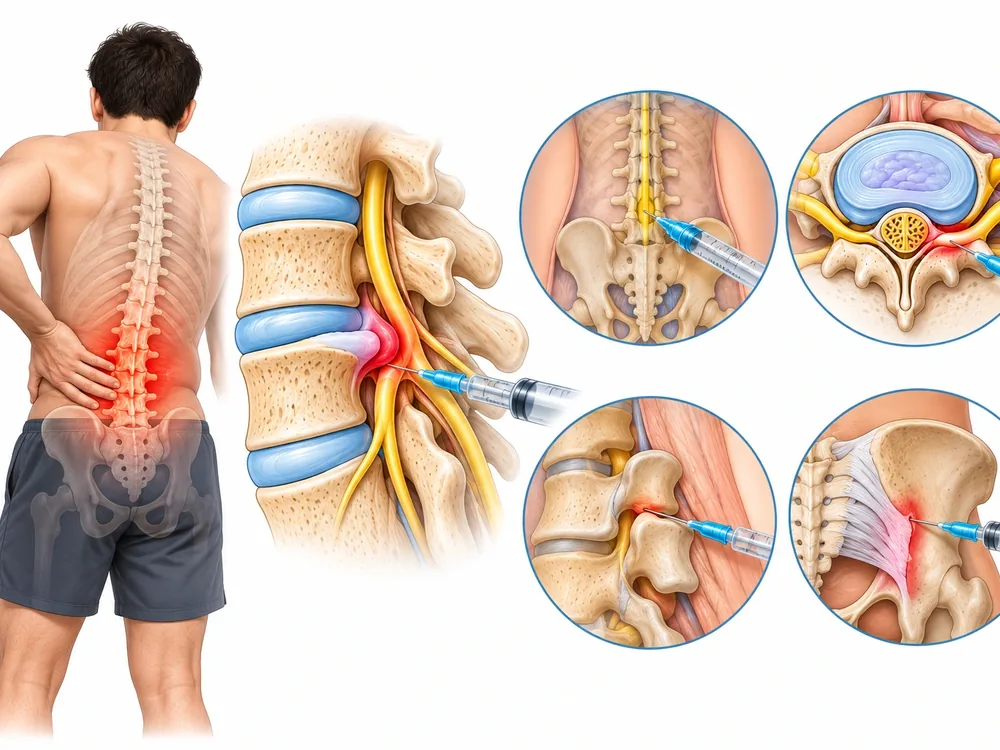
Epidural steroid injections
Anti-inflammatory medicine is placed near an irritated spinal nerve using X-ray guidance. It can ease sciatica or arm pain so you can move and do physical therapy.
Facet, sacroiliac, and nerve blocks
Numbing medicine is placed at a specific joint or nerve. If the pain eases, that confirms the source and helps plan the next step.
Radiofrequency ablation
Heat from a thin probe quiets the small nerves that carry pain from arthritic spine joints or the knee. Relief can last months, and the procedure can be repeated.
Spinal cord stimulation
A small implanted device sends mild signals that change how pain is felt. It is usually considered for long-standing nerve pain after a trial period shows it helps.
Medication management and active therapies
Pain doctors review all your medicines, add or swap options, and reduce risky combinations. Exercise therapy and cognitive behavioral therapy are recognized options for chronic pain [2], and many nondrug treatments improve pain or function, mostly in the short term [4].
Before your appointment
What to expect at your first pain management visit
Your first visit is about understanding your pain, not jumping straight to a procedure.
Your pain history.
Where it hurts, how it feels, what makes it better or worse, what you have tried, and how it affects sleep, mood, and work.
Focused exam.
Your doctor checks movement, strength, reflexes, sensation, and tender areas to narrow down the pain source.
Review of records and imaging.
Prior MRI, X-ray, and nerve test results are matched to your exam. New tests are ordered only if they would change the plan.
A plan with goals.
You agree on realistic goals, such as walking farther or sleeping through the night, and leave with next steps and pricing for any services discussed.
Bring a full list of medications, including over-the-counter pain relievers and supplements, plus prior imaging and reports and notes from physical therapy, injections, or surgery. A one-week pain diary that rates pain and notes activities helps your doctor see patterns. Bring a photo ID, because some pain medicines require identity checks.
Make an informed choice
How to choose the right pain management doctor near you
Look for a physician who takes time to find the cause of your pain, offers more than one kind of treatment, and sets goals with you.
- Confirm board certification. You can verify any physician for free through the American Board of Medical Specialties [6]. Every pain specialist on Apptly Health is verified before listing.
- Look for subspecialty certification in pain medicine, which can come from anesthesiology, physical medicine and rehabilitation [5], or neurology training.
- Ask which procedures the doctor performs and whether image guidance is used.
- Choose someone who combines procedures with physical therapy, movement, and behavioral support rather than offering injections alone.
- Ask how the practice approaches medication safety and long-term opioid use.
- Look at the price before you book. Self-pay patients also have a federal right to a Good Faith Estimate of expected charges for scheduled care, including procedures [7].
- Read the profile for languages spoken and communication style.
The evidence
The evidence: why specialized pain care matters
Chronic pain is one of the most common health problems in the country. These figures come from federal health surveys.
-
51.6 million
U.S. adults lived with chronic pain in 2021
That is 20.9% of adults, and rates stayed between 20.5% and 21.8% from 2019 to 2021 [1].
-
17.1 million
adults had high-impact chronic pain
High-impact pain frequently limits life or work activities and affected 6.9% of adults in 2021 [1].
-
39.0%
of adults had back pain in the past 3 months
And 36.5% had lower limb pain, from the 2019 National Health Interview Survey [3].
-
30.7%
of adults had upper limb pain in the past 3 months
Pain at all sites rose with age and was highest in adults 65 and older [3].
Go deeper
Pain medicines and opioids: what to know
Many people worry they will be judged for asking about pain medicine, or pushed onto opioids they do not want. A good pain specialist talks openly about both.
Nonopioid options come first
For many common types of short-term pain, nonopioid therapies work at least as well as opioids, and for longer-lasting pain they are preferred [2]. That includes anti-inflammatory medicines, nerve pain medicines, topical treatments, exercise, and procedures.
If you already take opioids
You will not be cut off abruptly. Your pain doctor reviews benefits and risks with you, checks for dangerous combinations such as sedatives, and plans any changes gradually. Ask about naloxone if you take opioids at home.
Goals over numbers
A pain score of zero is rarely realistic. Better goals are things you can do, like walking the dog, working a full shift, or sleeping through the night. Those goals guide which treatments to keep.
Mind and body together
Long-term pain affects sleep, mood, and stress, and those in turn make pain louder. Pain coping skills and therapy are real medical treatment, not a sign that the pain is in your head.
Direct access compared
A simpler path to a pain specialist
| Consideration | Apptly Health | Traditional route |
|---|---|---|
| Referral | Not required | Often required by your plan |
| Scheduling | Varies by live provider availability | Depends on referral processing and network openings |
| Price | Shown before you book | Known after the claim is processed |
| Choice of pain doctor | Any listed pain specialist | Limited to your network |
| Visit type | In person, or virtual for follow-ups | Mostly in person |
Related care
Related specialists you can book
Pain often has a spine, nerve, or rehabilitation side. These Apptly Health specialists frequently work alongside pain management doctors.
Helpful answers
Frequently asked questions about seeing a pain management doctor
Do I need a referral to see a pain management doctor?
Not on Apptly Health. You can book a board-certified pain management doctor directly, without a referral from your primary care physician. If you plan to use insurance for procedures elsewhere, check your plan, because many require a referral or prior authorization.
How much does a pain management visit cost without insurance?
Each pain specialist sets their own visit price, shown on their Apptly Health profile before you book. Injections and other procedures are priced separately. As a self-pay patient, you can request a Good Faith Estimate of expected charges for scheduled services under the No Surprises Act.
Does Apptly Health bill my insurance?
No. Apptly Health is a direct-pay platform. You pay the pain management doctor's listed fee directly, and Apptly Health does not submit claims to your insurance. Some plans reimburse out-of-network care, so check with your insurer if you plan to request reimbursement.
Can I book a pain management doctor on Apptly Health if I have Medicare or Medicaid?
Check with the physician's office before you book. Medicare and Medicaid have rules that limit when an enrolled physician can accept direct payment for covered services, so whether a self-pay visit is possible depends on the physician and the service you need.
What is the difference between a pain management doctor and a physiatrist?
A physiatrist specializes in physical medicine and rehabilitation, focusing on restoring function through therapy, exercise, bracing, and coordinated rehab. A pain management doctor focuses on diagnosing pain sources and treating them with targeted procedures and medication management. Many physiatrists also hold pain medicine certification, so the two often overlap.
Will a pain management doctor prescribe opioids?
Sometimes, but not as a first step. National guidance prefers nonopioid treatments for most ongoing pain. Pain specialists use medicines, procedures, and therapy together, and when opioids are considered, they review risks with you, set goals, and plan follow-up carefully.
Can I see a pain management doctor virtually?
Yes, for many visits. Video works well for follow-ups, medication reviews, and discussing results. A first visit often needs an in-person exam, and procedures such as injections are always done in person. Some pain medicines also have in-person requirements under federal and state rules.
Do injections for back pain actually work?
They help some people, especially for leg or arm pain from an irritated nerve. Relief varies from weeks to months. Injections work best as part of a broader plan with exercise and physical therapy. Your pain doctor will explain the expected benefit for your specific condition.
How do I know if a pain management doctor is board-certified?
Every pain specialist on Apptly Health is verified as board-certified before listing. You can also check any physician for free through the American Board of Medical Specialties Certification Matters tool, which also shows subspecialty certification in pain medicine.
What should I bring to my first pain management appointment?
Bring your full medication list, prior imaging and reports, notes on past treatments and how they worked, a photo ID, and a short pain diary. Be ready to describe where the pain is, how it feels, and what activities matter most to you.
When is pain an emergency?
Call 911 for chest pain, a sudden severe headache, or back pain with loss of bladder or bowel control or groin numbness. Also call 911 if someone taking pain medicine becomes hard to wake or is breathing slowly. These need emergency care, not an appointment.
Can I use HSA or FSA funds for pain management?
In many cases, yes. Physician visits and medically necessary procedures for diagnosis or treatment are generally qualified medical expenses for HSA and FSA accounts. Confirm with your plan administrator before you book.
More questions about booking, payments, or your account? Visit the Apptly Health FAQ page.

For physicians
Are you a pain management doctor?
Reach direct-pay patients actively looking for nonsurgical pain care. Set your own schedule and price, and spend more time on thoughtful treatment plans and less on prior authorizations.
Apply to Join the NetworkMedical review and references
Medically reviewed by Dr. Paula Muto
Board-certified vascular surgeon and founder of Apptly Health
This page is for general information and does not replace a consultation with a qualified physician. If you think you are having a medical emergency, call 911. If you are in emotional crisis, call or text 988.