Allergy and Immunology · Direct-Pay Specialist Care
Find a Board-Certified Allergist Near You
Book an allergy doctor for constant sneezing, asthma, hives, or a reaction to food, a sting, or a medicine. See the price before you book. No referral needed.
Enter your ZIP code to see allergists near you, with prices and open times.
- Board-certified allergists
- Care for adults and children
- Price shown before you book
- No referral required
The direct answer
What does an allergist do?
An allergist, also called an allergist and immunologist, is a physician who diagnoses and treats allergies, asthma, and immune system problems. Allergists find out what triggers your symptoms with skin or blood testing, treat hay fever, food and drug allergies, hives, eczema, and insect sting reactions, and offer allergy shots that can reduce symptoms over time. You can book one on Apptly Health without a referral.
Key facts at a glance
In 2021, 31.8% of U.S. adults had a seasonal allergy, eczema, or a food allergy; seasonal allergies alone affected 25.7% [1].
More than 1 in 4 U.S. children had a seasonal allergy, eczema, or food allergy in 2021 [2].
About 27.8 million people in the U.S. had asthma in 2023, including 4.8 million children [3].
Apptly Health lets you book a board-certified allergist directly, with the price shown before you confirm.
Allergists you can book now
Allergists near 07102
Current provider listings are checked when you open this page.
- Checking current provider listings, visit fees and appointment options…
Physician listings, available appointments and visit fees are refreshed when you search. Availability and the final fee are confirmed on the booking page.
Provider availability, prices and appointment times are checked live. Confirm exact visit details when booking.
Why Apptly is different
Allergy care without the gatekeeping
If you have cycled through antihistamines for years, or your child just reacted to a new food, skip the referral. Apptly Health lets you pick an allergist and book directly.
See how it works- A marketplace founded and led by physicians
- Verify each listed allergist's credentials and board certification
- The visit price is shown on the profile before you book
- Choose any listed allergist, with no network limits
- No referral from a primary care doctor or pediatrician needed
- Online booking in minutes
- A HIPAA-compliant platform for your records
- Many allergists offer virtual visits for follow-ups and medication reviews
Know when to get care
When should you see an allergist?
Over-the-counter pills and sprays help many people. See an allergist when they do not, when reactions are getting worse, or when you need to know exactly what you are allergic to.
Symptoms that point to an allergist
- Sneezing, stuffy or runny nose, or itchy, watery eyes that last for weeks or come back every season
- Wheezing, coughing, or chest tightness, especially at night, with exercise, or around pets or dust
- Hives or swelling that keep coming back, or that have lasted more than six weeks
- Itching, hives, vomiting, or swelling after eating a particular food
- A large or body-wide reaction after a bee, wasp, or fire ant sting
- Frequent sinus infections or ear infections that seem tied to allergies
Situations where an allergy evaluation helps
- You have a penicillin or other drug allergy on your record and are not sure it is real
- Your baby has severe eczema or an egg allergy and you have questions about introducing peanut foods
- You have been prescribed an epinephrine auto-injector and need a clear action plan
- Your asthma needs rescue inhaler use more than a couple of times a week or limits activity
- You want to know whether allergy shots or tablets could reduce your need for daily medicine
- You get infections that are unusually frequent, severe, or hard to clear, which can point to an immune problem
Important: Call 911 and use epinephrine right away if you or your child has signs of anaphylaxis after a food, sting, or medicine: trouble breathing or wheezing, throat tightness or hoarseness, swelling of the lips or tongue, repeated vomiting, or dizziness or fainting. Antihistamines and asthma inhalers are not enough to treat anaphylaxis. Do not wait to book an appointment.
Understand your options
How much does an allergist cost without insurance?
The cost of a self-pay allergist visit varies by physician, location, visit format, and the services you need. Apptly Health is designed to show the listed visit fee before you confirm a booking. Do not assume that tests, procedures, or follow-up services are included in that fee.
Questions to ask before booking
- Is this price for a new-patient visit or a follow-up?
- Does the visit include skin or blood allergy testing, or is testing billed separately?
- Will a virtual appointment be appropriate for my concern?
- Can the provider supply a Good Faith Estimate for scheduled self-pay care?
- Can I use eligible HSA or FSA funds for the visit?
For scheduled care, patients who are uninsured or choose not to use insurance generally have rights to a Good Faith Estimate under federal rules. Ask about additional services and expected charges in advance.
If you have Medicare or Medicaid: check with the physician's office before you book. Program rules limit when an enrolled physician can accept direct payment for covered services, so whether a self-pay visit is possible depends on the physician and the service.
Your path to care
How Apptly Health works
Booking allergy care should be the easy part.
-
Step 1
Search by city, ZIP code, or symptom.
Find board-certified allergists near you, or ones available by video.
-
Step 2
Compare allergists.
Review credentials, age groups seen, languages, and open times.
-
Step 3
See the price first.
The visit fee is on the profile before you book, not in a bill weeks later.
-
Step 4
Book and be seen.
Appointment timing depends on real provider availability in your selected location.
Results, prices, and appointment availability depend on participating physicians in your area.
Expertise for your needs
Conditions an allergist treats
Allergy and immunology covers the nose, lungs, skin, gut, and immune system. These are the conditions allergists on Apptly Health see most often.

Seasonal and year-round allergies
Allergic rhinitis, often called hay fever, causes sneezing, congestion, and itchy eyes. It affected 25.7% of U.S. adults in 2021 [1]. Testing shows whether pollen, dust mites, mold, or pet dander is the trigger, which makes it easier to control your environment and choose the right treatment.
Allergic asthma
For many people, allergies drive asthma. An allergist can test breathing with spirometry, identify triggers, adjust controller medicines, and discuss biologic injections for severe allergic asthma. Good control means fewer flare-ups, missed school days, and urgent care visits.
Food allergies
Food allergy affected 6.2% of U.S. adults in 2021 [1]. An allergist can tell a true allergy from an intolerance, decide which foods are safe, supervise an oral food challenge, and write an emergency plan. Some patients may be candidates for oral immunotherapy.
Drug allergies
Many drug allergy labels are not accurate. According to the CDC, 10% of U.S. patients report a penicillin allergy, but less than 1% are truly allergic [4]. Testing can remove an outdated label so you can safely use first-choice antibiotics.
Hives, swelling, and eczema
Chronic hives often have no single trigger, but they can usually be controlled. Allergists also help with eczema tied to allergies and with recurrent swelling of the face, lips, or throat.
Insect sting allergy
If a sting caused hives all over, trouble breathing, or fainting, an allergist can confirm which insect is responsible. Venom immunotherapy can lower the risk of a severe reaction to future stings [5].
Immune deficiencies
The immunology side of the specialty looks at why some people get frequent or severe infections, such as repeated pneumonia. Blood tests check antibody levels and immune function.
Know your options
Allergy testing and treatment options
Testing is what separates an allergist from guesswork. Your allergist will choose tests that fit your history and explain what results mean, since a positive test alone does not always mean a true allergy.
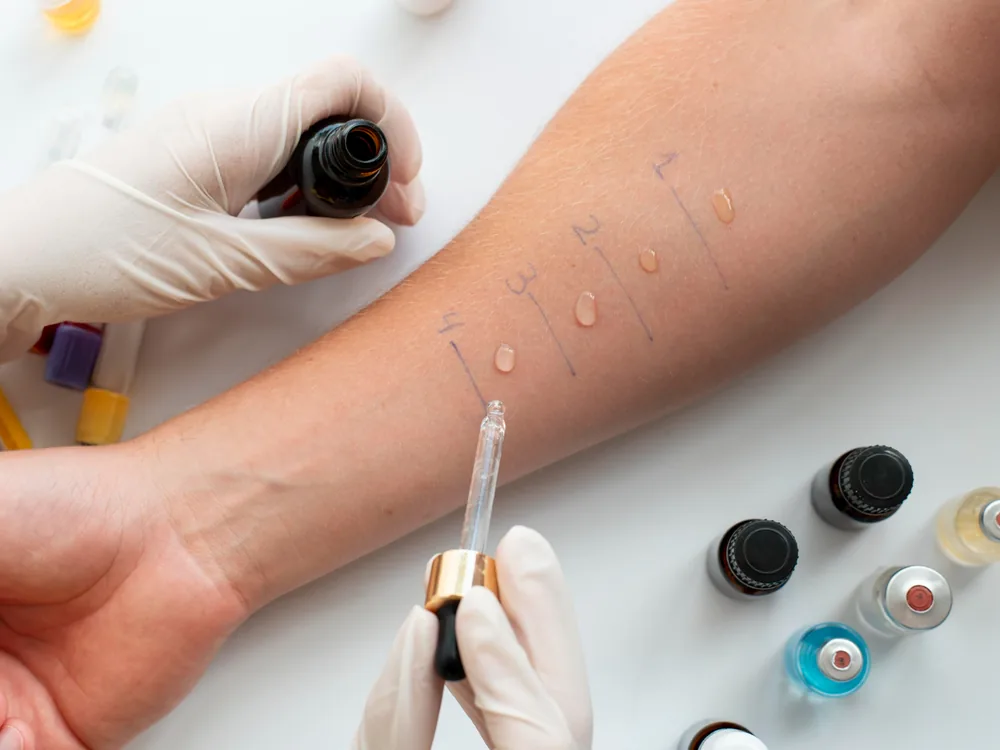
Skin prick testing
Tiny amounts of common allergens are placed on the skin of the arm or back with a light scratch. Results appear in about 15 to 20 minutes as small raised bumps. You may need to stop antihistamines for several days beforehand, so ask when you book.
Blood testing
A blood test measures allergy antibodies (IgE) to specific foods, pollens, or other allergens. It is useful when skin testing is not possible, such as with widespread eczema or medicines that cannot be stopped.
Patch testing
Used for delayed skin reactions to metals, fragrances, preservatives, or hair dye. Patches stay on the back for about two days.
Oral food and drug challenges
Under close supervision in the office, you eat a food or take a medicine in gradually larger doses. It is the most reliable way to confirm whether an allergy is real, and it must be done in person where emergency treatment is ready.
Allergy shots and tablets
Allergen immunotherapy trains the immune system to react less. Shots start with a build-up phase of weekly or twice-weekly doses that usually lasts four to six months, followed by maintenance shots every two to four weeks for three to five years [5]. For some pollen and dust mite allergies, under-the-tongue tablets taken at home are an option.
Before your appointment
What to expect at your first allergist visit
A first allergy visit is mostly conversation and, often, testing. Here is how it usually goes.
A detailed history.
Your allergist asks what happens, when, where, and after what. Timing matters: symptoms that flare in spring, at work, or within minutes of eating a food point to different causes.
A focused exam.
Expect a look at your nose, eyes, throat, skin, and lungs. If asthma is a concern, you may do a breathing test.
Testing when it will help.
Skin prick testing is often done the same day if you have stopped antihistamines. Otherwise your allergist may order blood work or schedule testing for a later visit.
A plan you can follow.
You leave with a diagnosis or working diagnosis, treatment, an emergency plan if needed, and pricing for any follow-up testing or allergy shots.
Bring a list of all medicines, including over-the-counter allergy pills, and any past allergy test results. A food and symptom diary, photos of hives or swelling, and labels from foods or products you suspect are very helpful. Ask before your visit whether to stop antihistamines, and never stop asthma medicines without your doctor's advice.
Make an informed choice
How to choose the right allergist near you
Allergy testing is offered in many places, but interpreting it well takes specialty training. Use this checklist.
- Confirm board certification in allergy and immunology. You can check any physician for free through the American Board of Medical Specialties [6]. Every allergist on Apptly Health is verified before listing.
- Ask whether the allergist sees children, adults, or both, especially if you are booking for a baby or toddler.
- If you may need allergy shots, check how often the office gives injections and what hours fit your schedule.
- For food or drug allergies, ask whether the office performs supervised oral challenges.
- Review the price before you book. Self-pay patients also have a federal right to a Good Faith Estimate of expected charges for scheduled care [7].
- Look for clear communication. A good allergist explains what your test results mean instead of handing you a long list of positives.
The evidence
The evidence: how common allergies and asthma are
Allergic disease touches nearly every family. These figures come from the CDC's National Center for Health Statistics and national asthma surveillance.
-
31.8%
of U.S. adults had a seasonal allergy, eczema, or food allergy
Women were more likely than men to report each type of allergy in 2021 [1].
-
18.9%
of U.S. children had a seasonal allergy in 2021
10.8% of children had eczema and 5.8% had a food allergy [2].
-
27.8 million
people in the U.S. had asthma in 2023
That is 8.4% of the population, and asthma was the underlying cause of 3,624 deaths that year [3].
-
10% vs under 1%
report a penicillin allergy vs are truly allergic
Testing by an allergist can safely clear many penicillin allergy labels [4].
Go deeper
Allergies at every age
Allergies can start at any age, and the right questions change as you get older.
Babies and toddlers
Eczema is often the first sign of allergic disease. Guidelines from the National Institute of Allergy and Infectious Diseases encourage introducing peanut foods early, and babies with severe eczema or egg allergy may need testing first [8]. Talk with your pediatrician or an allergist before trying peanut at home if your baby is in that higher-risk group.
School-age children and teens
Hay fever and asthma often show up now, and kids need a written plan for school, sports, and camp. An allergist can teach your child to use an epinephrine auto-injector and inhaler correctly.
Adults
Adults can develop new allergies, including to shellfish, or asthma for the first time. A move, a new job, or a new pet can bring symptoms. Later in life, an allergist can also review old drug allergy labels and choose treatments that are safe alongside other medicines.
Direct access compared
A shorter path to allergy answers
| Consideration | Apptly Health | Traditional route |
|---|---|---|
| Referral | Not required | Often required by HMO plans |
| Wait for a visit | Varies by live provider availability | Depends on network availability |
| Price | Shown before you book | Known after the claim is processed |
| Choice of allergist | Any listed allergist | Limited to your network |
| Visit type | In person, or virtual for many follow-ups | Mostly in person |
Related care
Related specialists you can book
Allergies often overlap with sinus, lung, and skin problems. These Apptly Health specialists frequently work alongside allergists.
Helpful answers
Allergist FAQs
Do I need a referral to see an allergist?
Not on Apptly Health. You can book a board-certified allergist directly, without a referral from your primary care doctor or your child's pediatrician. If you plan to use insurance somewhere else, check your plan first, because many HMO plans require a referral before covering a specialist visit.
How much does an allergist visit cost without insurance?
Each allergist sets their own visit price and shows it on their Apptly Health profile before you book. Allergy testing, oral challenges, and allergy shots are usually priced separately, so ask about them during your visit. As a self-pay patient you can request a Good Faith Estimate for scheduled services under the No Surprises Act.
Does Apptly Health bill my insurance?
No. Apptly Health is a direct-pay platform. You pay the allergist's listed fee directly, and Apptly Health does not submit claims to your insurance. Some plans reimburse out-of-network care, so check with your insurer if you plan to request reimbursement.
Can I book an allergist on Apptly Health if I have Medicare or Medicaid?
Check with the physician's office before you book. Medicare and Medicaid have rules that limit when an enrolled physician can accept direct payment for covered services, so whether a self-pay visit is possible depends on the physician and the service you need.
Can I see an allergist virtually?
Yes, for many needs. Video visits work well for reviewing symptoms and test results, adjusting medicines, and follow-ups. Skin testing, breathing tests, oral food or drug challenges, and allergy shots must be done in person. Your allergist will let you know which parts of your care need an office visit.
What is the difference between an allergist and an ENT doctor?
An allergist finds and treats the immune triggers behind symptoms, using testing, medicines, and allergy shots. An ENT doctor treats structural problems of the ears, nose, and throat, such as nasal polyps, a deviated septum, or chronic sinusitis, and can operate if needed. Many people with stubborn sinus symptoms benefit from seeing both.
Is an allergist the same as an immunologist?
Usually, yes. In the U.S., allergists are trained and board-certified in allergy and immunology, so the same doctor treats allergies and evaluates immune problems such as frequent or severe infections. Some focus more on one side of the specialty, so check the physician's profile for clinical interests.
How do I know if an allergist is board-certified?
Every allergist listed on Apptly Health is verified as board-certified before their profile goes live. You can also confirm any physician's certification for free with the American Board of Medical Specialties verification tool. Allergists are certified by the American Board of Allergy and Immunology, an ABMS member board.
What should I bring to my first allergist appointment?
Bring a list of all your medicines and doses, past allergy test results, and notes on when symptoms happen and what seems to trigger them. Photos of hives or swelling and labels from suspect foods help too. Ask whether to stop antihistamines before your visit so skin testing can be done.
Can I use HSA or FSA funds for an allergist visit?
In many cases, yes. Visits to a physician for diagnosis or treatment are generally qualified medical expenses, and that usually includes allergy testing and allergy shots. Check with your plan administrator before you book if you are unsure.
At what age can a child see an allergist?
At any age. Allergists can evaluate babies with eczema, a reaction to a new food, or questions about introducing peanut. Allergy shots are usually considered for children age five and older when testing shows environmental allergens are driving symptoms. Look for an allergist whose profile says they see children.
When is an allergic reaction an emergency?
Call 911 and use epinephrine if a reaction involves trouble breathing, wheezing, throat tightness, swelling of the lips or tongue, repeated vomiting, or dizziness or fainting. These are signs of anaphylaxis, which can get worse quickly. Antihistamines alone are not enough. Book an allergist after you have been treated.
More questions about booking, payments, or your account? Visit the Apptly Health FAQ page.

For physicians
Are you an allergist?
Reach direct-pay patients and families looking for allergy and asthma care, and set your own schedule and prices.
Apply to Join the NetworkMedical review and references
Medically reviewed by Dr. Paula Muto
Board-certified vascular surgeon and founder of Apptly Health
This page is for general information and does not replace a consultation with a qualified physician. If you think you are having a medical emergency, call 911. If you are in emotional crisis, call or text 988.