Sleep Medicine · Direct-Pay Specialist Care
Find a Board-Certified Sleep Specialist Near You
Snoring, gasping at night, lying awake, or fighting to stay alert in the afternoon? Compare sleep doctors near you, see the price up front, and book without a referral.
Enter your ZIP code to see sleep specialists near you, with prices and open times.
- Board-certified sleep specialists
- No referral required
- Price shown before you book
- In-person and virtual visits
The direct answer
What does a sleep specialist do?
A sleep specialist is a physician with board certification in sleep medicine who diagnoses and treats sleep disorders such as obstructive sleep apnea, chronic insomnia, narcolepsy, and restless legs syndrome. They order and read sleep studies, fit treatments like CPAP or oral appliances, and guide therapy for insomnia. Sleep specialists often train first in pulmonology, neurology, psychiatry, or internal medicine.
Key facts at a glance
About 50 to 70 million Americans have a sleep disorder, according to the National Heart, Lung, and Blood Institute [1].
An estimated 12% of U.S. adults have obstructive sleep apnea, and nearly 80% of them are undiagnosed [2].
Chronic insomnia affects as many as 10% of adults, and 30 to 35% have short-term insomnia at some point [3].
Apptly Health lets you book a board-certified sleep specialist directly, with the price shown before you confirm.
Sleep Specialists you can book now
Sleep Specialists near 07102
Current provider listings are checked when you open this page.
- Checking current provider listings, visit fees and appointment options…
Physician listings, available appointments and visit fees are refreshed when you search. Availability and the final fee are confirmed on the booking page.
Provider availability, prices and appointment times are checked live. Confirm exact visit details when booking.
Why Apptly is different
Sleep care without the gatekeeping
When you are exhausted, waiting weeks for a referral just to start the conversation feels endless. Apptly Health lets you go straight to a board-certified sleep doctor who sets their own schedule and posts their own price.
See how it works
- Physician-founded and physician-led marketplace
- Verify each listed sleep specialist's credentials and board certification
- The visit price is on the profile before you book
- Choose any listed sleep specialist, with no network limits
- Book directly, with no referral step
- Online booking that takes minutes, even at 2 a.m.
- HIPAA-compliant platform for your health details
- Many sleep specialists offer video visits for follow-ups and therapy check-ins
Know when to get care
When should you see a sleep specialist?
Bad nights happen to everyone. It is time to see a sleep doctor when the problem keeps coming back, affects your days, or someone who shares your bed is worried about what they hear.
Signs worth a sleep evaluation
- Loud, regular snoring, or a partner who notices you stop breathing, choke, or gasp
- Waking up with headaches, a dry mouth, or feeling unrefreshed after a full night
- Trouble falling asleep or staying asleep on most nights for several weeks
- Dozing off while reading, watching TV, in meetings, or at red lights
- An urge to move your legs in the evening that eases when you walk around
- Sudden muscle weakness with laughter or strong emotion, or vivid dreams as you fall asleep
- Acting out dreams, sleepwalking, or other unusual behavior at night
Situations that call for a closer look
- High blood pressure that is hard to control, atrial fibrillation, or heart failure
- Type 2 diabetes, obesity, or a thick neck combined with snoring
- A job that depends on alertness, such as commercial driving, shift work, or health care
- A home sleep test or wearable that flagged low oxygen or breathing pauses
- CPAP that you stopped using because the mask or pressure felt wrong
- Sleeping pills you have relied on for months and want to come off safely
Important: Do not drive or operate machinery if you are fighting to stay awake. Call 911 if someone stops breathing and cannot be woken, turns blue, or has chest pain. If poor sleep comes with thoughts of harming yourself, call or text 988 to reach the 988 Suicide and Crisis Lifeline right away.
Understand your options
How much does a sleep specialist cost without insurance?
The cost of a self-pay sleep specialist visit varies by physician, location, visit format, and the services you need. Apptly Health is designed to show the listed visit fee before you confirm a booking. Do not assume that tests, procedures, or follow-up services are included in that fee.
Questions to ask before booking
- Is this price for a new-patient visit or a follow-up?
- Does the fee include a home sleep test or in-lab study, or are those billed separately?
- Will a virtual appointment be appropriate for my concern?
- Can the provider supply a Good Faith Estimate for scheduled self-pay care?
- Can I use eligible HSA or FSA funds for the visit?
For scheduled care, patients who are uninsured or choose not to use insurance generally have rights to a Good Faith Estimate under federal rules. Ask about additional services and expected charges in advance.
If you have Medicare or Medicaid: check with the physician's office before you book. Program rules limit when an enrolled physician can accept direct payment for covered services, so whether a self-pay visit is possible depends on the physician and the service.
Your path to care
How Apptly Health works
Getting to a sleep doctor should not cost you more sleep.
-
Step 1
Search by city, ZIP code, or sleep problem.
Find board-certified sleep specialists near you or available by video.
-
Step 2
Compare sleep doctors.
Review credentials, primary training, languages, testing options, and open times.
-
Step 3
See the price first.
The visit fee is on the profile before you confirm, so there is no guessing.
-
Step 4
Book and be seen.
Appointment timing depends on real provider availability in your selected location.
Results, prices, and appointment availability depend on participating physicians in your area.
Expertise for your needs
Sleep disorders a sleep specialist treats
Sleep medicine covers more than snoring. These are the problems sleep doctors on Apptly Health see most often.
Obstructive sleep apnea
The airway collapses again and again during sleep, cutting off breathing until the brain wakes you briefly. Obesity, large tonsils, and hormone changes can narrow the airway [1]. Untreated apnea leaves you tired and strains the heart, which is why diagnosis matters even if you feel you have adapted.
Central sleep apnea
Here the airway is open, but the brain does not send the signal to breathe [1]. It is more common with heart failure, after a stroke, at high altitude, or with some pain medicines, and it often needs a different device setting than obstructive apnea.
Chronic insomnia
Trouble falling or staying asleep at least a few nights a week for months, along with daytime effects. As many as 10% of adults live with chronic insomnia [3]. A sleep specialist looks for what keeps it going, such as worry, irregular schedules, pain, or another sleep disorder hiding underneath.
Narcolepsy and hypersomnia
Overwhelming daytime sleepiness, sometimes with cataplexy, sleep paralysis, or vivid hallucinations at sleep onset. Narcolepsy is often not confirmed until 10 to 15 years after the first symptoms [5], so seeing a sleep doctor early can save years of being told you are just tired.
Restless legs syndrome
An uncomfortable urge to move the legs, worse at rest and in the evening. A 2024 global analysis estimated that about 7% of adults have it, with women affected more often than men [4]. Low iron, pregnancy, kidney disease, and some medicines can trigger or worsen it.
Circadian rhythm and shift-work disorders
Your body clock runs out of step with the life you need to live. Night owls who cannot fall asleep before 2 a.m. and nurses rotating night shifts both benefit from timed light, sleep scheduling, and a plan built around their work.
Know your options
Sleep tests and treatments, explained
Your sleep specialist chooses tests and treatments based on your symptoms, health history, and goals. Here is what each option involves.
Home sleep apnea test
A small device you wear in your own bed for one or more nights. It records breathing, airflow, and oxygen. It works well for many adults with a high chance of obstructive apnea, but it is not right for everyone.
In-lab sleep study (polysomnography)
An overnight study in a sleep center that also tracks brain waves, leg movements, and heart rhythm. It is the better choice for suspected central apnea, narcolepsy, unusual night behaviors, or significant heart or lung disease. A daytime nap test may follow for narcolepsy.
CPAP and other airway devices
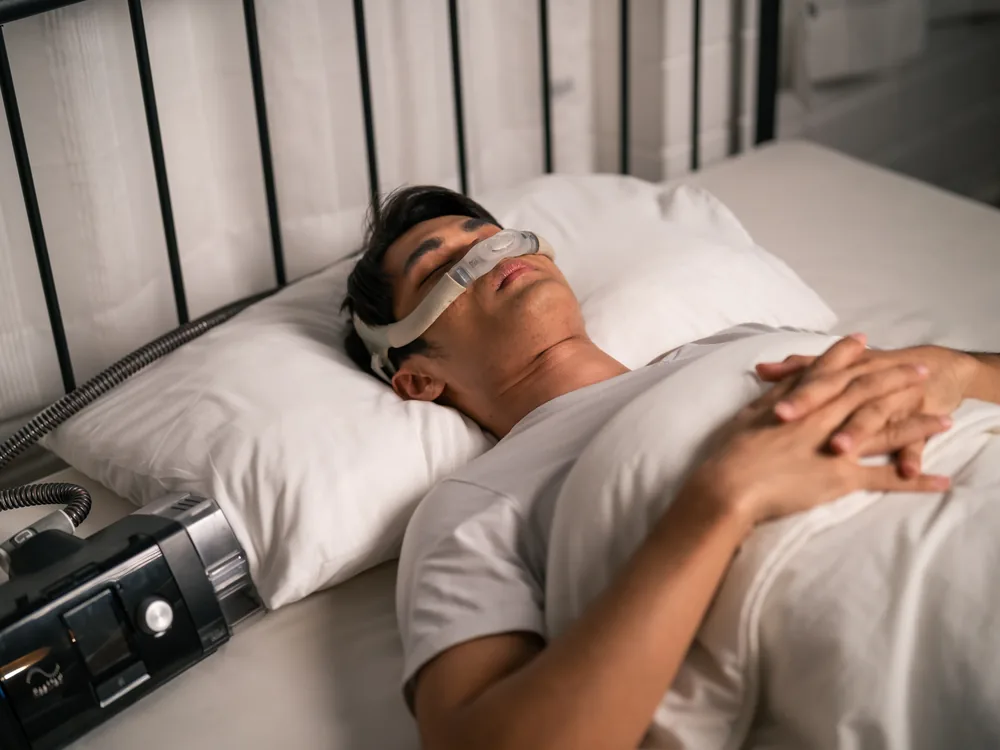
Positive airway pressure is a common first treatment for sleep apnea [1]. A custom oral appliance from a dental sleep provider, positional therapy, weight management, or surgery may be options, and some people qualify for an implanted nerve stimulator. Your sleep doctor helps match the option to your anatomy and severity.
Cognitive behavioral therapy for insomnia (CBT-I)
A structured, short-term program that retrains sleep habits and the thoughts that keep you awake. The American College of Physicians recommends CBT-I as first-line therapy for chronic insomnia [6]. Medicines may still play a role, and your physician will discuss the trade-offs.
Before your appointment
What to expect at your first sleep medicine visit
A first sleep visit is mostly a careful conversation. You will not be asked to sleep in the office.
Your sleep story.
Your sleep doctor asks about bedtime, wake time, snoring, night waking, naps, caffeine, alcohol, shift work, and how sleepy you feel during the day.
A focused exam.
Expect a look at your nose, mouth, throat, and jaw, along with neck size, weight, and blood pressure, all of which affect the airway.
Screening questions.
Short questionnaires measure sleepiness and insomnia severity so progress can be tracked over time.
A plan and next steps.
You leave knowing whether you need a home test, an in-lab study, blood work such as iron levels, or treatment you can start now, plus pricing for any follow-up.
Bring a list of medicines and supplements, any past sleep study reports, and your CPAP data card or app login if you already use a device. A one to two week sleep diary helps a lot. If you can, bring your bed partner or ask them to write down what they notice at night.
Make an informed choice
How to choose the right sleep specialist near you
Sleep medicine is a subspecialty, so the right doctor has extra training on top of their primary field. Use this checklist when comparing profiles.
- Confirm board certification in sleep medicine. You can check any physician for free through the American Board of Medical Specialties [7]. Every sleep specialist on Apptly Health is verified before listing.
- Notice their primary background. Pulmonary, neurology, psychiatry, and ENT backgrounds each bring different strengths for breathing, narcolepsy, insomnia, or airway surgery questions.
- Ask how they handle testing: home sleep tests, in-lab studies, or both, and where the lab is located.
- For insomnia, ask whether they offer CBT-I themselves or work with a trained therapist.
- For apnea, ask how they support CPAP setup and follow-up, including mask fitting and data review.
- Check the price before you book. Self-pay patients have a federal right to a Good Faith Estimate for scheduled care [8].
- Look for video visit options for follow-ups, which save a trip when you are already short on sleep.
The evidence
The evidence: why sleep disorders deserve real care
Sleep problems are common, often missed, and treatable. These figures come from federal health agencies, the national sleep medicine society, and peer-reviewed research.
-
50 to 70 million
Americans have a sleep disorder
Sleep apnea is among the most common, and it can be treated once it is diagnosed [1].
-
Nearly 80%
of U.S. adults with obstructive sleep apnea are undiagnosed
An analysis commissioned by the American Academy of Sleep Medicine estimated that 12% of adults have the condition [2].
-
Up to 10%
of adults have chronic insomnia
Short-term insomnia is far more common, affecting 30 to 35% of adults at some point [3].
-
7.12%
of adults worldwide have restless legs syndrome
Estimated for 2019 in adults ages 20 to 79, with higher rates in women than men [4].
Go deeper
Making sleep apnea treatment work for you
Diagnosis is only half the job. Many people give up on CPAP in the first weeks, often because of fixable problems. A good sleep specialist plans for these from day one.
The first two weeks
Wear the mask while awake and reading to get used to it. Expect some restless nights. Most machines record nightly use and leak data, which your sleep doctor reviews to spot problems early.
Common fixes
Mask leaks, a dry nose or mouth, and feeling like you cannot exhale are the usual complaints. A different mask style, heated humidity, a chin strap, or a pressure adjustment often solves them. Tell your doctor rather than quietly stopping.
When CPAP is not the answer
If you have honestly tried and cannot tolerate it, ask about an oral appliance, positional devices, weight-related options, airway surgery with an ENT surgeon, or an evaluation for an implanted nerve stimulator. Each has its own requirements, and your sleep specialist can tell you which fit.
Direct access compared
A shorter road to better sleep
| Consideration | Apptly Health | Traditional route |
|---|---|---|
| Referral | Not required | Often required by your plan before a sleep visit |
| Getting started | Book a sleep specialist directly | Primary care visit first, then a referral and wait |
| Price | Shown before you book | Known after the claim is processed |
| Choice of sleep doctor | Any listed sleep specialist | Limited to your network |
| Follow-up visits | In person or virtual, depending on the specialist | Mostly in person |
Related care
Related specialists you can book
Sleep problems often connect to the lungs, the airway, or the brain. These Apptly Health specialists frequently work alongside sleep doctors.
Helpful answers
Frequently asked questions about seeing a sleep specialist
Do I need a referral to see a sleep specialist?
Not on Apptly Health. You can book a board-certified sleep specialist directly without first seeing a primary care doctor. If you plan to use insurance for a sleep study or equipment elsewhere, check your plan, because some plans require a referral or prior approval before they will pay.
How much does a sleep doctor visit cost without insurance?
Each sleep specialist sets their own visit fee, and it is shown on their Apptly Health profile before you book. Sleep studies, CPAP equipment, and oral appliances are priced separately. As a self-pay patient, you can ask for a Good Faith Estimate of expected charges for scheduled services under the No Surprises Act.
Does Apptly Health bill my insurance?
No. Apptly Health is a direct-pay platform. You pay the sleep specialist's listed fee directly, and Apptly Health does not submit claims to your insurance. Some plans reimburse out-of-network care, so check with your insurer if you plan to request reimbursement.
Can I book a sleep specialist on Apptly Health if I have Medicare or Medicaid?
Check with the physician's office before you book. Medicare and Medicaid have rules that limit when an enrolled physician can accept direct payment for covered services, so whether a self-pay visit is possible depends on the physician and the service you need.
Can I see a sleep specialist by video?
Yes, many sleep specialists on Apptly Health offer virtual visits. Video works well for reviewing sleep histories, discussing test results, adjusting CPAP based on device data, and CBT-I sessions. Some people need an in-person airway exam or an in-lab study, and your doctor will tell you if so.
Do I need a sleep study to be diagnosed with sleep apnea?
Yes. Sleep apnea is confirmed with a sleep test, either a home sleep apnea test or an overnight study in a sleep lab. Smartwatches and phone apps can raise a flag, but they cannot diagnose apnea. Your sleep specialist decides which test fits your symptoms and health history.
What is the difference between a sleep specialist and a pulmonologist?
A pulmonologist treats lung diseases such as asthma, COPD, and lung nodules. A sleep specialist has additional board certification in sleep medicine and focuses on sleep apnea, insomnia, narcolepsy, and restless legs. Many sleep doctors trained first in pulmonology, but others come from neurology, psychiatry, or internal medicine.
Can a sleep specialist help with insomnia without sleeping pills?
Often, yes. Cognitive behavioral therapy for insomnia (CBT-I) is the recommended first-line treatment for chronic insomnia in adults. It works on sleep timing, habits, and the racing thoughts that keep you awake. Medication can still be appropriate for some people, and your sleep doctor will discuss the benefits and risks.
How do I know if a sleep specialist is board-certified?
Every sleep specialist listed on Apptly Health is verified as board-certified before their profile goes live. You can also confirm any physician's certification, including the sleep medicine subspecialty, for free through the American Board of Medical Specialties Certification Matters tool.
What should I bring to my first sleep appointment?
Bring your medication list, any earlier sleep study reports, a sleep diary covering one to two weeks, and CPAP data if you use a machine. Write down when you go to bed, when you wake, how often you nap, and what your bed partner has noticed.
When is a sleep problem an emergency?
Call 911 if someone stops breathing and cannot be woken, turns blue, or has chest pain. Do not drive when you are struggling to stay awake. If sleeplessness comes with thoughts of harming yourself, call or text 988 for the 988 Suicide and Crisis Lifeline right away.
Can I use HSA or FSA funds for a sleep specialist?
In many cases, yes. Physician visits to diagnose or treat a medical condition are generally qualified medical expenses, and sleep testing and CPAP supplies often are too. Check with your plan administrator before you book to confirm what your account covers.
More questions about booking, payments, or your account? Visit the Apptly Health FAQ page.
For physicians
Are you a sleep specialist?
Connect with direct-pay patients who are actively looking for help with apnea, insomnia, and other sleep disorders. Set your own schedule and price, and offer video follow-ups on your terms.
Apply to Join the NetworkMedical review and references
Medically reviewed by Dr. Paula Muto
Board-certified vascular surgeon and founder of Apptly Health
This page is for general information and does not replace a consultation with a qualified physician. If you think you are having a medical emergency, call 911. If you are in emotional crisis, call or text 988.